
Hickory Dog Bite Lawyer — Dog Bite Injury Attorney in Hickory NC
Hickory is the commercial and cultural center of the Catawba Valley region, serving as a hub for Catawba, Caldwell, and Alexander counties. Known for its furniture manufacturing heritage, Hickory has grown into a vibrant mid-sized city with an active parks system, a thriving downtown, and established residential neighborhoods stretching from the Lenoir-Rhyne University area to the Lake Hickory waterfront. The Hickory Dog Park at Kiwanis Park, along with the trails at Rotary Park and Henry Fork River Greenway, attract dog owners from across Catawba County year-round. Dog bite injuries occur throughout Hickory’s neighborhoods, parks, and shared outdoor spaces. If you or a loved one has been attacked by a dog in Hickory or anywhere in Catawba County, the Law Office of Ryan P. Duffy is here to help. Call 704-741-9399 for a free consultation with a Hickory dog bite attorney.
This page explains your rights under North Carolina law, the steps you should take after a dog attack in Hickory, and how attorney Ryan P. Duffy can help you recover full and fair compensation for your injuries.
Dog Bites in Hickory — Understanding the Local Risk
Hickory sits at the center of the Catawba Valley, serving residents across Catawba, Caldwell, and Alexander counties. The city’s extensive parks system is a year-round draw for dog owners. Kiwanis Park, located near 11th Avenue Drive NW, includes a fenced dog park with separate sections for large and small dogs and is one of the most visited parks in the city. The Rotary Park trail system and the Henry Fork River Greenway extend several miles through developed and natural areas, providing daily walking corridors for dog owners. Lake Hickory and its surrounding shoreline communities attract walkers, anglers, and cyclists year-round.
Hickory’s older established neighborhoods — including the Viewmont corridor, the Highland and Ridgecrest areas, and the residential districts surrounding Lenoir-Rhyne University — feature traditional homes with fenced yards from which dogs can and do escape. Newer residential growth along Highway 70 and Highway 16 has brought higher suburban density and dog ownership rates to Catawba County’s expanding outskirts. Catawba County Animal Services manages bite reports, quarantine orders, and dangerous dog designations for all of Catawba County, including Hickory proper, Conover, Newton, and Claremont.
Dog bite incidents in Hickory and across Catawba County occur in a wide range of settings: city parks, residential sidewalks, apartment common areas, and rural road edges in the county’s outlying areas. Because Catawba County encompasses both urban Hickory and surrounding rural communities, the enforcement context varies considerably, and an experienced dog bite attorney can help navigate these differences when building a strong liability case.
Hickory Dog Bite Attorney — North Carolina Dog Bite Laws
North Carolina does not have a single strict liability statute that applies to every dog bite. Instead, the state uses a combination of statutory strict liability for dangerous dogs and common-law negligence principles to determine when a dog owner is financially responsible for an attack.
N.C. Gen. Stat. 67-4.1 — Strict Liability for Dangerous Dogs
Under North Carolina General Statute 67-4.1, the owner of a dog that has been previously declared “dangerous” or “potentially dangerous” by animal control is strictly liable for injuries caused by that dog if it is running at large. Strict liability means the victim does not need to prove the owner was careless. The fact that a dangerous dog was at large and caused injury is enough to establish financial responsibility.
A dog may be classified as dangerous in Catawba County if it has previously bitten or attacked a person, killed or seriously injured another domestic animal while off the owner’s property, or has been determined by Catawba County Animal Services to pose a threat to public safety based on its behavior.
The Modified One-Bite Rule
For dogs not officially designated as dangerous, North Carolina applies the “one-bite rule,” though the state’s version is more nuanced than in other jurisdictions. Under this doctrine, a dog owner may be held strictly liable if the dog had a known dangerous propensity — meaning the owner was aware, or should have been aware, that the dog was likely to bite. Evidence of prior bites, aggressive lunging, growling at strangers, or escaping a yard to chase people can all demonstrate dangerous propensity.
Even without prior dangerous behavior, you can still recover by proving the owner was negligent — such as failing to comply with Catawba County leash laws and Hickory city animal ordinances, failing to properly secure a fence or gate, or leaving an aggressive dog unattended in a common area.
Catawba County Leash Laws and Local Ordinances
Catawba County requires that dogs be kept on a leash or otherwise restrained when off the owner’s property, except in designated off-leash areas. Violations of the leash law can serve as strong evidence of negligence in a dog bite case. Catawba County Animal Services enforces these ordinances and may issue citations, quarantine orders, or dangerous dog designations following a bite incident. Reports from animal control can be valuable evidence in your injury claim.
North Carolina’s Contributory Negligence Rule
One critical aspect of dog bite law in North Carolina is the contributory negligence rule. North Carolina is one of a small number of states that still applies pure contributory negligence, meaning that if the dog owner’s insurance company can show you were even slightly at fault for the bite — for example, by approaching a dog against warnings, or by reaching over a fence — your entire claim may be denied. This harsh rule makes it essential to work with an experienced attorney who can build a strong case and counter these defenses before they are raised.
Common Dog Bite Injuries in Hickory
Dog bite injuries vary widely in severity, and the setting in which a bite occurs in Hickory or the surrounding Catawba County area often influences the nature of the wound. Attacks at the Kiwanis Park dog park, on the greenway trails along Henry Fork River, and in residential neighborhoods surrounding Lake Hickory can involve dogs of all breeds and sizes. Emergency staff at Catawba Valley Medical Center treat a range of dog bite injuries, from minor puncture wounds to severe lacerations requiring surgical closure and long-term wound management.
Deep puncture wounds and lacerations are among the most common injuries, often requiring stitches or surgical closure and carrying a high risk of bacterial infection. Infections from dog bite wounds can spread rapidly if not treated promptly, sometimes requiring hospitalization and IV antibiotics. Nerve damage to the hands, arms, and face is a serious complication in more severe attacks, causing numbness, weakness, or permanent loss of motor function in affected areas.
Facial injuries deserve special attention in dog bite cases. Bites to the face — which occur with particular frequency when children are attacked — may require reconstructive surgery and leave permanent scars affecting appearance and quality of life. North Carolina law specifically recognizes scarring and disfigurement as compensable harm. Dog attacks also frequently cause lasting psychological trauma, including PTSD, chronic anxiety, fear of dogs, recurring nightmares, and depression. Children who are bitten near Catawba County schools, parks, and neighborhoods face a heightened risk of long-term emotional effects that may require professional counseling over years.
Getting Medical Care After a Dog Bite in Hickory
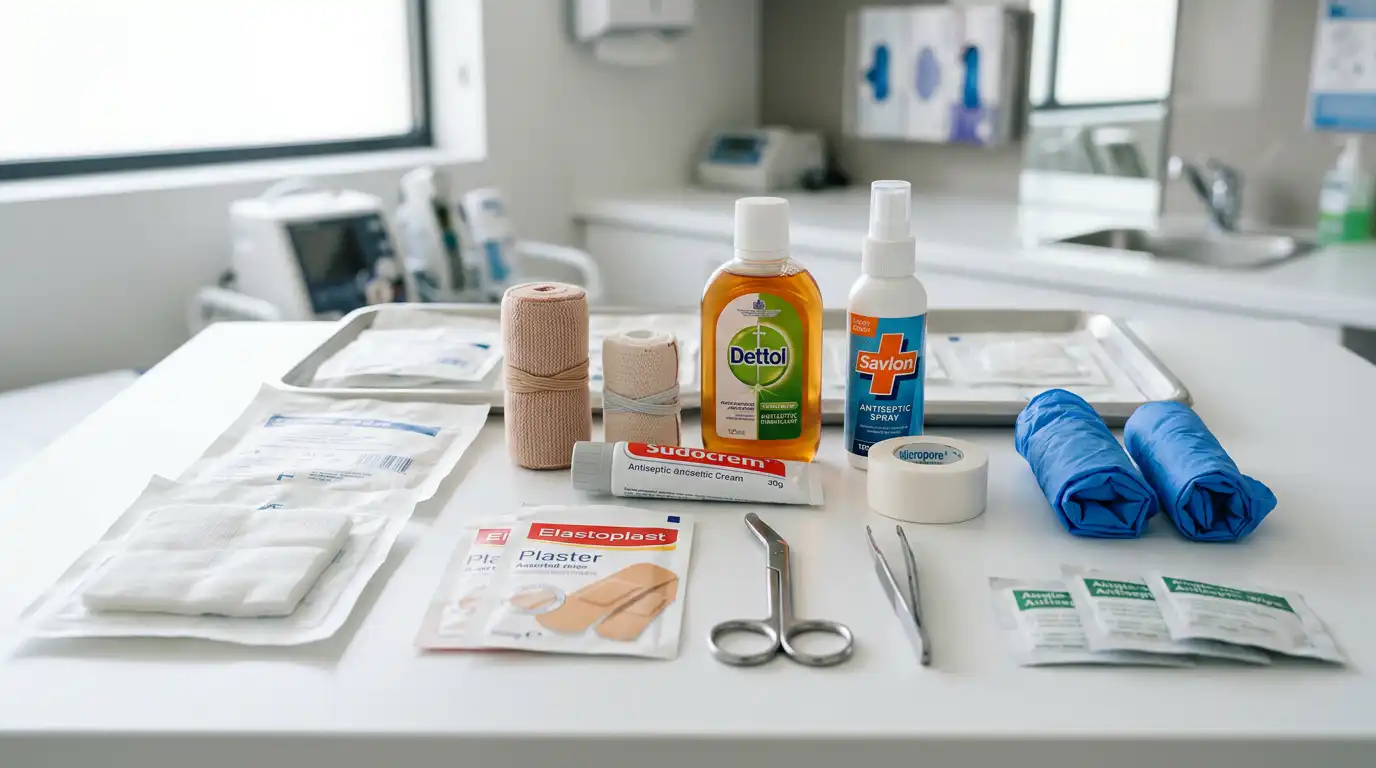
Dog bite victims in Hickory should seek emergency treatment at Catawba Valley Medical Center, located at 810 Fairgrove Church Rd SE. The emergency department at Catawba Valley Medical Center handles a significant volume of animal bite injuries each year, providing wound evaluation, surgical closure for deep lacerations, antibiotic prophylaxis, tetanus prophylaxis, and rabies exposure protocols. For bite wounds that do not require full emergency department care, MedFirst Urgent Care and FastMed Urgent Care on Highway 70 SE offer same-day evaluation and initial wound treatment.
Injuries to the face, hands, and fingers carry the highest risk of serious complications from dog bites. Hand and finger injuries frequently involve tendon damage and deep-tissue infection requiring surgical evaluation. Facial wounds may require consultation with plastic surgery specialists. Catawba Valley Medical Center’s affiliated physician network includes plastic surgery, orthopedic surgery, and infectious disease specialists who provide follow-up care for serious bite injuries in the Hickory area.
Thorough documentation of every medical visit — from the initial emergency room evaluation through all follow-up appointments, prescription medications, and specialist consultations — is essential for capturing the full economic value of your injury claim. Medical records establish both the extent of your injuries and the causal link between the dog attack and your treatment costs. The Law Office of Ryan P. Duffy can advise you on how to document your care from the outset. Call 704-741-9399.
Injured? Get a Free Consultation Today
The Law Office of Ryan P. Duffy handles these cases directly. No fee unless we recover for you.
Schedule Your Free Consultation
Call us at 704-741-9399 or contact us online to speak with a specialist.
What to Do After a Dog Attack in Hickory
The steps you take immediately after a dog bite can significantly affect both your health and your ability to recover compensation. If you are bitten by a dog in Hickory or anywhere in Catawba County, you should:
-
Seek medical attention immediately. Even if the wound appears minor, see a doctor or visit an emergency room. Dog bite wounds are prone to infection and may require antibiotics, tetanus boosters, or rabies prophylaxis. Medical records from the outset serve as critical evidence in your claim.
-
Report the bite to Catawba County Animal Services. Filing a report creates an official record of the incident, triggers a quarantine or investigation of the dog, and may lead to a dangerous animal designation that strengthens your case.
-
Identify the dog and its owner. Obtain the owner’s name, address, and contact information. Determine whether the dog has a history of aggressive behavior or prior bite incidents.
-
Document the scene and your injuries. Take photographs of your injuries, the location of the attack, any broken fences or open gates, and the dog. Keep all medical records, bills, and receipts.
-
Collect witness information. Get names and contact information for anyone who saw the attack.
-
Contact a Hickory dog bite attorney. Before speaking with the dog owner’s insurance company, call 704-741-9399. Insurance adjusters will attempt to minimize or deny your claim, and anything you say can be used against you.
Catawba County Animal Control — What Happens After You Report a Bite
Catawba County Animal Services is the primary agency responsible for investigating dog bite incidents in Hickory and throughout Catawba County. After you file a report, an animal control officer will investigate the facts of the incident, identify the dog and verify ownership and vaccination records, initiate a mandatory quarantine period if the dog’s rabies vaccination status is uncertain, and evaluate whether grounds exist for a dangerous or potentially dangerous dog designation under N.C. Gen. Stat. Chapter 67.
The official records generated through a Catawba County Animal Services investigation are valuable evidence in a personal injury claim. These records include the initial incident report, the officer’s investigation notes, any prior complaint history for the dog or its owner, quarantine orders, citations for leash law violations, and any formal proceedings to classify the animal as dangerous. If the dog that attacked you has a documented history of aggression with Catawba County Animal Services, that prior record supports negligence and may trigger the statutory strict liability provisions under N.C. Gen. Stat. 67-4.1.
Attorney Ryan P. Duffy has experience obtaining animal control records from Catawba County, interpreting bite history documentation, and using county agency findings to build comprehensive dog bite claims for Hickory-area clients. Do not wait for animal control to complete its investigation before consulting an attorney — call 704-741-9399 to speak with a Hickory dog bite lawyer as soon as possible after your injury.
Hickory Dog Bite Case — Who Is Liable?
Determining who is financially responsible for a dog bite injury in Hickory depends on the circumstances of the attack. Liability may extend beyond just the dog’s owner.
Dog Owners
The dog’s owner is the most common defendant in a bite case. Under North Carolina law, an owner who knew or should have known about a dog’s dangerous tendencies, or who failed to exercise reasonable care in controlling the animal, can be held liable for injuries. In Hickory’s established neighborhoods, university area, and active parks system, owners who fail to leash their dogs or allow them to escape from residences are frequently at fault.
Property Owners and Landlords
Landlords and property managers in Hickory may be liable for dog bite injuries if they knew a tenant’s dog was dangerous and failed to take action, or if they failed to enforce pet policies or breed restrictions in their lease agreements. A landlord who ignores complaints about an aggressive dog on the property may share liability for a subsequent attack.