
Pedestrian accident attorney — when a car crossed into the wrong path.
A pedestrian struck by a car almost never gets up the way they went down. The physics are asymmetric and the injuries are usually severe: head trauma, multiple fractures, internal injuries, long rehabilitation, and far too often a wrongful-death claim. North Carolina’s harsh fault rule makes these cases harder than they should be — insurers know it, and they push fault onto the person on foot at every opportunity. This page lays out the legal mechanics, the recurring defense tactics, the coverage strategy that often determines whether a serious case becomes a fair recovery, and what families should do in the first days after a pedestrian wreck.
No fee unless we win · Personally handled by the attorney · Licensed in NC & SC

Why pedestrian cases get harder before they get easier
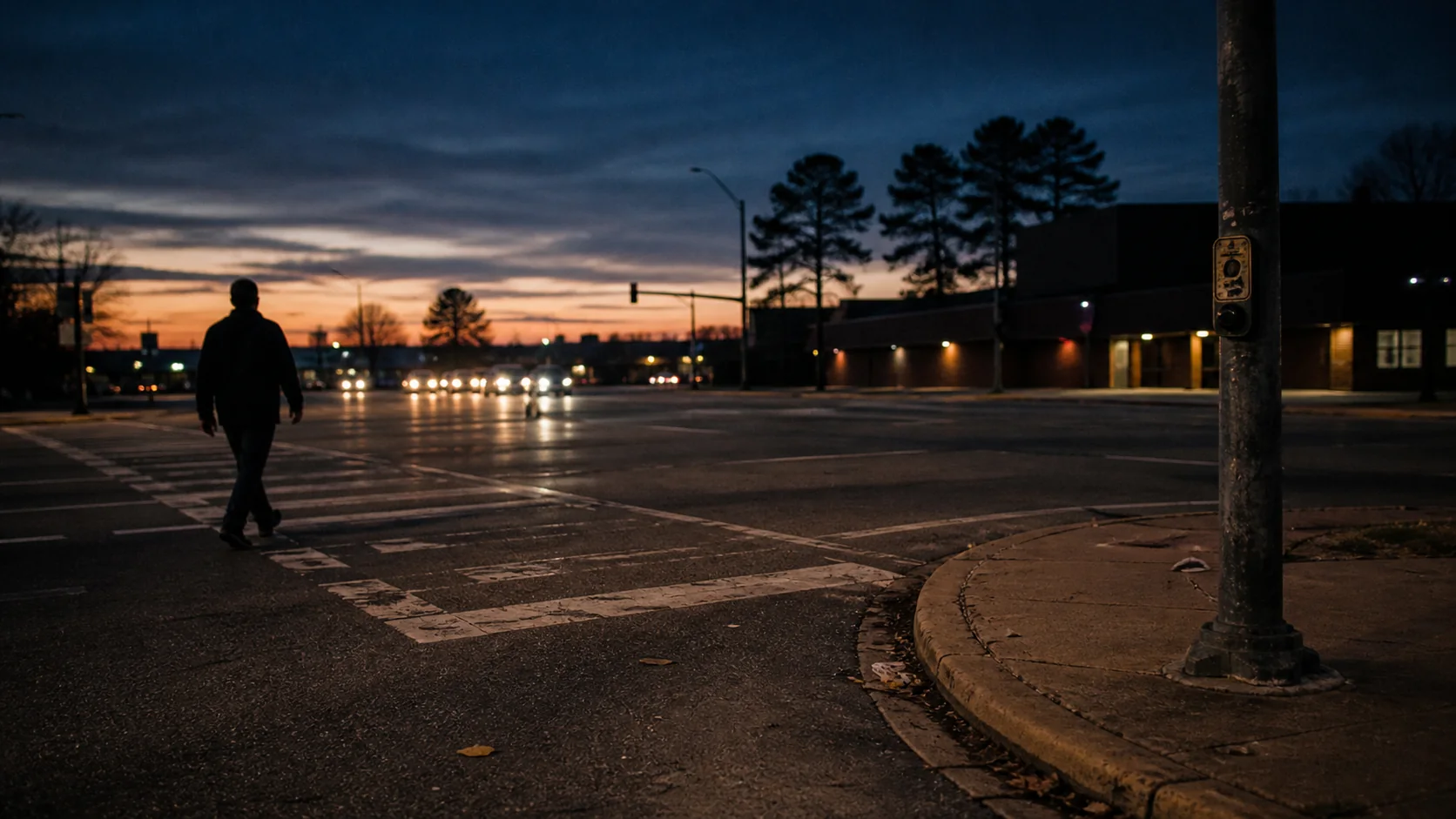
Drivers and adjusters look for any reason to share fault with the pedestrian: mid-block crossing, jaywalking, dark clothing, headphones, alcohol on the pedestrian’s breath at the scene. In a state with pure contributory negligence, attaching even 1% fault to the pedestrian is enough for the insurer to argue you recover nothing at all. That is the central reality of a North Carolina pedestrian case — the defense doesn’t need to prove the driver was blameless. It only needs to argue the pedestrian was negligent at all.
The cases that hold up are the ones built quickly and carefully. Crash-scene photographs, witness statements, downloaded traffic-camera footage, business surveillance, signal-timing data, the pedestrian’s habitual route, the driver’s phone records — everything has to be preserved before it disappears. Most of this evidence has a 24- to 72-hour shelf life. Wait two weeks and most of it is gone.
Catastrophic injuries also drive the case from a different direction: the more serious the injuries, the more important it becomes to identify every source of coverage. A typical case looks beyond the driver’s liability policy to the pedestrian’s own auto policy (UM/UIM applies even when you’re on foot), household-resident policies, and umbrella coverage. Coverage hunting is part of the job.
NC and SC right-of-way rules in plain English
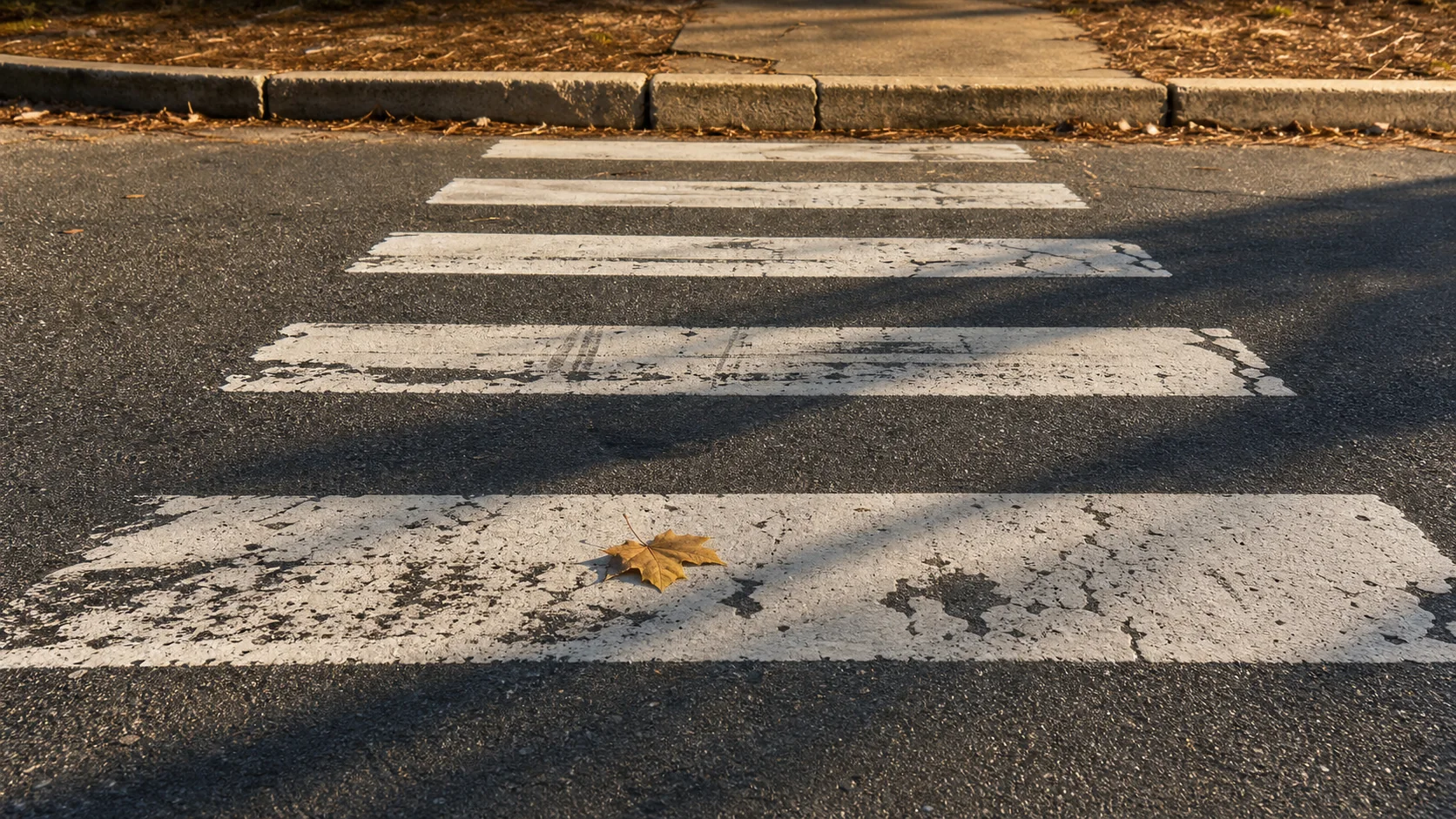
In marked crosswalks, both states put the duty to yield on the driver. The driver must — not should, must — yield to a pedestrian in a marked crosswalk, regardless of whether a signal is present. Failure to yield is a traffic infraction and supports a negligence-per-se argument in the civil case.
Where there is no marked crosswalk, intersections still create implied crosswalks at the extension of the curb lines — many drivers assume otherwise, and they’re wrong. A pedestrian crossing at an unmarked intersection has the same legal protection as one crossing in a striped crosswalk.
Crossing mid-block outside an intersection does shift more of the duty to the pedestrian, but it doesn’t convert into automatic fault: drivers still have to keep a proper lookout and avoid foreseeable hazards. The legal question is whether the pedestrian gave the driver enough time and space to avoid the collision, and whether the driver was paying attention. Drivers who can’t see a person in time to stop are typically driving too fast for conditions.
Special rules apply in school zones, around buses with extended stop arms, at signalized intersections during specific signal phases, and at construction or work zones. And on the SC side, modified comparative negligence means a partly-at-fault pedestrian can still recover, with the award reduced by their share — not the all-or-nothing outcome that haunts NC cases. Statute of limitations is unforgiving — once it runs, the claim is gone. If you are reading this and the wreck happened more than two years ago, call the office today.
Crosswalk vs. mid-block — the legal mechanics
The crosswalk question changes the case more than people expect. If the pedestrian was in a marked crosswalk, the driver’s duty is essentially absolute — failing to yield is the answer. If the pedestrian was at an unmarked intersection (within the implied crosswalk at the extension of the curb lines), the same legal protection applies, though defense will try to argue the pedestrian wasn’t actually within the implied crosswalk lines.
If the crossing was mid-block (between intersections, no crosswalk), the law shifts. The pedestrian has a duty to yield to oncoming traffic; the driver still has a duty of reasonable care. Whether each met that duty becomes a fact question. Speed, lighting, traffic conditions, the pedestrian’s visibility, the driver’s attentiveness, the proximity of available crosswalks — all of these matter.
Where the crossing happened isn’t always obvious. A driver may claim the pedestrian was “in the middle of the road,” but the police report, witness placement, and physical evidence (point of impact, debris field, body location) often tell a different story. Pinning down the exact location is investigation work, not a fact the defense gets to dictate.
When pedestrian cases turn catastrophic
Pedestrian injuries are disproportionately catastrophic. A 30-mph impact between a vehicle and a person is, biomechanically, an extremely violent event. The recurring serious injuries:
Traumatic brain injury. Concussion through severe TBI. The pedestrian’s head often strikes the windshield, A-pillar, or pavement. Long-term cognitive symptoms (memory, focus, mood, sleep) are common and often underdiagnosed at the scene.
Multiple fractures. Pelvis, femur, tibia, fibula, ankle, wrist, ribs. Surgical hardware, long rehab, and risk of long-term complications (arthritis, hardware failures, chronic pain).
Internal injuries. Liver and spleen lacerations, intestinal injuries, internal bleeding. Often require emergency surgery and have long-tail complications.
Spinal injuries. From soft-tissue through full spinal cord injury. Pedestrian cases produce the kinds of cases where life-care planning becomes part of the damages calculation.
Pedestrian fatalities. Many pedestrian cases tragically become wrongful-death cases. The legal framework shifts to the wrongful-death statute, with a separate 2-year deadline in NC. See the wrongful-death page for the procedure.
The medical bills on a serious pedestrian case routinely exceed the at-fault driver’s liability policy limits. Coverage strategy stops being theoretical and starts being the case.
UM/UIM coverage — the recovery beyond the driver’s policy
Almost every Carolina family carries auto insurance with uninsured (UM) and underinsured (UIM) motorist coverage, and almost nobody reads their declarations page until they need it. On a serious pedestrian case, your own auto policy often becomes the most important coverage source.
UM/UIM applies on foot. Most people assume UM/UIM only applies when you’re driving your car. That’s wrong. Your auto policy’s UM and UIM coverage applies whether you were in a vehicle, on a bicycle, on a scooter, or on foot. A pedestrian struck by a car can usually claim against:
The at-fault driver’s liability policy — the first source. Often inadequate; NC minimums are only $30K/$60K.
The pedestrian’s own auto policy — UM (if the driver had no insurance, or in a hit-and-run) or UIM (if the driver was insured but underinsured for the injuries).
Household-relative auto policies. A pedestrian who lives with a parent, spouse, or other relative who carries auto insurance can often access that relative’s UM/UIM, even on a separate policy.
Umbrella policies. Higher-net-worth families sometimes carry $1M-$5M umbrella coverage that stacks on top of underlying policies.
Identifying every applicable policy and stacking them properly is a coverage-analysis exercise that gets done early in every serious case. Settling against the driver’s policy without first investigating UM/UIM is a common (and expensive) mistake.
Special cases — hit-and-run, parking lots, children
Hit-and-run. When the at-fault driver flees, UM coverage on the pedestrian’s own policy is usually the recovery source. Most policies require prompt reporting (typically within 24 hours), credible identification of the wreck as a hit-and-run (police report, witness statements, physical evidence), and cooperation with law enforcement’s investigation.
Parking lots. Parking-lot pedestrian incidents are common — reversing vehicles, low-speed strikes at exits, distracted backup. Parking lots are private property where rules of the road don’t apply identically and shared fault is more common. Coverage usually still applies (the driver’s liability policy responds), but the investigation focuses on the lot’s design, lighting, signage, and any surveillance.
Children. Cases involving a pedestrian-struck child raise their own issues. NC’s tolling rule applies (the SOL doesn’t start running until age 18). The contributory-negligence defense is harder for insurers to win when the pedestrian is a small child — children below a certain age can’t be contributorily negligent as a matter of law. Court approval is required for any settlement involving a minor.
E-scooters, e-bikes, motorcycle adjacency. Cases sometimes involve pedestrians struck by e-scooters, e-bikes, or motorcycles. The legal framework is similar but the coverage analysis differs — some scooter and e-bike strikes aren’t covered by auto insurance at all. Renter’s and homeowner’s policies sometimes apply; sometimes only the rider’s assets are reachable.
What to do after a pedestrian wreck — a checklist
- Call 911 from the scene if anyone is able. Request police and EMS even if injuries seem minor — adrenaline masks serious injuries.
- Accept transport to the hospital. “Refused transport” in the police report becomes the centerpiece of every insurer’s damages-minimization argument.
- Identify every witness on scene. Names and phone numbers. Pedestrians, drivers in nearby cars, residents of adjacent buildings. They scatter fast.
- Preserve video. Traffic cameras, business surveillance, doorbell cams, dash cams in nearby vehicles. Most overwrites in 24–72 hours.
- Photograph everything at the scene if family can return: skid marks, point of impact, debris field, lighting conditions, sight lines, signage, signal timing.
- Pull your auto policy declarations page. What UM/UIM limits do you have? Household relatives?
- Don’t talk to the driver’s insurer. Their questions are designed to put fault on you.
- Call a lawyer within days, not weeks. The evidence window on pedestrian cases is narrow.
What I watched defense do on pedestrian cases
Pedestrian files were the ones the defense lawyers I worked with treated as “chargeable” from day one — meaning they assumed the pedestrian was going to be assigned some level of fault and built the case around it. Adjusters were trained to ask the responding officer about whether the pedestrian was in a crosswalk, whether they had been drinking, whether they were on a phone, and whether their clothing was reflective. The narrative was drafted before the file was even thirty days old.
The clothing argument. “The pedestrian was wearing dark clothes at night.” This shows up in nearly every nighttime pedestrian case. Whether it amounts to negligence is a fact question — pedestrians don’t have a legal duty to wear reflective gear. But the argument gets traction with juries and adjusters use it relentlessly.
The intoxication angle. If alcohol shows up in toxicology, adjusters lean on it hard — even when the driver was the one at fault. Whether the pedestrian’s intoxication actually caused the collision (vs. the driver’s inattention) is rarely investigated by the carrier; it’s just used.
The phone/headphones angle. If the pedestrian had headphones or was looking at a phone, the carrier will argue inattention. Whether a pedestrian had a legal duty to hear the oncoming car, or whether the driver should have seen the pedestrian in time, is the actual legal question.
The MIST-equivalent. Even in pedestrian cases, low-speed strikes get treated like minor wrecks. A 15-mph strike can cause serious injury — particularly to an elderly pedestrian — but adjusters apply the same “low impact, low injury” logic.
The early lowball on catastrophic cases. Pedestrian injuries are often catastrophic. The first offer from an adjuster on a catastrophic case is, in my experience, never a serious offer. They are anchored low because they can be — and because they know catastrophic-injury cases involve catastrophic medical bills the family is desperate to pay.
The countermove is the same in every serious pedestrian case: secure the physical scene immediately, pull every available video before it’s overwritten, and put the driver under oath about distractions, speed, and whether they ever actually saw the pedestrian before impact. Most drivers who hit pedestrians weren’t looking where they needed to be; preserving the evidence that proves that is a thirty-day window, not a one-year one.
Damages you can pursue
Medical care — emergency
Ambulance, ER, trauma surgery, ICU, in-patient hospitalization. Often six figures on a serious pedestrian case before discharge.
Medical care — long-term
Rehab, in-patient and outpatient PT/OT, follow-up surgeries, hardware revisions, durable medical equipment, home modifications.
Future medical care
Life-care plan when permanent impairment results. Future surgeries, ongoing therapy, eventual revision procedures, in-home care.
Lost wages & earning capacity
Time out of work plus the difference between pre- and post-injury earning capacity when impairment is permanent.
Pain & suffering
The catastrophic-injury category. Juries take serious pedestrian injuries seriously.
Disfigurement & permanent impairment
Separate compensable categories beyond medical bills.
Loss of consortium
Available to a spouse when the injury materially affects the marital relationship.
Wrongful death damages
Separate statutory action when the pedestrian does not survive. See the wrongful-death page for procedure.
Punitive damages
Available where the driver’s conduct was genuinely reckless — impaired driving, deliberate disregard, fleeing the scene.
Common mistakes that hurt your claim
- Skipping or delaying the hospital. “Refused transport” at the scene becomes the centerpiece of every insurer’s downplay.
- Giving a recorded statement to the driver’s insurer. The questions are designed to put fault on you.
- Forgetting your own auto policy. UM/UIM on your own policy — or a relative you live with — can apply even when you were on foot. Most people don’t know what limits they have.
- Letting video evidence age out. Traffic-camera and business surveillance footage often overwrites in 24–72 hours. Preservation requests have to go out immediately.
- Settling on the driver’s policy without checking UIM. On serious cases, the driver’s policy is rarely enough. Releasing the driver without preserving UIM can cost you the additional recovery.
- Talking to the at-fault driver’s adjuster casually. The friendly conversation is also the fault-shifting interview.
- Settling before maximum medical improvement. Catastrophic-injury costs grow with time. Don’t price the case before the medical picture is clear.
- Signing a broad medical authorization. Some authorizations grant access to your lifetime medical history. Read first; consult before signing.
- Posting about the wreck on social media. Defense investigators screenshot everything. A photo at a family event becomes Exhibit A on the ‘he seems fine’ argument.
- Waiting too long to consult counsel. Evidence on pedestrian cases ages in days, not weeks.
Frequently asked questions
What if I was crossing outside a crosswalk?
It complicates the case in North Carolina because it gives the defense a fault argument — but it does not automatically end the claim. Drivers still owe a duty to keep a proper lookout. Whether they did is a fact question. In South Carolina, partial fault reduces but doesn’t bar recovery if you’re 50% or less at fault.
The driver said the sun was in their eyes.
Sun glare, unfamiliar roads, and “I didn’t see them” are not legal defenses. Drivers are required to drive at a speed that allows them to stop within the distance they can see. A driver who can’t see is required to slow down.
Is it different if I was hit in a parking lot?
Yes — parking lots are private property, the rules of the road don’t apply the same way, and shared fault is more common. Coverage usually still applies. The investigation just has to focus on different details — the lot’s layout, lighting, signage, surveillance.
The driver was uninsured. Now what?
UM coverage on your own auto policy can apply even when you were on foot. Most families don’t know what limits they have until they need them — the office reads the declarations page on every case. If you don’t have UM/UIM, household relatives’ policies sometimes apply.
What about hit-and-run?
Hit-and-run typically triggers UM coverage on your own policy, even with no identifiable at-fault driver. Prompt police reporting (typically within 24 hours required by most policies), credible witness identification, and physical evidence at the scene matter.
My family member died after being struck. Is that handled the same way?
No — a wrongful-death claim is a separate statutory action, with different damages categories and a shorter NC time limit (two years from date of death). See the wrongful-death page.
How do I find out what UM/UIM I have?
The declarations page of your auto policy lists your limits. Pull it before you talk to anyone’s insurer. We review it on every case — many clients have higher limits than they realized, and stacking household policies can multiply the recovery substantially.
What if I had been drinking when I was hit?
It complicates the case in NC because it gives the defense a contributory-negligence argument, but it doesn’t automatically end the claim. The legal question is whether your intoxication actually caused the collision or whether the driver was the one at fault. Defense uses it aggressively; that doesn’t mean it wins.
What if I was wearing dark clothes at night?
Pedestrians don’t have a legal duty to wear reflective gear. Whether clothing color matters depends on the driver’s ability to see, the lighting, and whether the driver was paying proper attention. The argument shows up in nearly every nighttime case; it doesn’t automatically win.
My child was struck. Are the rules different?
Yes in several ways. The SOL is tolled until the child turns 18. Children below a certain age can’t be contributorily negligent as a matter of law (the exact age varies by case). Court approval is required for any settlement involving a minor. Catastrophic-injury cases involving children produce some of the largest recoveries because the damages period is the child’s entire life.
Will the driver be charged criminally?
Depends on the facts. Failure to yield is a traffic violation. Reckless conduct, impaired driving, or fleeing the scene can produce criminal charges — potentially serious felonies if the injury or death was caused. The civil case proceeds in parallel with any criminal proceeding.
How long does a pedestrian case take?
Catastrophic-injury pedestrian cases typically take 12–30 months. We don’t demand until medical care has plateaued, so the future-care figures are known. From there, negotiation and (when needed) litigation play out.
Will my case go to trial?
Most don’t. Most settle — but they settle for more when the file is built as if it will be tried. Pedestrian cases involving serious injuries or wrongful death are often the cases where carriers most aggressively defend, so trial preparation is taken seriously.
What does it cost to hire your office?
Nothing up front. Personal-injury representation is on contingency — the fee comes out of a recovery, not your pocket, and there is no fee at all if we don’t recover.
Tell me what happened.
A free, confidential consultation. No fee unless we win.
Request a consultation 704-741-9399This page is general information about Carolina personal-injury practice and is not legal advice. Every case turns on its facts. Reading this page does not create an attorney–client relationship.