
Construction accident attorney — for injuries that workers’ comp doesn’t fully cover.
Workers’ comp is supposed to take care of injured workers, and sometimes it does. But comp doesn’t pay for pain and suffering, doesn’t fully replace lost wages, and doesn’t reach the parties on a jobsite who aren’t your employer — the general contractor, the property owner, the equipment manufacturer, the subcontractor whose carelessness caused the fall. Those third-party claims are where the real recovery often is, and they have to be developed in parallel with the comp case from day one. This page covers how comp and third-party claims interact, the OSHA-citation evidence that often decides cases, the recurring defense playbook on construction files, and what injured workers and their families should do in the first weeks.
No fee unless we win · Personally handled by the attorney · Licensed in NC & SC
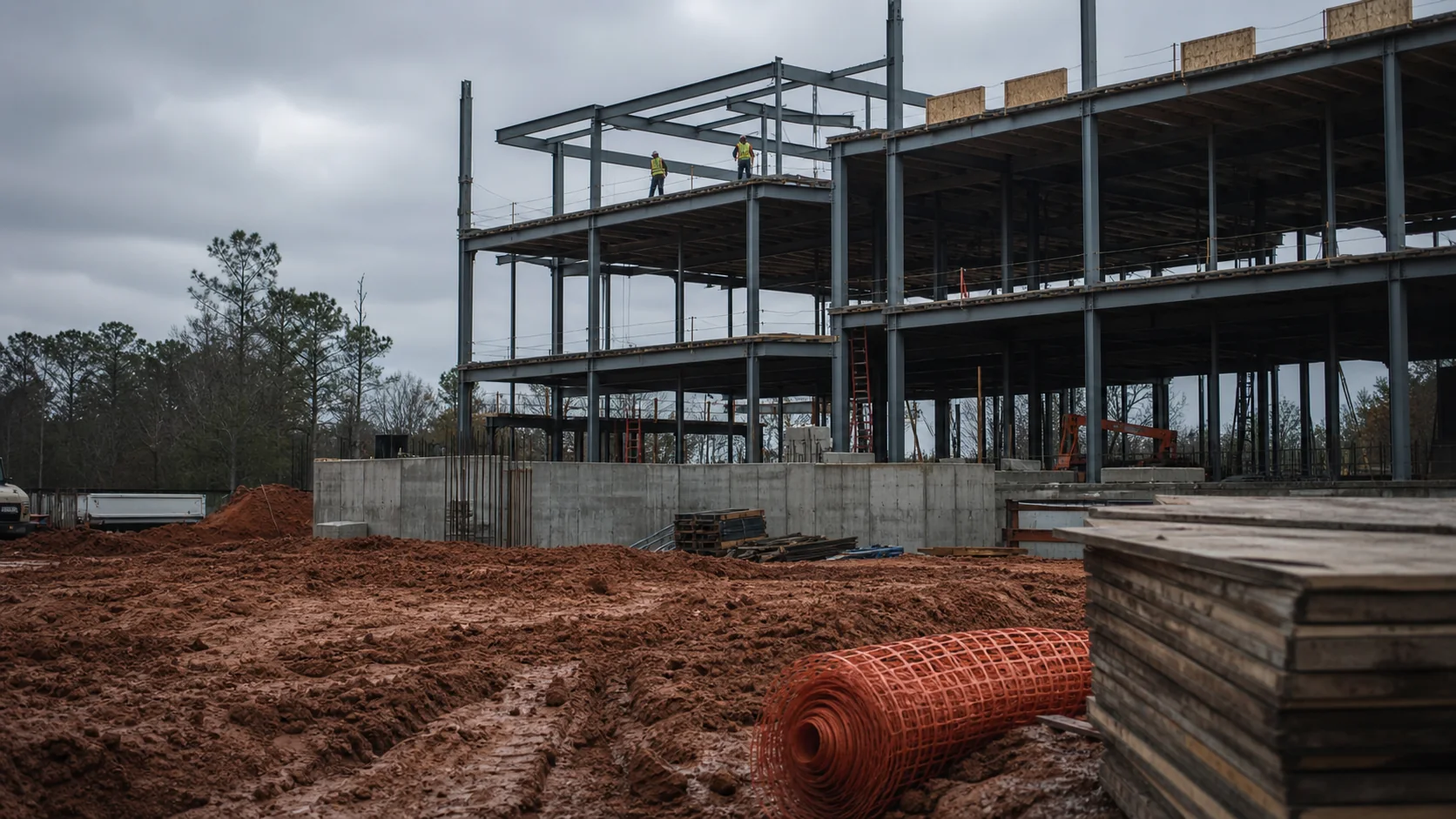

Workers’ comp is one piece of the picture — not the whole thing
If you’re hurt on the job in North Carolina, workers’ comp is generally the exclusive remedy against your employer (N.C.G.S. § 97-9). Comp pays medical and a portion of lost wages (typically two-thirds of average weekly wage up to a state-set maximum), but it does not pay for pain and suffering, does not fully replace income, and stops well short of what a serious injury actually costs a worker and their family. That’s by design — comp is supposed to be a trade: no-fault payment in exchange for limited damages.
What comp does not bar is a separate civil claim against non-employer parties whose negligence contributed to the injury. On almost every construction site, those parties exist. A general contractor that didn’t enforce fall protection. A property owner who left a hazard unaddressed. An equipment manufacturer whose tool failed. A subcontractor whose careless work created the danger. Each is potentially a defendant in a civil claim parallel to the comp case.
The right way to handle a serious construction injury is to do both at once: protect the comp benefits the worker is entitled to, and identify the third-party defendants whose insurance can pay the rest. The two cases interact — the comp carrier will assert a statutory lien on the third-party recovery for benefits already paid — and they need to be coordinated from the start. Settling either case without considering the other is one of the most expensive mistakes in this practice area.
What causes most serious construction injuries
OSHA tracks the construction industry’s “Fatal Four”: falls, struck-by incidents, electrocutions, and caught-in/between. These four categories account for the majority of construction fatalities every year.
Falls from heights. Consistently the leading cause of construction deaths nationally. Ladders, scaffolding without proper rails, unguarded openings, missing or improperly worn fall-arrest harnesses, roofs without perimeter protection. These are the recurring fact patterns and the recurring OSHA citations — 29 CFR 1926 Subpart M (fall protection) is one of the most-cited OSHA standards in construction.
Struck-by injuries. Falling tools or materials, swinging loads from cranes, vehicles in active work zones. The interaction between heavy equipment and foot-traffic workers is where most struck-by cases originate.
Electrocution. Contact with overhead power lines (especially with extension ladders, scaffolding, and crane booms), live circuits during renovation, improperly grounded tools, lock-out/tag-out failures.
Caught-in/between. Trench collapses (a leading cause of construction death), machinery entanglement, getting pinned between vehicles or fixed objects.
Beyond the Fatal Four, the recurring cases include heavy-equipment incidents, chemical and silica-dust exposure, repetitive-stress injuries, and the catastrophic injuries that flow from heavy machinery used carelessly around foot traffic.
OSHA citations and how they help your case
OSHA citations are public records and often pivotal evidence in a third-party civil case. A citation issued shortly after the incident describing the specific violation that caused the injury is not by itself proof of negligence in the civil case, but it is powerful evidence and shifts the conversation considerably.
How to get the file. OSHA inspection records are obtainable through Freedom of Information Act requests and OSHA’s public-disclosure portals. The full inspection file typically includes interview summaries with witnesses, photographs, citation language, the contractor’s abatement plan, and any abatement-verification visits. Pulling this file early — often within the first 30 days — is part of basic case work-up.
What the citation language reveals. OSHA citations identify the specific standard violated (e.g., 29 CFR 1926.501(b)(1) for missing fall-protection systems), the alleged hazard, the dates of the violation, and the penalty assessed. The specific language can support negligence-per-se arguments — that violating a safety standard designed to prevent the very injury that occurred is itself evidence of negligence.
What a settled citation means. Sometimes contractors settle OSHA citations administratively — agreeing to abatement and a reduced penalty. The settlement doesn’t eliminate the citation as civil evidence; it’s still admissible. A contractor that accepted the citation has accepted, at least implicitly, that the underlying conduct happened.
Multiple-employer worksite analysis. OSHA’s multi-employer doctrine identifies controlling, creating, exposing, and correcting employers on a worksite. When the citation goes against the general contractor as a “controlling employer” for a hazard created by a subcontractor, the legal mapping for the civil case becomes clearer.
Third-party defendants — who can be sued
Beyond the worker’s direct employer, construction sites typically have multiple parties whose negligence may have contributed to the injury. Identifying every responsible party is core case work.
General contractors. The GC typically controls jobsite safety, sets the schedule, and is responsible for coordinating multiple subcontractors. When the GC fails to enforce safety standards or knew about a hazard and didn’t correct it, civil liability often follows.
Property owners. Owners can be liable for known hazards on the property, particularly when they retained control over the work or knew about a dangerous condition. Owner liability is more limited than GC liability, but it’s the right question to ask.
Subcontractors (other than the worker’s employer). A roofer’s negligence that causes a tile to fall on a plumber working below creates a third-party claim by the plumber against the roofing sub. Cross-trade negligence is common.
Equipment manufacturers. Defective tools, scaffolding, ladders, lift equipment, and heavy machinery support products-liability claims against the manufacturer. Design defects, manufacturing defects, and failure-to-warn theories all apply.
Engineers, architects, and design professionals. When a structural failure or design flaw causes injury, the design professional’s professional-liability insurer is a coverage source.
Premises lessees and managers. On a leased commercial property, the lessee or property manager sometimes shares liability for known hazards.
Subrogation liens — managing the comp carrier’s claim on your recovery
When the third-party case recovers money, the workers’ comp carrier asserts a statutory lien for benefits already paid. This is one of the most important and frequently mishandled pieces of construction cases.
The basic mechanic. The comp carrier paid your medical and (a portion of) your lost wages. When you recover from a third party, the carrier asserts a lien for what it paid — with reductions for attorney’s fees and case expenses (in NC, typically a 1/3 reduction).
Negotiating the lien down. The amount of the lien is often negotiable. Carriers will frequently accept less than the full amount, particularly when the third-party recovery is well below full case value or when comp benefits remain ongoing. The reduction can be material — sometimes 30–50% of the asserted lien.
Closing future comp benefits. If the third-party recovery is large, the comp carrier may take a credit against future comp benefits, meaning you stop receiving comp until the credit is used up. Whether this is the right outcome depends on the case — sometimes negotiating a buyout of the future credit is preferable.
The clincher decision. A “clincher” (full and final settlement of the comp case) closes comp permanently. Whether to clincher, and when, depends on (a) how much in future comp benefits is realistically owed, (b) what the third-party recovery looks like, and (c) the worker’s long-term medical and wage picture. Signing a clincher early — before the third-party case is evaluated — is one of the most expensive mistakes in this practice.
Specific job types — the recurring fact patterns
Different construction work creates different hazards. The specifics matter for both case work-up and damages.
Roofing. Falls from height are the dominant injury. Fall-protection violations (no harness, harness improperly worn, no proper anchor point, no safety net) are the central question. Roofers also suffer heat-related illness and burn injuries from hot materials.
Scaffolding. Improperly assembled or inadequately inspected scaffolding causes falls and collapses. Subcontractors who erected scaffolding may be liable for defects to workers on other crews.
Trenching and excavation. Trench collapses are catastrophic and largely preventable through proper sloping, shoring, or shielding (OSHA requires one of these for trenches 5+ feet deep). Cases involving trench collapse routinely succeed against the responsible contractor.
Electrical work. Lock-out/tag-out failures, contact with energized circuits, arc-flash injuries. Power-tool defects and improper grounding are recurring product-liability angles.
Heavy equipment. Crane swings into a worker; backhoe operator doesn’t see foot-traffic worker; forklift overturns. Equipment operator training records, maintenance records, and the equipment’s service history all become evidence.
Highway construction. Workers struck by passing vehicles. Traffic-control plan violations, inadequate signage, and the responsible governmental entity’s contracting choices all become issues.
What injured workers should do in the first weeks
- Report the injury immediately in writing to your employer. NC requires written notice within 30 days; missing it can affect comp.
- Get medical care from authorized providers for the comp side, but document everything.
- Don’t sign a clincher without independent legal review — especially in the first weeks. Comp carriers push early closures; the third-party case has to be evaluated first.
- Document the scene. If safe, photograph the conditions, equipment, ladders, scaffolding, fall-arrest gear, and any apparent hazards before anything is cleaned up or modified.
- Identify witnesses. Coworkers, subcontractors on other crews, jobsite visitors. Names and phone numbers.
- Don’t talk to non-employer carriers (the GC’s liability carrier, the property owner’s carrier, equipment manufacturer reps) before consulting counsel.
- Request the OSHA inspection file. Or have counsel request it. This often takes weeks; start early.
- Don’t return to work before you’re medically cleared. Pressure from foremen is a recurring issue; medical clearance is what matters, not workplace politics.
What I saw the defense bar do on construction files
Comp carriers and construction-defense firms work closely. The patterns I saw repeatedly from the defense side — and they’re predictable enough to plan against.
The early clincher push. Comp carriers push a quick clincher (lump-sum settlement closing the comp case) before the worker had counsel evaluating the third-party angle. The clincher document, depending on how it’s written, can release claims the worker didn’t even know they had — or compromise the third-party recovery by locking in lower comp benefits that depress the overall case value. Never sign one in isolation.
The sole-proximate-cause argument. On the third-party side, the standard move is to argue the worker was the “sole proximate cause” of their own injury (NC contributory negligence again). “He didn’t use his harness.” “He was on a ladder he shouldn’t have been on.” The defense looks for any worker behavior that can be characterized as the cause.
Assumption of risk. “Construction is inherently dangerous; you knew the risks when you took the job.” Both NC and SC limit how far this defense can be pushed, but carriers still try it.
The open-and-obvious doctrine. On premises claims against property owners, the defense argues the hazard was “open and obvious” and the worker should have avoided it. Whether something is open and obvious is a fact question; defense uses it to try to convert into law.
The indemnity-and-additional-insured maze. Construction contracts contain complex indemnity language and additional-insured endorsements. Defendants try to wedge the case into contractual indemnity to push it back onto the worker’s own employer (which is comp-protected and can’t be sued). Reading the contracts and the actual insurance certificates carefully is part of the work.
Witness alignment. Foremen, safety supervisors, and coworkers often share an employment relationship with one of the defendants. Their initial accounts can be cooperative; their formal accounts under defense-counsel guidance sometimes shift. Getting witnesses on the record while memories are fresh and accounts are independent matters a lot.
What worked against all of that was good documentation built early: the OSHA file, photographs of the scene before it was cleaned up, the contracts between the parties, the depositions of the safety supervisor and the foreman taken before they had time to align their stories. None of that work happens accidentally.
Damages you can pursue
Medical care — past and future
Surgery, hardware, rehab, long-term pain management, future revision procedures. The third-party case captures what comp doesn’t.
Lost wages
Both past lost wages and the difference between comp’s partial wage-replacement and your actual income.
Lost earning capacity
When permanent impairment limits future earnings — the bigger long-term damages number on a serious case.
Pain & suffering
Not paid by workers’ comp. Available in the third-party civil claim and often the largest single category.
Loss of consortium
Available to a spouse when the injury affects the marital relationship.
Disfigurement & permanent impairment
Separate compensable categories beyond medical bills.
Future medical care
Surgical revisions, prosthetics, durable medical equipment, in-home care for catastrophic cases. Life-care planning sometimes required.
Loss of household services
When permanent disability limits what you can do at home as well as at work.
Punitive damages
Reserved for genuinely reckless conduct — a contractor who knew about a serious hazard and ignored it, deliberately falsified safety records, or violated explicit OSHA abatement orders.
Common mistakes that hurt your claim
- Signing a comp clincher before evaluating third-party claims. It can compromise the bigger case before you know it exists. Never sign without independent legal review.
- Recorded statement to a non-employer carrier without counsel. Locked-in answers used to defeat the third-party case later.
- Failing to pull the OSHA file. The citation is often the case. The full inspection file usually takes weeks to obtain; start early.
- Letting scene evidence disappear. Tools, scaffolding, ladders are cleaned up or destroyed within days. Preservation letters go out immediately.
- Assuming undocumented workers have no rights. Documentation status does not bar a personal-injury claim in either NC or SC. Insurers know this; some adjusters bluff anyway.
- Not identifying every responsible party. GCs, owners, equipment manufacturers, other subs — coverage often exists beyond the immediate employer. Naming everyone who matters takes investigation.
- Ignoring the OSHA-citation timeline. Citations are issued within 6 months of inspection but the inspection file develops over months. Tracking the citation process while the civil case is being built matters.
- Missing the 30-day NC written-notice requirement on comp. NC requires written notice of a work injury within 30 days. Late notice can affect comp benefits.
- Treating the comp doctor as the only doctor. Comp panels limit treatment options. Second opinions sometimes uncover issues the comp doctor missed; this matters for the third-party case.
- Settling the third-party case without negotiating the comp lien. The lien is negotiable; settling without addressing it leaves money on the table.
Frequently asked questions
If I have a comp case, can I also sue?
Generally not your employer — comp is exclusive there. But you can sue third parties (general contractor, property owner, equipment manufacturer, other subcontractors) whose negligence contributed. The two cases are coordinated.
My comp carrier said they own part of my recovery. Is that real?
Yes — the comp carrier asserts a statutory lien on the third-party recovery for benefits already paid. The size of that lien is negotiable and often subject to reduction (typically 1/3 in NC for attorney fees and expenses, plus often additional negotiated reductions). Managing the lien carefully is one of the most important pieces of the settlement.
What if I’m an independent contractor, not an employee?
Then comp may not apply at all — but a direct negligence claim against the responsible party is. Misclassification cases also arise where the “independent contractor” was, by the actual relationship, an employee — those cases sometimes recapture comp eligibility.
I’m undocumented. Can I still bring a claim?
Yes. Documentation status does not bar a personal-injury claim in North Carolina or South Carolina. You are entitled to recover for the injuries you actually suffered.
How long do I have?
Three years for the third-party PI claim from the date of injury. Comp has its own separate timeline — NC requires written notice within 30 days and filing a comp claim within 2 years. The two timelines are independent.
My foreman told me to go back to work.
Pressure to return before you’re medically cleared is a recurring issue. Medical clearance is what matters, not workplace politics. Document the pressure; the office coordinates the medical side so the legal record is consistent.
Can I get fired for filing a comp claim?
Retaliation for filing a workers’ comp claim is illegal in NC and SC. Whether you can be fired depends on the facts; many states (including NC) have specific wrongful-discharge protections for filing comp claims.
What if my injury was caused by a defective tool or piece of equipment?
Then a products-liability claim against the manufacturer is in play. Defective ladders, scaffolding, power tools, and lift equipment are all potential claims. Preserving the actual tool or piece of equipment as evidence is critical.
What if I have a pre-existing condition that the wreck made worse?
Pre-existing conditions don’t bar your claim. The legal rule is that the defendant takes you as they find you. If the construction incident aggravated, accelerated, or worsened a pre-existing condition, the damages from the aggravation are recoverable.
Can I sue if my coworker caused my injury?
Generally not directly — coworker immunity is a feature of the comp system. But the employer’s comp obligations remain, and third-party claims against other entities (the GC who didn’t enforce safety procedures, the equipment manufacturer) can still proceed.
What about silica, asbestos, or chemical exposure?
These cases follow specialized rules. The statute of limitations runs from the date of discovery (when the worker reasonably knew the exposure caused their illness) rather than the exposure itself. Causation is often complex; expert witnesses are essential.
My case involves a fatality. What’s different?
It becomes a wrongful-death case under NC’s 2-year statute. The personal representative of the estate brings the suit; damages categories are statutory. See the wrongful-death page for the full framework.
Will my case go to trial?
Most don’t. Most construction cases settle — but they settle for more when the OSHA file has been pulled, the contracts and additional-insured endorsements have been read, and every potential defendant has been identified.
What does it cost to hire your office?
Nothing up front. Personal-injury representation is on contingency — the fee comes out of a recovery, not your pocket, and there is no fee at all if we don’t recover. Workers’ comp representation follows separate statutory fee rules.
Tell me what happened.
A free, confidential consultation. No fee unless we win.
Request a consultation 704-741-9399This page is general information about Carolina personal-injury practice and is not legal advice. Every case turns on its facts. Reading this page does not create an attorney–client relationship.