
Drunk driving victim attorney — when someone else’s choice changed your life.
The criminal case will handle the punishment. The civil case is how you and your family get made whole — medical care, lost wages, the pain that doesn’t leave, and, in the right cases, punitive damages that compensatory awards alone don’t reach. This page covers how Carolina civil claims against impaired drivers work, why coverage stacking matters so much in these cases, when dram-shop liability against a bar or host is on the table, and what families should preserve in the first weeks while criminal investigators are still actively gathering evidence the civil case will eventually need.
No fee unless we win · Personally handled by the attorney · Licensed in NC & SC


Civil claims against a drunk driver are not the criminal case
When a drunk driver hurts someone, two cases get triggered. The criminal case is the state’s prosecution — DWI in North Carolina, felony serious injury by vehicle, or worse if a death is involved. The civil case is yours. They run on parallel but separate tracks. The criminal case’s job is punishment; the civil case’s job is to make you and your family whole. You do not need to wait for the criminal proceeding to conclude, and you don’t need a criminal conviction to recover — though a conviction (or guilty plea) can be useful evidence.
The civil burden is preponderance of the evidence (more likely than not) rather than the criminal “beyond a reasonable doubt” standard, which means civil liability is often clearly established even where the criminal case has procedural complications. Blood-alcohol results, dashcam footage, the responding officer’s observations, breath-test refusals, and field-sobriety performance are all routinely admissible in civil court.
Practically, the civil case looks like any serious-injury claim — investigation, medical workup, damages calculation, demand — with one major addition: punitive damages, which substantially change the negotiation dynamics.
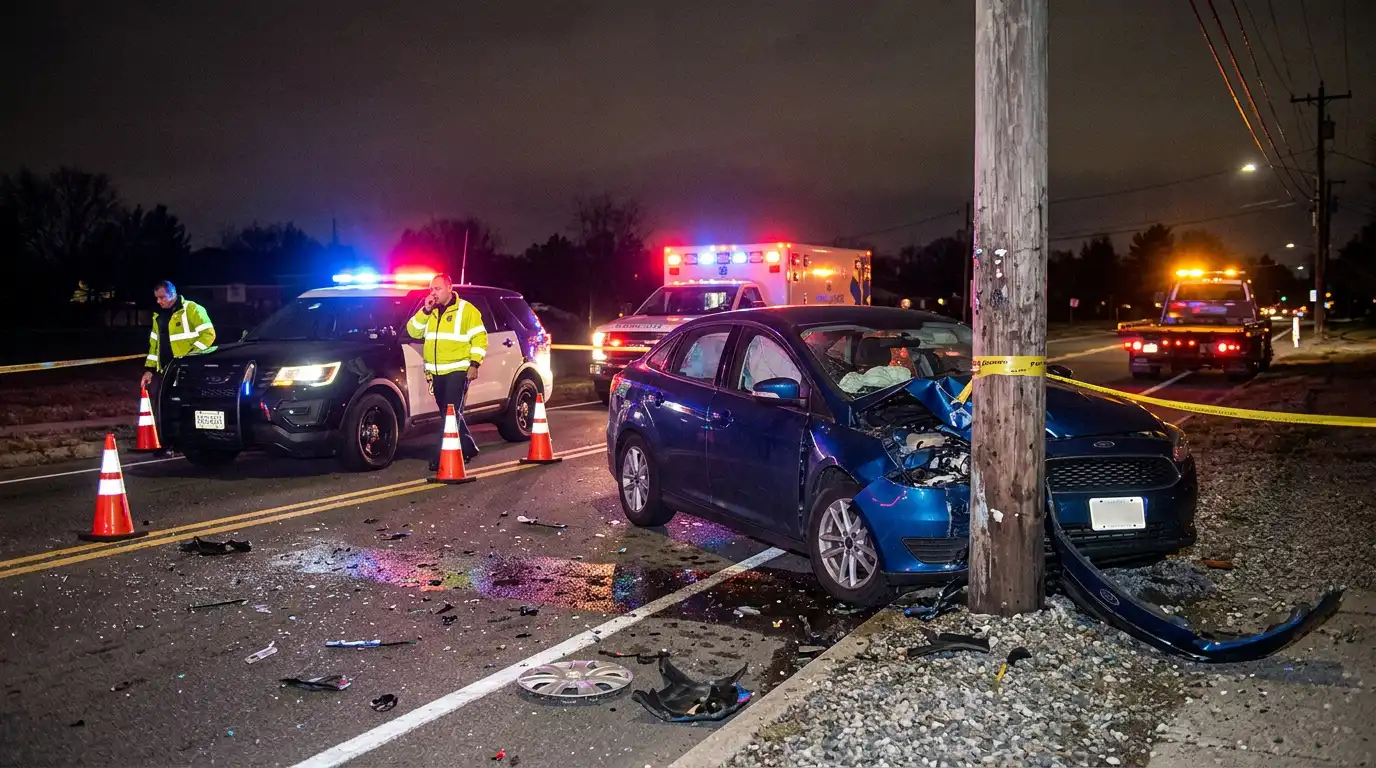
Punitive damages and how the cap really works
Both North Carolina and South Carolina recognize punitive damages for drunk-driving conduct, and the mechanics are favorable to injured plaintiffs.
North Carolina. The general punitive cap (N.C.G.S. § 1D-25) limits punitive damages to three times compensatory damages or $250,000, whichever is greater. But the statute specifically carves out cases where the defendant was impaired by alcohol or controlled substances — in those cases, the cap does not apply at all. That’s a meaningful exception. A DUI case can produce punitive damages that aren’t numerically limited by the standard cap.
South Carolina. SC also permits punitive damages for reckless conduct, with its own statutory framework. The cap (S.C. Code § 15-32-530) is generally three times compensatory damages or $500,000, whichever is greater, with carve-outs for impaired-driver cases and specific aggravating factors.
What this means in negotiation. Adjusters know punitive damages are on the table and they typically know their insureds have limited coverage for them. Many policies don’t cover punitive damages at all (against public policy in some states; allowed in others), which creates pressure on the at-fault driver personally. That pressure often gets the at-fault driver’s liability policy fully tendered quickly, which then opens up the UIM and dram-shop angles.
UM/UIM stacking — how multiple policies combine
Most DUI defendants are underinsured. NC’s minimum auto liability is $30,000 per person / $60,000 per accident — on a serious case, the policy exhausts in an afternoon. The recovery beyond that comes from the injured person’s own coverage and from household-resident policies.
UM (uninsured motorist). Applies when the at-fault driver has no insurance, in a hit-and-run, or in some other coverage-gap situation. Triggered automatically when liability coverage isn’t available.
UIM (underinsured motorist). Applies when the at-fault driver has insurance but not enough. The injured person’s UIM responds for the gap between the at-fault policy limit and the injured person’s damages.
Stacking on multiple policies. NC permits inter-policy stacking under specific conditions: a household with two cars on two separate policies (or with the same policy covering multiple vehicles) often allows stacking the UM/UIM coverage from each. Whether stacking applies depends on the exact policy language, when the policies were issued, and which version of the statute applies. SC has its own stacking framework.
Household-resident coverage. A child living with parents, or a spouse on a separate policy, can often access the other’s UM/UIM coverage. The legal definition of “resident” matters here and is fact-intensive.
Umbrella coverage. Many families carry umbrella coverage that extends UM/UIM benefits beyond the underlying policy limit, sometimes by $1M-$5M. Often forgotten until prompted.
The investigation work in a DUI case is half medical, half policy-analysis. Every coverage source has to be identified, the stacking analysis run, and releases drafted carefully to preserve recovery against every applicable policy.
Dram-shop and social-host liability in NC and SC
When a bar, restaurant, or social host serves alcohol to a visibly intoxicated patron or to a minor, and that patron then injures someone in a wreck, the law in both states sometimes permits a claim against the server.
North Carolina. NC’s dram-shop law is narrower than in some states. The clearest path is N.C.G.S. § 18B-305, which prohibits serving an underage person; civil liability flows from that statutory violation. The path against a server who furnished alcohol to a visibly intoxicated adult is harder under NC common law — available, but narrower and fact-intensive (the line of cases starts with Hutchens v. Hankins). The factual basis usually has to be strong: server logs showing the patron’s tab built rapidly, witness testimony to obvious intoxication, surveillance video of the patron’s state when last served.
South Carolina. SC’s dram-shop framework has historically been more plaintiff-friendly, with civil liability for serving visibly intoxicated patrons (Christiansen v. Campbell) and minors. The proof requirements are still substantial but the legal door is wider open.
Social-host liability. Both states recognize some social-host liability, particularly when minors are served, but the doctrine is narrower than commercial dram-shop. A homeowner who provides alcohol at a party where a guest then injures someone in a wreck may have civil exposure, depending on the facts.
When it matters practically. Dram-shop adds another coverage source (usually the bar’s general-liability policy), which can be significant when the at-fault driver’s policy is exhausted. It also adds a defendant whose interests don’t align with the at-fault driver, which sometimes accelerates settlement. Always evaluated; not always pursued.
Preserving evidence while the criminal case is still active
DUI cases come with an unusual evidence dynamic: the criminal investigators are actively gathering evidence in the days and weeks after the wreck. That evidence will eventually be useful in the civil case, but the criminal case’s timeline doesn’t accommodate the civil investigation, and some evidence has to be preserved independently.
Toxicology and blood-alcohol results. Available through the District Attorney’s office once the criminal case has progressed, but sometimes delayed. We file public-records requests and (if necessary) civil-discovery subpoenas to obtain them. The actual BAC matters — a 0.08 versus a 0.18 case is meaningfully different in terms of punitive-damages exposure.
Dashcam and bodycam footage. Most NC and SC law enforcement agencies record traffic stops. The footage often shows the driver’s state — field-sobriety performance, slurred speech, the driver’s own statements. Public-records requests obtain this; some agencies require court orders.
Bar receipts and surveillance. When a dram-shop theory is in play, the bar’s POS records (showing tab progression) and any surveillance video need preservation letters within days — bars frequently overwrite surveillance within 30-90 days.
The vehicle. The at-fault vehicle’s event-data recorder (EDR) and infotainment system sometimes capture speed, braking, and even phone-pairing data. Preserved through coordination with the at-fault carrier and (sometimes) with criminal investigators.
The defendant’s phone. When phone use is suspected (texting plus drinking), records can be subpoenaed. Mobile carriers typically retain detailed records for 12-18 months; preservation letters can extend that.
When DUI cases become wrongful-death cases
Far too many drunk-driving cases involve a death. The civil framework shifts to the wrongful-death statute: NC’s 2-year deadline replaces the 3-year PI clock, the personal representative of the estate becomes the proper plaintiff, and the damages categories follow the wrongful-death statute’s framework.
Punitive damages remain critical in DUI wrongful-death cases — the cap exemption applies and the conduct generally supports them. See the wrongful-death page for the full procedural framework.
What changes practically: the family’s emotional bandwidth is at its lowest, the criminal case is typically a felony prosecution that gets significant attention, and the carriers often offer policy limits quickly to make the case go away. Quick offers on DUI wrongful-death cases are sometimes appropriate; they’re often not. The full damages picture — especially the present monetary value of the decedent’s life under the wrongful-death statute — takes work to develop properly.
What families should do in the first weeks
- Get medical care and document it thoroughly. Even injuries that seem minor at the scene often manifest 24-72 hours later.
- Don’t talk to the at-fault driver’s carrier. Their early calls aim to settle the case quickly for policy limits or below.
- Pull your own auto-policy declarations page. Find your UM and UIM limits. Same for household relatives.
- File a public-records request for the police report, toxicology, and dashcam footage. Or have counsel do it. Some materials are released as the criminal case progresses; others require subpoenas.
- Preserve the at-fault vehicle if you can. EDR data and infotainment logs are vulnerable to the vehicle being repaired or scrapped.
- Identify where the alcohol was served. If dram-shop liability may be in play, preservation letters need to go out within days to preserve bar records and surveillance.
- Don’t settle quickly on the at-fault driver’s policy. UM/UIM stacking and dram-shop options have to be developed before you release the at-fault driver.
- Coordinate with the criminal prosecutor’s office. Restitution proceedings are part of the criminal case and can run in parallel with civil claims.
Why DUI defense files look different from inside
On the defense side, DUI civil cases were unusual: the underlying conduct was usually indefensible, so the strategy moved straight to minimizing damages rather than fighting liability. Adjusters were trained to be sympathetic on the phone, to express concern, to offer policy limits early on smaller cases — and to dig in hard on larger cases, fighting the medical causation and damages calculations rather than the liability question they couldn’t win.
The early policy-limits tender. The bigger threat in serious DUI cases is usually the at-fault driver’s policy limit. Many DUI defendants carry NC minimums — $30,000 per person. A catastrophic injury exhausts that in an afternoon, leaving the family looking at uncovered losses. Carriers offer policy limits quickly to close their exposure. Whether to accept is the wrong question; the right question is whether the release language preserves UM/UIM and dram-shop claims against everyone else.
The release-trap. The release accompanying a policy-limits payment often contains broad language that, read loosely, could be argued to release UM/UIM and dram-shop claims. Defense counsel draft releases broadly on purpose. The release has to be narrowed before signing.
UIM coordination tactics. The injured person’s own UIM carrier has its own interests — minimizing what it pays. When the at-fault carrier offers policy limits, UIM carriers sometimes refuse to consent to the settlement (in some policy configurations) unless the UIM carrier waives its subrogation rights. Coordinating between multiple carriers in DUI cases is its own legal exercise.
Causation-attribution defense. In cases where the injured person was also impaired or had pre-existing conditions, defense argues those factors caused or contributed to the injury. Whether the BAC at the scene actually caused the wreck is sometimes contested with reconstruction experts.
Dram-shop minimization. When a dram-shop claim is filed, the bar’s insurer attacks the “visibly intoxicated” element relentlessly. They depose servers (who often don’t remember the patron), they argue tab pace doesn’t prove intoxication, they argue the patron consumed alcohol elsewhere. The factual record has to be airtight to survive these defenses.
Knowing the playbook, the move is to investigate every other source of recovery before signing any release: UIM on the victim’s policy, household-resident policies, employer coverage if the driver was on-duty, dram-shop liability where the facts support it. A release of the driver doesn’t automatically release every other source, but it has to be drafted carefully to preserve them.
Damages you can pursue
Medical care — past and future
Including catastrophic-injury rehabilitation, surgery, hardware, long-term pain management.
Lost wages
Through recovery and beyond, where permanent impairment affects future earnings.
Lost earning capacity
The difference between pre- and post-injury earning ability when impairment is permanent.
Pain & suffering
Compensable on the full statutory categories.
Punitive damages
Available for drunk-driving conduct in NC and SC. NC cap exempts impaired drivers from the standard 3x/$250K limit.
Wrongful-death damages
When the victim does not survive; separate statutory categories under NC and SC wrongful-death law.
Loss of consortium
Available to a spouse when the marital relationship is affected.
Disfigurement & permanent impairment
Separate compensable categories beyond medical bills.
Restitution from the criminal case
Smaller than civil damages but worth pursuing in parallel with the criminal proceeding.
Common mistakes that hurt your claim
- Settling on the at-fault policy without checking UIM. UIM almost always exists; people rarely know their own limits. Releasing the driver without preserving UIM can cost the additional recovery.
- Signing a broad release with the at-fault carrier. Release language sometimes covers more than the at-fault driver. Read first; consult before signing.
- Letting the criminal case eclipse the civil case. The civil case has its own timeline. Waiting on the criminal case can cost you evidence.
- Talking to the at-fault driver’s insurer. The conversation isn’t neutral; it’s a damages-shrinking interview.
- Assuming a dram-shop claim is impossible. Narrower than other states, but viable on the right facts. Worth evaluating, not assuming away.
- Settling before maximum medical improvement. Serious DUI injuries evolve over months. Don’t price the case before the medical picture is clear.
- Missing the punitive-damages cap exemption argument. NC’s punitive cap doesn’t apply when the at-fault driver was impaired. Defense will argue around this; the exception is plain in the statute.
- Letting bar surveillance overwrite. 30-90 day retention windows are common. If dram-shop may apply, preservation letters go out immediately.
- Not stacking household-relative UM/UIM. A spouse or child living in the household can often access another resident’s UM/UIM coverage. Frequently missed.
- Ignoring umbrella coverage. Higher-net-worth families often have umbrella policies that extend UM/UIM beyond the underlying limit. Worth asking about.
Frequently asked questions
Should I wait for the criminal case to finish before I file?
Usually no. Evidence ages and statutes run. The civil case can — and usually should — proceed in parallel with the criminal case.
Can I recover punitive damages?
Likely yes, where the at-fault driver was impaired. Both NC and SC allow punitive damages for that conduct, and NC’s statutory cap doesn’t apply to drunk-driving cases. SC’s framework similarly favors punitive recovery.
What if the drunk driver had only minimum insurance?
We pursue the policy and look hard at UM/UIM on your own coverage, on household relatives’ coverage, and at any dram-shop angle. Recoveries on DUI cases are commonly built from multiple policy sources stacked together.
Does it matter if the driver hadn’t been drinking but was on drugs?
No. Impairment is impairment. The legal framework treats alcohol and drug impairment similarly for punitive-damages and dram-shop purposes (though dram-shop usually involves a commercial server who sold alcohol).
Can I sue the bar that served them?
In limited cases, yes. Dram-shop liability in NC is narrower than in some states and turns on specific facts (e.g., serving a visibly intoxicated patron or serving a minor). SC’s framework is somewhat broader. It’s worth evaluating; it isn’t automatic.
What if my loved one was killed?
A wrongful-death claim is brought by the personal representative of the estate. North Carolina’s two-year deadline is shorter than ordinary PI. See the wrongful-death page.
What if I had been drinking too?
Doesn’t bar the claim under SC’s comparative-negligence framework if you were 50% or less at fault. In NC, partial fault is a harder issue under contributory negligence — but the analysis is fact-specific. If the drunk driver caused the wreck, your having had a drink doesn’t automatically make you contributorily negligent.
What does ‘visibly intoxicated’ mean for dram-shop?
It’s a fact question with a developed body of case law. Slurred speech, unsteady gait, visible impairment of motor function, server-observable signs of intoxication. Surveillance footage and server statements are the usual evidence. The standard is observability — what a reasonable server would have seen.
What if the driver took medication that made them impaired?
Prescription-drug-impaired driving is treated similarly to alcohol-impaired driving for civil-liability purposes. The driver who took medication knowing it would impair their driving may face punitive exposure. The dram-shop analogy doesn’t directly transfer (no commercial server), but pharmacy or prescribing-physician liability sometimes arises in egregious cases.
Can the at-fault driver’s insurer settle without my permission?
Not really — you have to sign the release. The carrier can offer; you decide whether to accept. The question of whether a UIM carrier’s consent is required for the underlying settlement depends on the specific UIM policy language.
What about hit-and-run?
If the drunk driver fled the scene, UM coverage on your own policy can apply. Prompt police reporting (typically within 24 hours), credible identification of the wreck as a hit-and-run, and physical evidence at the scene all matter.
Are punitive damages taxed?
Yes — punitive damages are generally taxable as income at the federal level, unlike compensatory damages for physical injury. We coordinate with the family’s tax advisor on structuring.
What if criminal restitution is awarded?
Restitution is part of the criminal sentence and is typically a fraction of civil damages. It doesn’t bar the civil claim; the civil case proceeds independently. Restitution payments received can sometimes affect civil-damages calculations, but rarely materially.
How long does a DUI case take?
Cases with clear liability and adequate coverage often settle in 6–12 months once medical care has plateaued. Cases requiring UIM stacking, dram-shop development, or trial preparation routinely run 12–24 months.
What does it cost to hire your office?
Nothing up front. Personal-injury representation is on contingency — the fee comes out of a recovery, not your pocket, and there is no fee at all if we don’t recover.
Tell me what happened.
A free, confidential consultation. No fee unless we win.
Request a consultation 704-741-9399This page is general information about Carolina personal-injury practice and is not legal advice. Every case turns on its facts. Reading this page does not create an attorney–client relationship.