
Dog bite attorney — when someone else’s animal changed your life.
A dog bite is rarely just a wound. It is reconstructive surgery, scarring that lasts a lifetime, nerve damage that lingers, and — especially in children — the kind of fear that doesn’t go away. The owner’s homeowner’s insurer is on the case within days, and the law in this area works very differently on each side of the NC-SC line. This page lays out what a Carolina dog-bite claim actually involves, where the money comes from, the recurring defense tactics, and the legal mechanics that make these cases worth taking seriously.
No fee unless we win · Personally handled by the attorney · Licensed in NC & SC
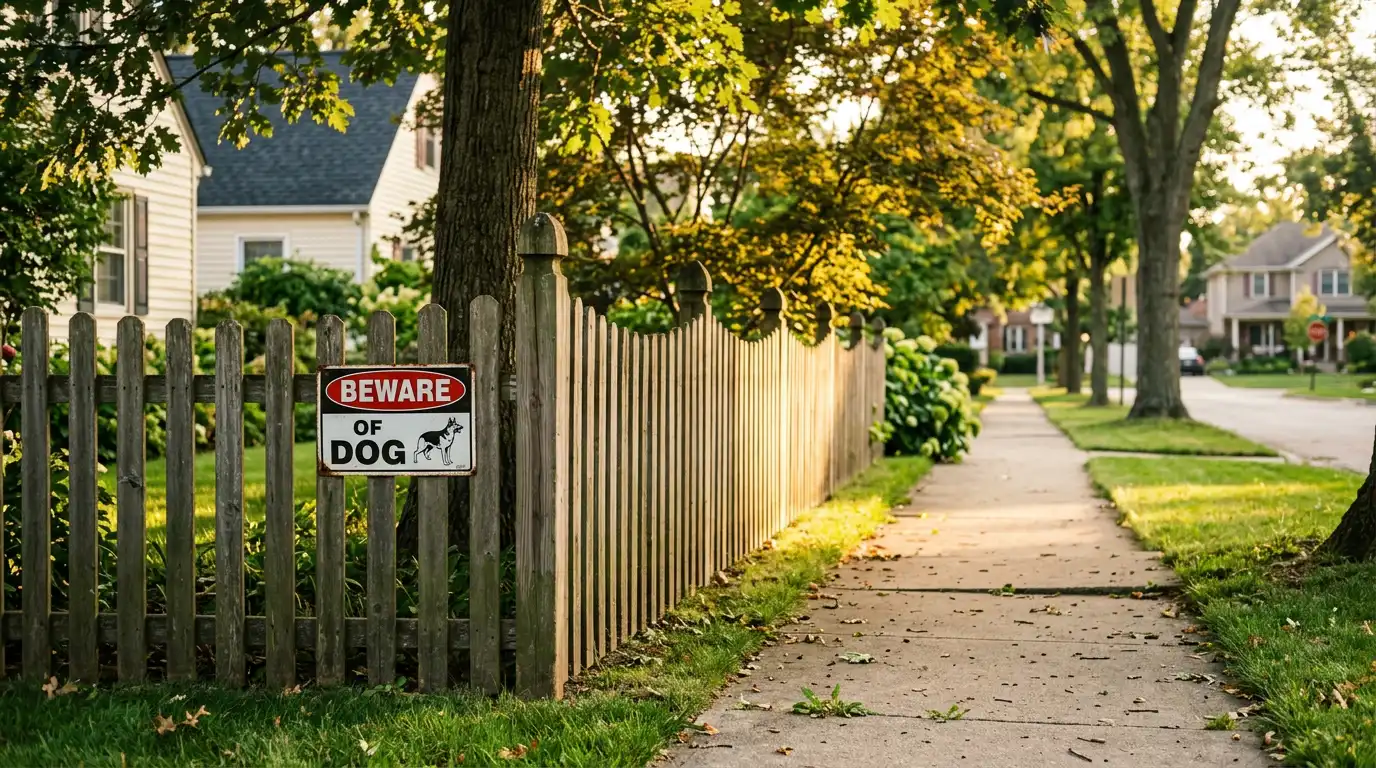

What a Carolina dog-bite claim actually looks like
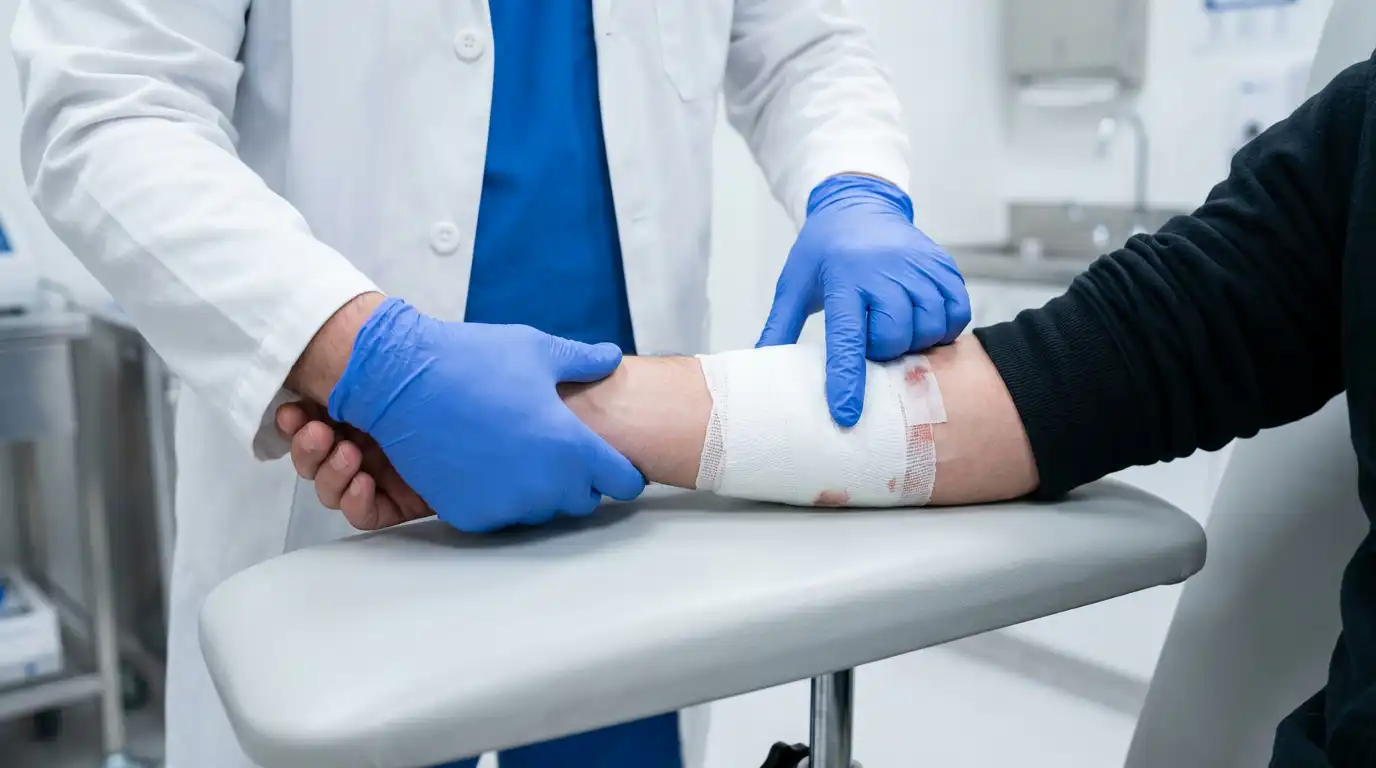
Most dog-bite cases turn on three things: how the bite happened, what the dog’s history was, and the medical and emotional toll on the person bitten. The first question is whether liability is clear — was the victim somewhere they had a right to be, was the dog under control, was there any prior history? The second is the injury itself: torn skin, deep puncture wounds, broken bones in children, surgical repair, scarring that will need revision procedures for years. The third is the way the bite has changed daily life — sleep, anxiety, fear of dogs, the parent’s guilt that follows when a child is bitten in their care.
Almost every dog-bite case is paid by a homeowner’s or renter’s insurance policy — the dog owner’s, the host’s, or sometimes a landlord’s. That has two consequences: there is usually meaningful coverage to pursue, and there is also a professional adjuster on the other side whose job is to minimize what comes out of the policy. The friendliness of that adjuster on the first phone call is part of the claims-handling system, not a personal favor.
These cases rarely end at the bite itself. Wound repair is week one; the legal picture often plays out over months or years as the scarring matures, plastic-surgery consults happen, and (for children) a long arc of revision procedures unfolds. Settling too early leaves money on the table that the family will need later.
Why NC and SC law diverge sharply here
South Carolina imposes strict liability on dog owners by statute. Under S.C. Code § 47-3-110, if you are bitten or attacked while lawfully in a public place or lawfully on private property (including the owner’s) and you did not provoke the dog, the owner is liable — whether or not the dog had ever shown aggression before. That is favorable law for an injured person and changes the negotiation considerably. Provocation and trespass are the two main defenses, both narrowly construed.
North Carolina is more complicated. The traditional rule requires showing the owner knew, or had reason to know, that the dog had a dangerous propensity — the “one-bite” doctrine. But North Carolina layers statutory liability on top of that. Under N.C.G.S. Chapter 67, owners of dogs formally classified as “dangerous” or “potentially dangerous” can be held strictly liable. Violations of leash laws or running-at-large statutes (state and local) can support negligence-per-se theories. Owner negligence — failing to control, secure, or warn about the dog — is the most common path. And there is a separate strict-liability statute under N.C.G.S. § 67-4.4 for fatal attacks or attacks causing severe injury by dogs over six months old at large at night.
What that means practically: the first-time-bite assumption (that a dog with no prior history isn’t actionable) is often wrong. Many NC cases that look closed under the one-bite doctrine turn out to be viable under one of the statutory or leash-law theories. Don’t accept “he’s never bitten before” as the end of the conversation.
Both states give an adult three years to file, and for minors the clock typically does not start running until they turn 18 — an important rule for child bite victims whose long-term scar-revision care plays out over many years.
The first 30 days — preserving the case
What happens in the month after a bite shapes the entire claim. The case-building work that matters most:
Animal Control report. File one. Even when the dog’s owner is cooperative or apologetic, the official report locks in the date, the dog’s history, the quarantine record, and (in many counties) any prior complaints on file for that address. Without it, the prior-bite history depends on the owner’s memory.
Medical documentation from day one. Emergency-room records, photographs of the wounds before they are stitched, follow-up records from the primary-care provider, and (when warranted) a plastic-surgery consult. Photographs of fresh wounds are unrecoverable later; if no one took them, that evidence is gone.
Identification of every witness. Neighbors, mail carriers, delivery drivers, joggers on the street, the parents of children present. Phone numbers, not just names.
Doorbell-camera and surveillance footage. Many residential bites are captured on Ring, Nest, or neighborhood doorbell cameras. Footage often overwrites in 30–60 days. Preservation requests have to go out within weeks.
Documentation of the dog’s history. Prior bites, prior complaints, prior “dangerous dog” classifications. Local Animal Control will have these on request; HOA records sometimes also.
None of this can be reconstructed after the fact. The carrier knows that, which is why their adjuster calls early.
Children and dog bites — why these cases need extra care
Children are bitten far more often than adults, and the bites are typically more severe by body proportion: a bite to a child’s face or head is medically and legally a different case than the same bite to an adult’s forearm. Children’s cases have their own legal characteristics.
Tolling. The statute of limitations does not begin to run until the child turns 18. That means a child bitten at six has until age 21 to file. Cases sometimes appropriately wait until the medical picture is more developed.
Scarring & revision surgery. A child’s body grows; scar tissue does not grow proportionally. Scars that look manageable at age six often need revision at age twelve, fifteen, and eighteen. A settlement that doesn’t account for staged future revisions has shortchanged the child.
Psychological injury. Pediatric PTSD after a dog bite is well-documented and treatable. Children who were bitten often develop lasting fear of dogs, sleep disruption, and avoidance behaviors that affect their development. Treatment with a child psychologist is compensable.
Court oversight of minors’ settlements. Any settlement involving a minor in North Carolina has to be approved by a court, and the funds are typically held in a structured account or guardianship until the child reaches majority. This isn’t optional; it’s how minors’ recoveries are protected. We coordinate this step carefully on every children’s case.
Where the money comes from — coverage realities
Almost every dog-bite recovery comes from an insurance policy, not the dog owner’s personal assets. Identifying every applicable policy is core case work.
Homeowner’s insurance. The primary source in the majority of cases. Most policies cover dog-related liability up to the policy limit (usually $100,000 to $500,000), though there are real exceptions:
Breed exclusions. Many carriers exclude specific breeds (often pit bulls, rottweilers, dobermans, certain German shepherd lines, wolf hybrids) entirely. Read the policy carefully — an exclusion can mean the claim isn’t covered at all, in which case the recovery has to come from the owner’s assets or alternative theories.
Renter’s insurance. Many tenants carry it; it typically covers dog liability the same way homeowner’s does. Worth asking about even if the bite happened in a rented house or apartment.
Landlord liability. A landlord who knew about a dangerous dog on the property — especially after written complaints — can sometimes be held responsible. Tenant complaints on file, prior animal-control visits, and HOA records can support this.
Umbrella policies. Affluent homeowners often carry umbrella coverage on top of homeowner’s, sometimes $1M+. Worth asking about on serious-injury cases.
Common dog-bite injuries and the medical record
Dog bites cause a predictable range of injuries. Each has its own medical and legal profile.
Puncture wounds. Deceptively serious. The visible wound is small; the underlying damage to tissue, tendons, and the risk of deep infection can be substantial. Every puncture wound to a hand should be evaluated for tendon involvement.
Tearing injuries (avulsion). Larger tears that often require surgical repair and have a high probability of permanent scarring.
Crush injuries. Larger breeds can cause crush injuries to a child’s skull or an adult’s hand. Often require imaging and surgical evaluation.
Nerve damage. Bites to the hand and forearm frequently sever or damage nerves. Recovery is incomplete; surgical repair is sometimes possible.
Infection. Dog bites carry a high infection rate — tetanus follow-up, sometimes rabies series (when the dog can’t be observed for 10 days), and antibiotic courses are standard.
Scarring. Permanent visible scarring is a compensable category in its own right. Plastic-surgery consults, revision-surgery estimates, and scar-management treatment are all part of the medical record on a serious case.
What to do after a dog bite — a checklist
- Get medical care immediately, even if the wound looks minor. Puncture wounds in particular are deceptively serious and need professional irrigation.
- File an Animal Control report. Do this even if the owner asks you not to. The official record is essential evidence.
- Photograph the wounds before suturing if possible. Fresh wound photos are unrecoverable.
- Identify and get contact info for every witness. Bystanders disappear quickly.
- Preserve doorbell-camera and surveillance footage. Ring/Nest video usually overwrites within 30–60 days. Ask immediately.
- Document the dog and the location. Photographs of the dog, the property, the gate, the leash situation if any.
- Don’t give the homeowner’s adjuster a recorded statement before talking to a lawyer.
- Follow through on every medical appointment. Gaps in care become Exhibit A for the carrier.
What the homeowner’s carrier is doing while you’re still bandaged
Homeowner’s carriers move fast on dog cases. From the defense side, I watched the same sequence repeat: an adjuster called the bite victim within forty-eight hours, sympathetic and conversational, and started asking framing questions designed to put the bite on the victim. Was your hand near the dog’s food? Were you reaching toward the dog’s face? Had the dog seemed agitated when you arrived? The answers became the “provocation” argument later.
The provocation interview. Provocation under both NC and SC law is narrower than the carrier wants you to believe. Walking past the dog, reaching to pet a friendly-looking animal, making eye contact, or being a child playing near the owner is not provocation under any case law I’ve seen. But adjusters are trained to phrase questions so that a sympathetic-sounding answer (“Yes, I did reach toward him”) becomes the foundation of a denial.
Animal-control records mining. The carrier pulls the dog’s formal history within days. If there are no prior incidents, the argument becomes “one-off, no propensity, no liability under the one-bite rule.” If there are prior incidents, the argument shifts to whether the owner had been ‘adequately warned’ under the relevant local ordinance. The strategy adapts to the file; the goal does not.
Breed-exclusion gambit. When the dog is a breed the policy excludes, the carrier denies coverage entirely — sometimes correctly, sometimes wrongly. The exclusion has to be specifically applicable, and the dog has to actually be the excluded breed (which is sometimes a fact dispute). Insurers occasionally read exclusions broadly to deny meritorious claims.
Prior-bite witness scrubbing. Defense investigators contact neighbors and prior victims who might have called Animal Control. Sometimes they show up before counsel is involved, recording statements that minimize earlier incidents. We get to those witnesses first when we can.
Settlement before the scarring matures. A child’s scar at three months looks different than at three years. Carriers know this and offer early settlements designed to close the case before the long-term picture is clear. A settlement based on the early-stage wound understates revision-surgery costs that will land on the family in five or ten years.
Knowing the playbook changes what we do on intake. The provocation conversation isn’t had on the adjuster’s timeline; it’s had with counsel present, after we’ve seen the animal-control history, the breed restrictions in the owner’s policy, and the photographs of the scene.
Damages you can pursue
Emergency & reconstructive care
ER, wound irrigation, surgical repair, tetanus and rabies follow-up, plastic-surgery consults, hardware and procedures.
Scar revision (current and future)
Often staged over years — especially for children. Plastic surgeons estimate the lifetime cost; that estimate is part of the claim.
Permanent scarring & disfigurement
A compensable category in its own right, separate from medical costs. Juries take visible scarring seriously.
Psychological injury
PTSD, anxiety, sleep disturbance, fear of dogs, developmental setbacks in children. Treatment is compensable.
Lost wages and earning capacity
Time out of work for surgery and recovery; permanent loss if hand function is impaired.
Loss of services (children)
Available to parents for the loss of an injured child’s services during recovery.
Loss of consortium (spouse)
When the marital relationship is materially affected by the injury.
Punitive damages (rare)
Available for genuinely egregious conduct — a known-dangerous dog kept loose despite warnings, or willful violation of a dangerous-dog order.
Common mistakes that hurt your claim
- Talking to the homeowner’s adjuster alone. The friendly conversation is also the provocation interview.
- Skipping the Animal Control report. It preserves witnesses, the dog’s history, and quarantine info. Without it, every fact becomes contested.
- Letting doorbell-camera or Ring video age out. Most footage overwrites within 30-60 days. Preservation requests have to go out immediately.
- Posting photos or context on social media. Anything inconsistent with the version of events becomes ammunition.
- Settling before scar revisions are estimated. A child’s scarring may need procedures for a decade. Settle before that’s priced in and the money is gone.
- Assuming there’s no claim because the owner is a friend or family member. The check almost always comes from the homeowner’s policy, not the owner’s pocket.
- Signing a broad medical authorization. Some authorizations grant access to your entire lifetime medical history. Read first; consult before signing.
- Missing the rabies follow-up. If the dog can’t be observed for 10 days, rabies prophylaxis is medically and legally important. Don’t skip it.
- Not photographing the fresh wounds. Pre-suture photos are unrecoverable. If the ER didn’t, ask a family member to.
- Letting an “owner is uninsured” statement end the inquiry. Renter’s policies, landlord liability, and umbrella coverage are all worth investigating.
Frequently asked questions
The owner is a friend — do I really want to sue them?
Personal-injury claims against a homeowner almost always resolve through their homeowner’s insurance policy. The owner’s out-of-pocket exposure is typically nothing — that’s what they pay premiums for. Most of these cases settle without litigation; the friendship doesn’t have to be the casualty.
The dog had never bitten anyone before. Do I still have a case?
In South Carolina, prior bite history is not required — the statute imposes strict liability. In North Carolina, prior bites are one path, but not the only one: leash-law violations, running-at-large statutes, and ordinary negligence (failure to control or restrain) are all viable theories. The first-bite assumption is often wrong.
My child was bitten. Is the time limit the same?
For minors, the three-year clock does not start until the child turns 18. That matters for cases involving long-term scar revision, where the full medical picture won’t be known for years. A child bitten at six has until age 21 to file.
What if I was at the owner’s house when it happened?
Being a guest doesn’t bar recovery. Both NC and SC law allow lawful guests to bring claims; provocation and trespass are the main defenses and they have specific narrow definitions.
What if I provoked the dog?
Provocation is a defense, but the legal definition is narrower than the insurance adjuster’s definition. Walking past the dog, reaching to pet a friendly-seeming animal, or making eye contact is not provocation in any state’s case law I’ve worked with.
Will Animal Control’s findings decide my case?
No. Animal Control is administrative; civil liability is separate. Their report is evidence, but it doesn’t bind the civil case.
What if the dog was a pit bull or another excluded breed?
Many homeowner’s policies exclude specific breeds. If yours did, the coverage may not respond — but it’s worth reading the policy carefully, because exclusions are sometimes drafted narrowly or applied incorrectly. Landlord liability, renter’s policies, and the owner’s personal assets can also be in play.
Will the dog be put down because of my claim?
Civil claims don’t cause euthanasia. That decision is administrative (Animal Control) and depends on the dog’s history, the severity of the bite, and the local ordinance. A claim against the owner’s insurer doesn’t change Animal Control’s evaluation.
My child has lasting nightmares but no major scarring. Is there still a claim?
Yes. Psychological injury is a compensable category, especially for children. Treatment with a child psychologist documents the harm; juries (and adjusters) recognize it as real.
The bite happened on rental property. Does the landlord have any liability?
Sometimes. If the landlord knew about a dangerous dog — especially after written complaints from neighbors or prior animal-control visits — they can be held responsible. The facts matter; not every landlord is liable, but the question is worth asking.
The owner says they have no insurance.
Worth verifying. Some claims are paid by renter’s policies, by household-member homeowner’s coverage, by umbrella policies, or by landlord coverage that the owner didn’t know covered them. We check every coverage source before accepting that there’s no policy.
What if it was a postal carrier, delivery driver, or contractor bitten in the course of work?
Workers’ comp typically applies and pays medical and partial wages, but third-party claims against the dog owner can be brought in parallel. The owner’s homeowner’s policy can still respond. The two cases are coordinated, and the comp lien is managed at settlement.
Will my child have to testify?
Most cases settle without the child testifying. If a case proceeds to trial, child testimony is handled carefully — sometimes by deposition rather than in open court, with the judge’s involvement. Nothing happens to the child without significant preparation and protection.
How long does a dog-bite case take?
Straightforward cases with clear liability and adequate coverage often settle in 6–12 months. Cases involving child victims with ongoing scar revision can take longer because we wait for the medical picture to mature. Cases that require litigation typically run 12–24 months.
What does it cost to hire your office?
Nothing up front. Personal-injury representation is on contingency — the fee comes out of a recovery, not your pocket, and there is no fee at all if we don’t recover.
Tell me what happened.
A free, confidential consultation. No fee unless we win.
Request a consultation 704-741-9399This page is general information about Carolina personal-injury practice and is not legal advice. Every case turns on its facts. Reading this page does not create an attorney–client relationship.