
Charlotte drunk driving accident attorney — for Mecklenburg County victims and families.
Charlotte has the largest concentration of bars, restaurants, and late-night venues in the Carolinas — and the predictable drunk-driving fact patterns that follow. Uptown bar-district pickups, LoSo and SouthEnd weekend traffic, Independence Boulevard and Tryon corridor late-night crashes, and the I-77 / I-485 fatality pattern all generate civil cases that run alongside the criminal DUI proceedings. The civil case is its own thing — it doesn’t wait for the criminal case to finish, it uses different evidence rules, and it has its own recovery framework including punitive damages that injury cases ordinarily don’t reach. I handle Charlotte DUI civil cases personally.
No fee unless we win · Personally handled by the attorney · Licensed in NC & SC
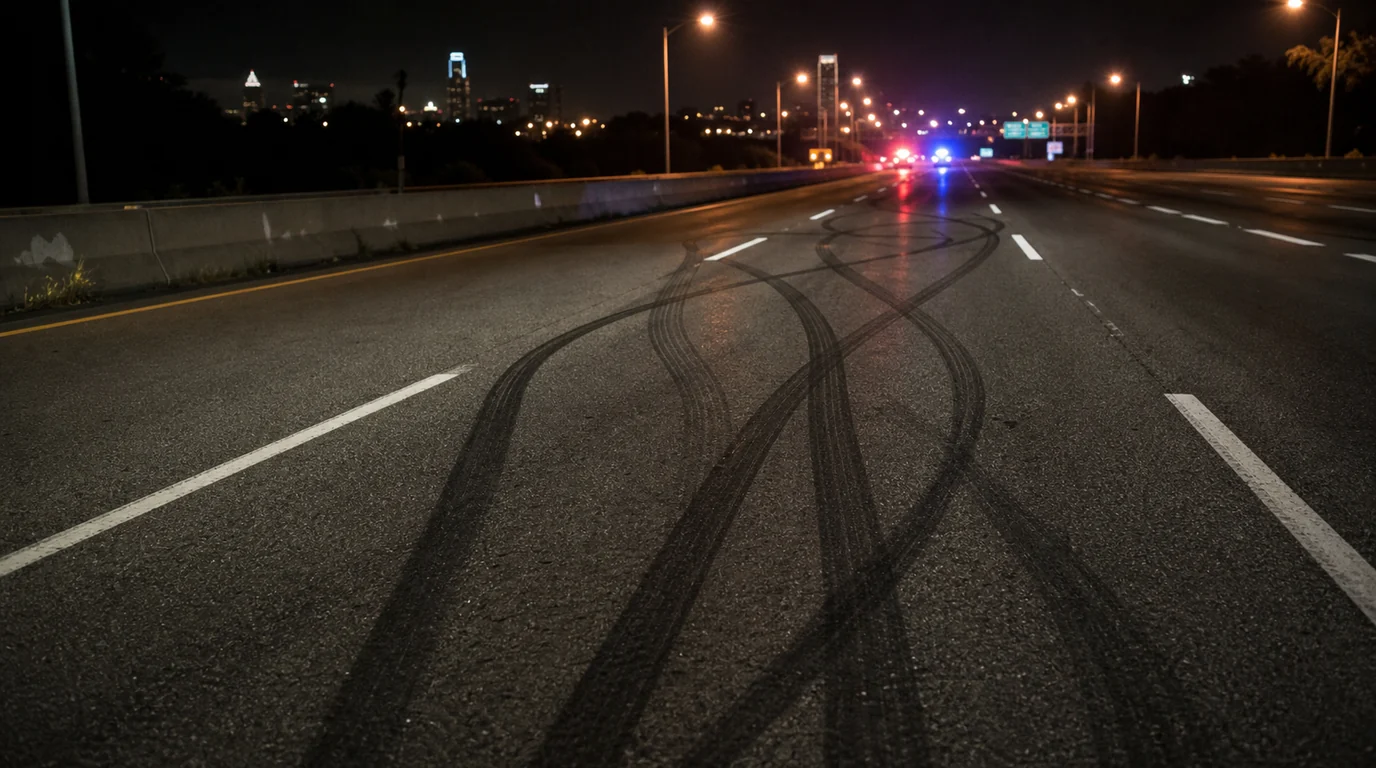

Where Charlotte drunk-driving crashes happen
Charlotte’s drunk-driving caseload clusters by venue type and time of night. Uptown after midnight — the bar district around Trade and Tryon, the entertainment area near the Spectrum Center, and the rideshare-handoff zones — produces a steady stream of pedestrian-struck and vehicle-collision cases tied to impaired drivers leaving the venue. The hit-and-run rate on these crashes runs notably higher than the city baseline, which makes UM coverage the threshold recovery question on a meaningful share of intakes.
SouthEnd / LoSo / NoDa late-night traffic generates a separate pattern: impaired drivers on the surface streets between bar districts and residential neighborhoods, often involving collisions with sober drivers heading home from work or pedestrians crossing to or from the LYNX Blue Line. Cases here usually involve the impaired driver’s personal auto-liability policy plus UIM stacking on the victim’s household coverage when liability limits are inadequate.
Independence Boulevard, Albemarle Road, and the South Boulevard corridor remain Charlotte’s recurring impaired-driving fatality zones — long, fast arterials where impaired drivers’ speed and reaction-time deficits compound. NCDOT and CMPD data consistently identify these as Charlotte’s highest-fatality DUI corridors.
The I-77 / I-485 / I-85 interstate network through Mecklenburg County produces commercial-vehicle and rideshare DUI cases on top of personal-vehicle cases. Commercial-vehicle DUI cases bring federal motor-carrier regulations and zero-tolerance standards into the analysis — expanding the evidence universe materially.
Bank of America Stadium and surrounding event-night traffic generate a distinct and well-documented DUI pattern. Panthers and Charlotte FC home games, stadium concerts, and major events push tens of thousands of alcohol-using attendees into the streets between 10 PM and 2 AM, simultaneously drawing impaired drivers from the uptown parking decks, the event-night Lyft/Uber staging corridors, and the arterials radiating toward I-277, I-77, and South Boulevard. CMPD DUI-enforcement data consistently shows elevated arrest rates in the stadium corridor on event nights. Civil cases arising from event-night crashes in this zone sometimes implicate both the at-fault driver and, when the facts support it, the establishment or tailgate venue that over-served them — particularly where surveillance footage documents the service sequence.
The Carowinds Boulevard and the I-485 / I-77 interchange area in the southwest corner of Mecklenburg produces a recurring impaired-driving pattern tied to entertainment venues and the lake-access highway traffic flowing into Gaston and York counties late at night. Cases in this zone frequently cross county lines — the crash happens in Mecklenburg but the venue was in York County, SC, or the at-fault driver was domiciled in Gaston County — which adds a venue analysis on top of the coverage map.
Trauma care and the Mecklenburg County criminal/civil overlap
Severe Charlotte DUI crashes route to Atrium Health Carolinas Medical Center in Dilworth — the only Level I trauma center in the region. The trauma records are central to the civil case; the EMS records often capture the impaired driver’s clinical-impairment indicators that supplement law-enforcement BAC evidence; the toxicology and chain-of-custody records become decisive when the BAC is the central liability proof.
The civil case files in Mecklenburg County Superior Court and proceeds in parallel with the criminal DUI prosecution — the two are separate proceedings with separate evidentiary rules. A criminal DUI conviction is admissible in the civil case under NC’s rules (with appropriate foundation), and it materially strengthens the civil liability analysis. We coordinate timing between the two cases to capture the criminal evidence without waiting for the criminal case to fully conclude.
How North Carolina law shapes a Charlotte DUI civil case
NC’s civil-side framework for DUI cases combines several layers. Negligence per se applies based on the criminal DUI statute violation — the impaired driver’s violation of N.C.G.S. § 20-138.1 supports the civil-side negligence analysis without further proof of unreasonable conduct. Punitive damages are available under Chapter 1D on a higher proof standard but DUI fact patterns reach that standard regularly — willful or wanton conduct, conscious disregard for safety, the kind of behavior that punitives are designed to punish and deter.
NC’s punitive cap applies (three times compensatory damages or $250,000, whichever is greater), with exceptions including DUI cases under specific statutory configurations. The cap analysis matters at the settlement-positioning stage.
UM/UIM coverage is often the principal recovery vehicle. Impaired drivers disproportionately carry minimum coverage or are uninsured. NC’s UIM stacking rules sometimes allow stacking across household policies to expand the recovery materially. The early case work includes a full UM/UIM coverage map across the victim’s household policies and any applicable umbrella coverage.
NC has no general dram-shop statute, but liability against an over-serving establishment can sometimes be pursued under negligent service / common-law theories when the facts support it — particularly when the establishment served a visibly impaired person or a minor. These cases are fact-intensive and require careful early investigation of the establishment’s service records.
Insider perspective on Charlotte cases
The defense playbook in Charlotte DUI civil cases has three recurring moves. First, the early-settlement push tied to criminal-case timing: defense counsel sometimes offers policy limits before the criminal conviction lands, hoping the victim will accept the limits and close the file before the criminal record (and the related punitive-damages exposure) becomes admissible evidence. Second, the carrier’s strict containment of the punitive analysis: carriers consistently undervalue the punitive component of DUI cases on the theory that policy coverage for punitives is limited or excluded under most NC policies. The third-party valuation reality, however, doesn’t track the carrier’s preferred framing — juries award punitives in clear-fact DUI cases. Third, the UM/UIM coverage compression: the victim’s own UM carrier sometimes treats UM claims with the same adversarial posture as third-party liability claims, slow-walking medical authorizations and recorded statements. The response is to treat the UM carrier as a litigation defendant from the beginning, even when nominally they are the victim’s own insurer.
Charlotte — common questions
I was hit by a Charlotte drunk driver who has no insurance. What now?
Your uninsured-motorist coverage on your auto policy (or any household policy) is the principal recovery vehicle. NC’s UM stacking rules can expand recovery across household policies in some configurations. We open the UM claim immediately and treat the case as if the at-fault driver were fully insured — the same evidence work, the same damages analysis, the same settlement-positioning framework.
Does the criminal DUI case have to finish before I can sue?
No. The civil case is separate and proceeds on its own timeline. A criminal conviction is admissible in the civil case (with appropriate foundation), which materially strengthens the liability analysis — but the civil case can file, discovery can proceed, and resolution can happen before, during, or after the criminal case. We coordinate timing to capture the criminal evidence efficiently.
Can I sue the bar that over-served the impaired driver?
Sometimes. NC has no general dram-shop statute, but common-law negligent-service theories can apply when the establishment served a visibly impaired person or a minor. These cases require careful early investigation of the establishment’s service records, server statements, and surveillance video. The bar’s commercial liability insurance is usually the recovery source when a viable claim exists.
How does NC’s punitive-damages cap actually work in a Charlotte DUI case — and when does it not apply?
NC’s punitive cap is the greater of three times the compensatory damages award or $250,000. In practice, for a serious-injury DUI case with $300,000 in compensatory damages, the cap allows up to $900,000 in punitives. There are statutory exceptions: the cap does not apply when the compensatory award itself exceeds the cap calculation. More importantly for Charlotte DUI cases, the cap does not change the fact that juries can and do award punitives in clear-fact impaired-driving cases — the cap just defines the ceiling. Cases involving high BAC, a driver with prior DUI history, or a commercial-vehicle driver who violated federal zero-tolerance rules often produce the strongest punitive argument, and that argument meaningfully shifts the carrier’s evaluation of the case.
The impaired driver that hit me was a rideshare driver on duty in Charlotte. Does Uber or Lyft’s coverage apply?
Yes, if the driver was in period 2 or 3 (en-route to a pickup or actively carrying a passenger). Uber and Lyft maintain $1 million commercial liability policies when the app is active in those phases. An impaired rideshare driver injuring a third-party vehicle occupant or pedestrian in period 2 or 3 implicates that commercial coverage. The carrier will scrutinize the app status and timing precisely, so the first step is preserving the rideshare trip data and CMPD DUI arrest record before they can be managed or deleted.
For the full Carolina legal framework
This page covers the local context of drunk-driving injury and fatality cases in Charlotte and across Mecklenburg County. For the comprehensive Carolina drunk-driving civil framework — implied-consent law, the criminal-conviction overlay, punitive damages, UM/UIM stacking when the impaired driver was uninsured or underinsured, and the full 15 FAQs — Carolina Drunk Driving Accident Attorney.
Drunk-driving cases in nearby Carolina cities
Tell me what happened in Charlotte.
A free, confidential consultation. No fee unless we win.
Request a consultation 704-741-9399General information about Carolina personal-injury practice; not legal advice. Every case turns on its facts. Reading this page does not create an attorney–client relationship.