
Fort Mill dog bite attorney — where SC’s strict-liability statute changes the case entirely.
Fort Mill’s status as a high-growth, high-income South Carolina community means a relatively dense dog population in tightly-spaced neighborhoods, with insurance policies that tend to be more substantial than those in many comparable NC suburbs. More importantly: South Carolina’s dog-bite law works completely differently from North Carolina’s. Fort Mill bites are governed by SC’s strict-liability statute, which removes the "prior history" question that dominates NC cases. I represent Fort Mill bite victims personally, licensed in both states.
No fee unless we win · Personally handled by the attorney · Licensed in NC & SC
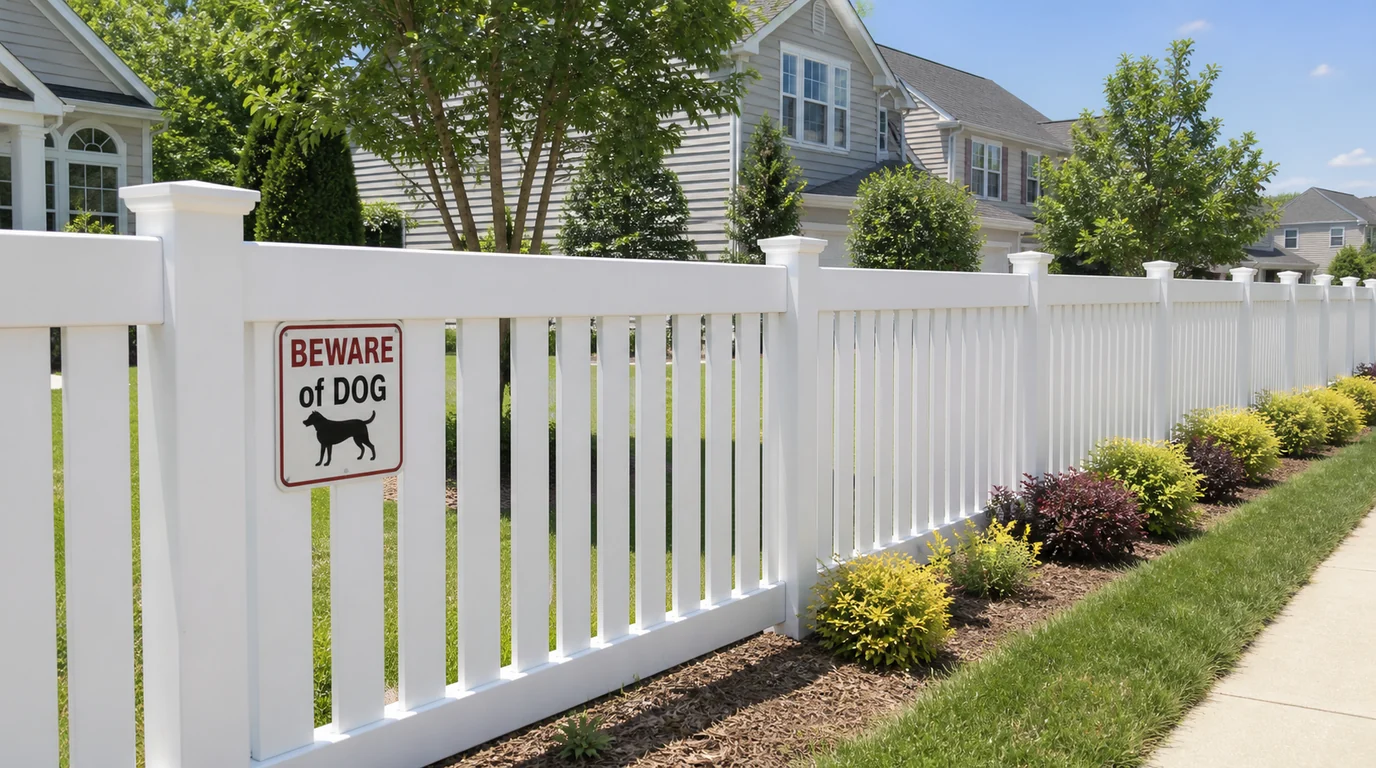

Where Fort Mill dog-bite cases happen
Fort Mill’s bite cases concentrate in its dense residential subdivisions — the Tega Cay, Baxter Village, Massey, and the corridor along Sutton Road and SC-160 (Gold Hill Road). Many of these neighborhoods feature tightly-spaced single-family homes with shared fences and gates between yards, conditions that recurringly produce neighbor-dog bites — particularly when children move between yards or when delivery and service workers enter the property.
York County Animal Control (SC) handles classification, quarantine, and complaint records for the area, including Fort Mill. SC’s ordinance framework differs from NC’s in detail; the county process is the relevant one.
Fort Mill’s commuter-community profile produces a recurring case category: cross-border families. NC-employed residents who live in Fort Mill bring complex questions when bites happen at home in SC: the bite is governed by SC’s strict-liability statute, but the family’s insurance — including health insurance, sometimes auto UM/UIM (for at-home dog bites in NC, separately), and umbrella coverage — spans both states. The legal analysis is state-specific; the coverage analysis is family-specific.
The Carowinds area produces a recurring summer-tourist case category: visiting families bring dogs that become aggressive in unfamiliar surroundings. Bites at vacation-rental properties involve their own coverage analysis (see the Concord page’s speedway-weekend short-term-rental discussion — the legal mechanics are similar with SC law substituting for NC’s).
Wound care and the York County court
Fort Mill bite victims who need emergency care typically go to Piedmont Medical Center in Rock Hill — the regional hospital that serves Fort Mill as the closest full-service hospital. Severe pediatric bites or complex reconstructive needs sometimes route across the state line to Levine Children’s Hospital in Charlotte — producing the cross-state medical-record pattern common in Fort Mill cases.
Civil cases file in York County Court of Common Pleas. SC’s civil procedure differs from NC’s in several ways — discovery rules, pleading requirements, the structure of punitive-damages analysis — that change how a Fort Mill case is built compared to a Mecklenburg one.
How South Carolina’s strict-liability statute shapes your case
South Carolina’s dog-bite law is fundamentally different from North Carolina’s. Under S.C. Code § 47-3-110, if you are bitten or attacked while lawfully in a public place or lawfully on private property (including the owner’s) and you did not provoke the dog, the owner is liable — whether or not the dog had ever shown aggression before. The one-bite question that dominates NC cases doesn’t apply.
Two defenses remain available: provocation and trespass. Both are narrowly construed under SC case law. Walking past the dog, reaching to pet a friendly-appearing animal, or making eye contact is not provocation. Being a child too young to be reasonably aware of the dog is not provocation. Being a lawful guest is not trespass.
The result is meaningfully more plaintiff-friendly than NC’s framework. Fort Mill cases routinely settle for higher values than comparable Charlotte cases with similar injuries — not because of jury composition but because the legal framework leaves the carrier less defensive ground.
SC’s statute of limitations on dog-bite claims is three years (S.C. Code § 15-3-530), matching NC’s. The tolling rule for minors operates similarly — the clock typically does not start until the child turns 18.
Insider perspective on Fort Mill cases
The strict-liability framework changes what the homeowner’s carrier does in a Fort Mill case. The provocation interview still happens — but its goal is different. In NC, the carrier needed any thread of provocation to win on contributory negligence. In SC, the carrier needs the provocation defense to actually meet SC’s narrow legal standard, which it usually doesn’t. The result: SC adjusters often move to early policy-limits offers on clear-liability serious-injury cases, sometimes within weeks of the bite. Those early offers may or may not be appropriate — the right question is whether the full damages picture is developed (scar revisions, pediatric care, psychological treatment) and whether umbrella and additional-policy coverage have been investigated before any release is signed.
Fort Mill — common questions
I live in Fort Mill but was bitten in Charlotte. Which state’s law applies?
North Carolina’s, generally — the bite location controls the substantive law. A Fort Mill resident bitten in Mecklenburg County is in an NC case under the one-bite framework, not under SC’s strict-liability statute. Your insurance may still respond from your SC policies.
How is SC’s strict-liability different from NC’s one-bite rule in plain English?
In NC, the carrier’s first move is often "the dog had no prior history, so there’s no liability." In SC, prior history is irrelevant — if you were lawfully somewhere and didn’t provoke the dog, the owner is liable, period. The legal door is much wider open on SC cases.
My child was bitten at a Carowinds-area vacation rental. What coverage applies?
Coverage is complex: the host’s homeowner’s policy (which may or may not cover short-term-rental activity), the platform’s host-protection program (limited scope), the guest who brought the dog if they have applicable coverage, and any umbrella policies. Identifying every source before signing a release is essential.
For the full Carolina legal framework
This page covers Fort Mill, South Carolina dog-bite cases — including SC’s strict-liability statute. For the comprehensive Carolina dog-bite legal framework on both sides of the line, Carolina Dog Bite Attorney.
Dog-bite cases in nearby Carolina cities
Tell me what happened in Fort Mill.
A free, confidential consultation. No fee unless we win.
Request a consultation 704-741-9399General information about Carolina personal-injury practice; not legal advice. Every case turns on its facts. Reading this page does not create an attorney–client relationship.