
Concord pedestrian accident attorney — for Cabarrus County crosswalk and roadside victims.
Concord’s pedestrian-crash pattern reflects its identity as a city built around the speedway, an enormous mall, and a fast-growing residential ring — every one of those three components produces its own kind of pedestrian case. Speedway weekends drop tens of thousands of out-of-town drivers into a road network they don’t know. Concord Mills produces parking-lot and entrance-driveway crashes year-round. The new-subdivision arterials surrounding the city are wider and faster than the older grid, and pedestrian infrastructure hasn’t caught up.
No fee unless we win · Personally handled by the attorney · Licensed in NC & SC
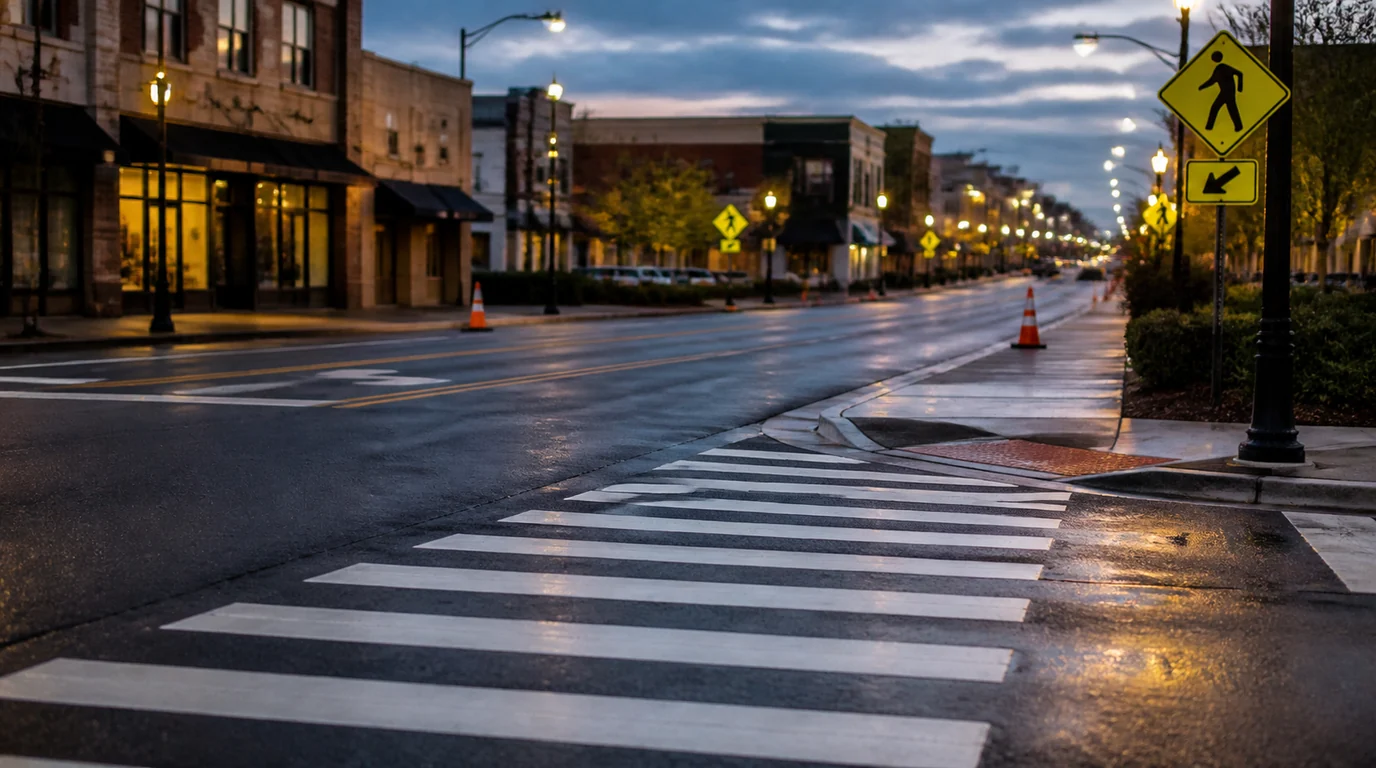

Where Concord pedestrian crashes happen
The Concord Mills corridor — including Concord Mills Boulevard, Bruton Smith Boulevard, and the I-85 frontage roads — is the densest pedestrian-crash zone in Cabarrus County. Shoppers, hotel guests, and outlet-mall workers move on foot across roads designed for vehicle volume. The crashes cluster at unsignalized commercial-entrance gaps and at the long crossings between hotel rows and the mall itself.
Speedway-weekend traffic — spring and fall races, plus the weekly summer event schedule — produces a distinct pedestrian-crash spike along Speedway Boulevard, Concord Parkway North, and the campground/RV-lot entrances. Out-of-state drivers, traffic deviations, and late-night impaired driving all elevate risk. Hit-and-run rates run higher on race weekends than they do the rest of the year.
The downtown Concord historic core — Union Street, Cabarrus Avenue, the blocks around the courthouse — produces a smaller but recurring pedestrian-crash volume tied to the bar-and-restaurant district’s growth and the renovation of the old Hotel Concord. Lower speeds; more recoverable cases on driver-fault evidence.
The arterials around NorthEast Medical Center / Atrium Health Cabarrus and Carolinas Mall generate steady pedestrian-crash volume tied to medical traffic and shift workers. Older sidewalk networks, multi-lane crossings, and bus stops on the wrong side of the street follow the regional pattern.
Trauma care and the Cabarrus County court
Severe Concord pedestrian crashes route to Atrium Health Cabarrus in Concord for initial trauma stabilization; the most severe cases transfer to Atrium Health Carolinas Medical Center in Charlotte for Level I trauma care. Rehab and orthopedic follow-up runs through Cabarrus’s outpatient network or, for Charlotte-affiliated care, the Carolinas Rehabilitation system. Race-weekend cases sometimes involve out-of-state clients with hospital follow-up at home; coordinating multi-state records is part of the work.
Civil cases file in Cabarrus County Superior Court. Cabarrus juries handle a significant pedestrian-case docket because of the Concord Mills and speedway volume; they are accustomed to the issues but not desensitized to severe injuries.
How North Carolina pedestrian law shapes a Concord case
NC’s framework applies identically in Cabarrus County: §§ 20-173 and 20-174 govern right-of-way; contributory negligence bars recovery for any pedestrian fault; last clear chance is the workaround. The Concord twist is the steady availability of commercial-property evidence: Concord Mills, the hotel cluster, the speedway, and many large retailers maintain surveillance video, incident reports, and entrance-driveway design records that become central to the case if preserved early. Spoliation letters in the first week prevent video from being overwritten on a routine 30-day cycle.
Race-weekend cases sometimes involve commercial-vehicle defendants — shuttle services, RV-park transports, food-vendor trucks — whose commercial policies expand the recovery substantially. Identifying the commercial defendant within the case’s first 60 days is usually decisive.
The Concord Parkway / Speedway Boulevard corridor appears on NCDOT’s high-crash corridor reports for pedestrian incidents during event weekends specifically. That documented pattern rebuts the “could not anticipate” defense in cases that occurred during scheduled events.
Insider perspective on Concord cases
The Concord pedestrian playbook from the defense side has one Concord-specific move worth knowing: when the case occurs on a race weekend, defense counsel will try to characterize the venue as “chaotic by nature,” implicitly arguing that pedestrians should expect the chaos and behave accordingly. That is a sophisticated form of contributory-negligence framing. The response is to document the venue’s event-day traffic plan, the speedway’s and the city’s acknowledged need for pedestrian accommodations, and the foreseeability of pedestrian movement on event days — all of which support the “reasonable driver should have anticipated” standard.
Concord — common questions
I was hit in the Concord Mills parking lot or on a mall entrance road. Who’s liable?
The at-fault driver primarily, but parking-lot design and entrance-driveway visibility can create commercial-property liability where geometry was unsafe. Mall surveillance video usually exists for 30 days, then is overwritten — preserving it early matters. The case is workable in both fora.
My crash happened during a Charlotte Motor Speedway race weekend. Does that affect anything?
It can. Out-of-state drivers, commercial-shuttle services, and impaired-driving rates all spike on race weekends, which can shift the defendant lineup. Sometimes the at-fault driver is identifiable through speedway parking and credit-card records that the venue holds. We pursue those records early.
I was hit walking from the hotel to the mall, outside a marked crosswalk. Contributory negligence?
It’s a defense the carrier will assert, but the Concord Mills corridor is documented as one of NC’s high-pedestrian-crash zones. That status, combined with hotel-mall traffic patterns designed for pedestrians to cross, often rebuts the defense. The case is winnable with the right evidence work.
For the full Carolina legal framework
This page covers the local geography of pedestrian crashes in Concord and across Cabarrus County. For the comprehensive Carolina pedestrian-injury legal framework — statutes, contributory negligence, last clear chance, hit-and-run recovery, and the full 15 FAQs — Carolina Pedestrian Accident Attorney.
Pedestrian cases in nearby Carolina cities
Tell me what happened in Concord.
A free, confidential consultation. No fee unless we win.
Request a consultation 704-741-9399General information about Carolina personal-injury practice; not legal advice. Every case turns on its facts. Reading this page does not create an attorney–client relationship.