
Kannapolis pedestrian accident attorney — for Cabarrus and Rowan County crosswalk victims.
Kannapolis is one of the more interesting pedestrian-case cities in the region. The downtown core has been substantially rebuilt around the North Carolina Research Campus, which created intentional pedestrian infrastructure that simply didn’t exist in the old Cannon Mills town layout. At the same time, the city’s older arterials — US-29 / South Cannon Boulevard, Loop Road — remain dangerous high-speed corridors. The two patterns coexist within a few blocks of each other and require different evidence approaches.
No fee unless we win · Personally handled by the attorney · Licensed in NC & SC
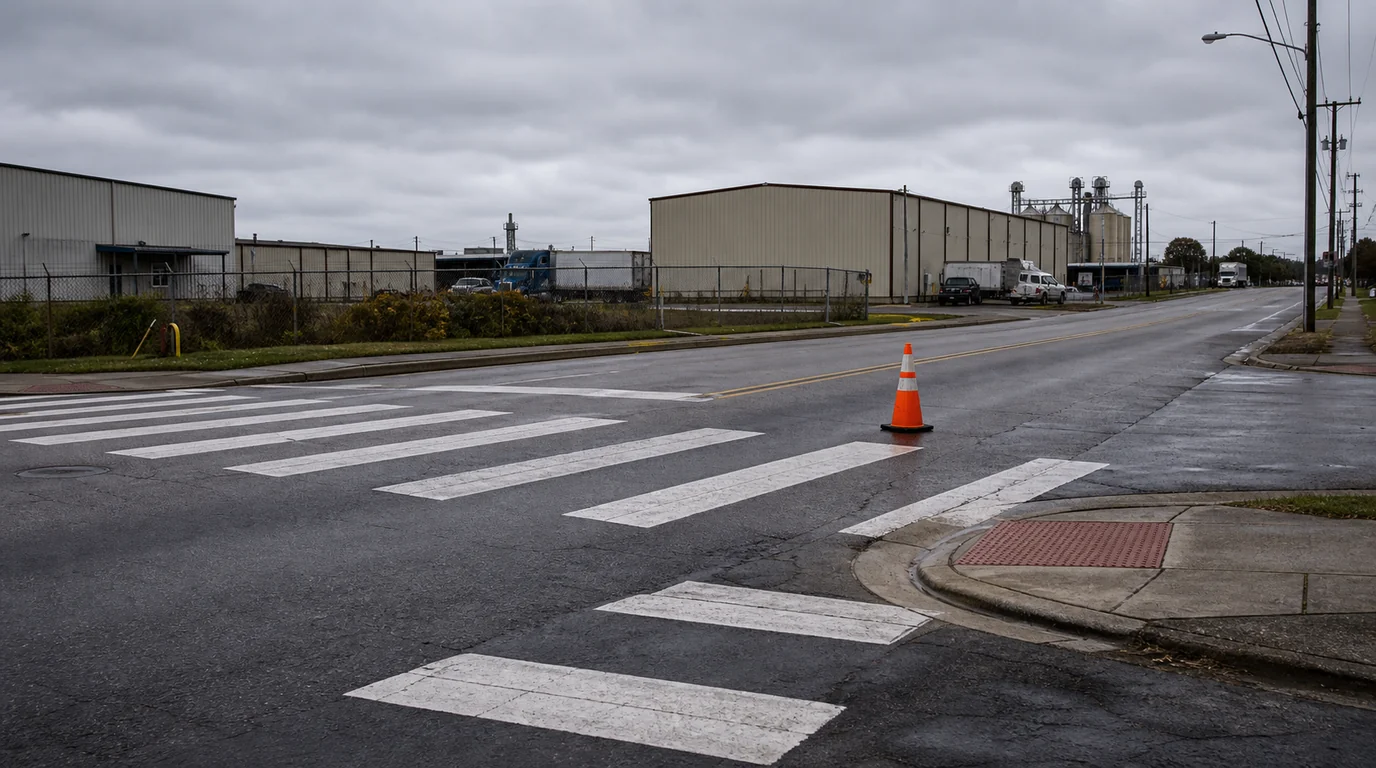

Where Kannapolis pedestrian crashes happen
US-29 (South Cannon Boulevard) running north-south through Kannapolis is the dominant high-speed arterial and the source of the largest local pedestrian-crash volume. Wide, fast, lined with commercial frontage, with sidewalk gaps and bus-stop placement issues. Crash clusters concentrate at the older commercial-driveway gaps and at the intersections approaching the Concord line.
The NC Research Campus and downtown Kannapolis revitalization area — West Avenue, Main Street, the blocks around the Cabarrus Health Alliance and Carolinas Medical Center NorthEast properties — have intentional pedestrian infrastructure that produces lower-speed cases with strong liability profiles. Crosswalks are marked, signals are documented, and the streetscape design supports pedestrian foreseeability.
The Loop Road / Earnhardt Boulevard corridor and the older residential grids of the historic Cannon Mills neighborhoods produce a steady stream of local-driver / local-pedestrian cases. Older sidewalk networks, residential through-traffic patterns, and shift-worker pedestrian movement all contribute.
The NC-3 / Dale Earnhardt Boulevard area running toward Concord and the I-85 corridor produces a meaningful share of severe cases tied to commuter and freight traffic between Cabarrus County and the Salisbury/Lexington corridor.
Trauma care and the Cabarrus County court
Severe Kannapolis pedestrian crashes route to Atrium Health Cabarrus in Concord for initial trauma stabilization — Cabarrus is the regional trauma referral center and is a short ambulance run from Kannapolis. The most severe cases transfer to Atrium Health Carolinas Medical Center in Charlotte for Level I trauma care. Cabarrus’s records system documents the transfer cleanly.
Civil cases file in Cabarrus County Superior Court in Concord. Cabarrus juries handle a meaningful pedestrian caseload from the Cabarrus / Kannapolis / Concord area; they are accustomed to the case patterns and respond well to engineering evidence and well-documented damages.
How North Carolina pedestrian law shapes a Kannapolis case
NC’s framework applies. The Kannapolis twist is the unusual quality of downtown engineering evidence: the Research Campus area has formal MUTCD-compliant signal timing, documented crosswalk design, and intentional pedestrian-priority designations. Those records support the foreseeability analysis and the “reasonable driver should have anticipated pedestrians” standard in ways that older streetscapes don’t.
US-29 and Earnhardt Boulevard appear on NCDOT’s high-crash corridor reports for the relevant sections. The documented pattern rebuts the “could not anticipate” defense and supports the negligence theory.
Workers’-compensation overlap is common in cases involving shift workers from the regional industrial base. Coordinating the comp claim with the third-party negligence case is standard.
Insider perspective on Kannapolis cases
The Cabarrus County defense playbook for Kannapolis cases has one Kannapolis-specific feature: defense counsel sometimes argues that pedestrians should have used the Research Campus area’s improved crossings rather than crossing where the crash occurred, even when the Research Campus crossings were not on the pedestrian’s logical path. The argument is a variation on the standard contributory-negligence framing. The response is to document the pedestrian’s actual path of travel (origin, destination, transit stops) and show that the alternative crossings were not reasonably available given the geometry.
Kannapolis — common questions
I was hit on US-29 / South Cannon Boulevard. Are these cases winnable?
Yes, with the right evidence work. US-29 is on NCDOT’s documented high-crash corridor list for the relevant section. That documentation rebuts the “could not anticipate” defense. The contributory-negligence argument has to be addressed head-on with engineering evidence, but it is generally not fatal where the driver was speeding, distracted, or impaired.
My case happened near the NC Research Campus downtown. How strong is that?
Typically very strong. The Research Campus area has intentional pedestrian infrastructure with documented signal timing and formal pedestrian-priority designations. Crashes here usually turn on driver-side evidence (distraction, impairment, speed) — a driver-side fight, not a pedestrian-side fight.
I was a shift worker walking home from a Kannapolis industrial job when I was hit. Comp or lawsuit?
Often both. Workers’ comp may cover the medical and partial wages if the route was one the employer required or controlled. A separate third-party negligence claim against the at-fault driver captures pain and suffering, full lost wages, and the rest of the damages. The two are coordinated; the comp carrier asserts a lien on the third-party recovery.
For the full Carolina legal framework
This page covers the local geography of pedestrian crashes in Kannapolis and the northern Cabarrus / southern Rowan County area. For the comprehensive Carolina pedestrian-injury legal framework — statutes, contributory negligence, last clear chance, hit-and-run recovery, and the full 15 FAQs — Carolina Pedestrian Accident Attorney.
Pedestrian cases in nearby Carolina cities
Tell me what happened in Kannapolis.
A free, confidential consultation. No fee unless we win.
Request a consultation 704-741-9399General information about Carolina personal-injury practice; not legal advice. Every case turns on its facts. Reading this page does not create an attorney–client relationship.