
Charlotte pedestrian accident attorney — for Mecklenburg County crosswalk and roadside victims.
A pedestrian crash in Charlotte rarely leaves middle ground. The injuries skew catastrophic — orthopedic, neurological, often both — and the legal defense skews aggressive. North Carolina’s contributory-negligence rule has been weaponized against Charlotte pedestrians for decades, and the carrier’s first move is almost always to pin some thread of fault on the person who was walking. I represent Charlotte pedestrian-crash victims personally, drawing on years of defending these claims from the insurance side to dismantle the contributory-negligence arguments before they bury the case.
No fee unless we win · Personally handled by the attorney · Licensed in NC & SC
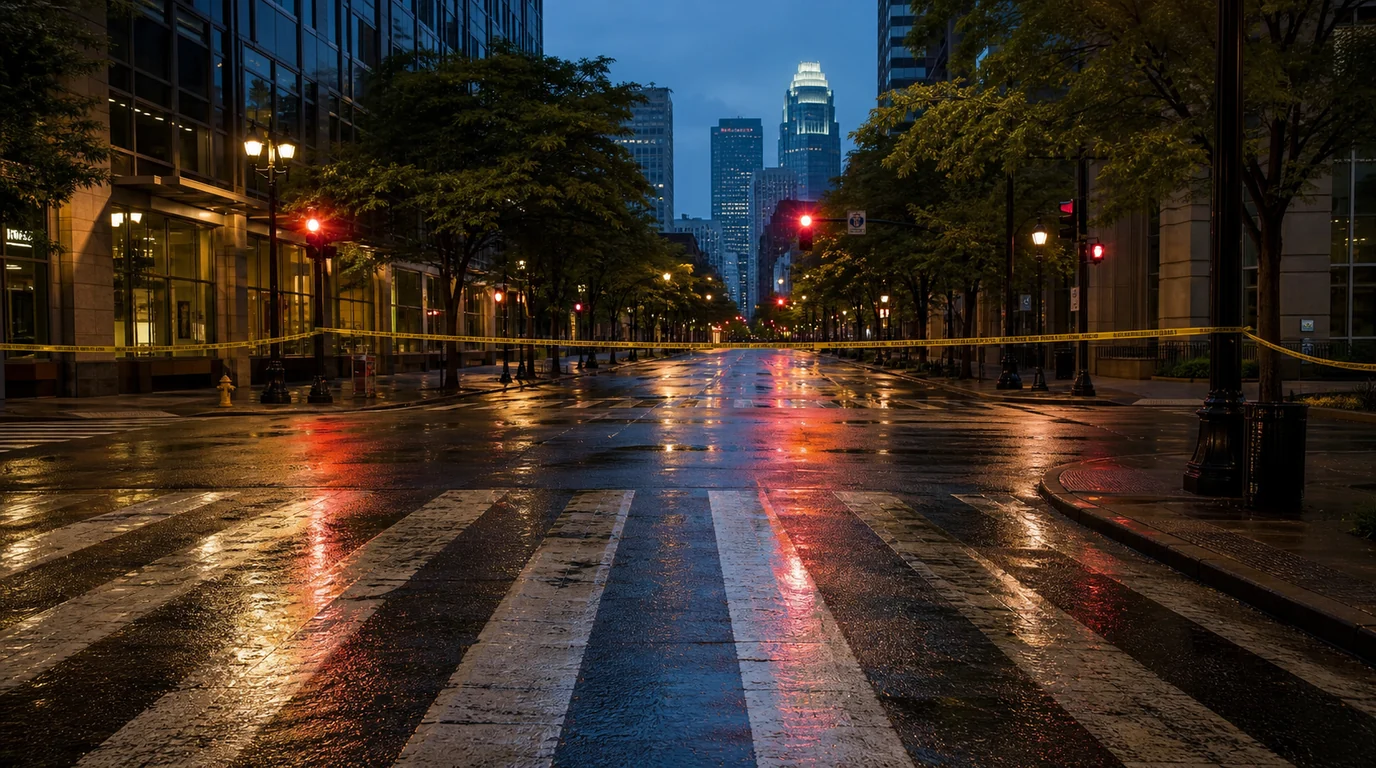

Where Charlotte pedestrian crashes happen
Charlotte’s pedestrian-fatality numbers are the worst in North Carolina by a wide margin and have been for years. CDOT and NCDOT data consistently identify the same corridors: North Tryon Street from uptown through NoDa, Independence Boulevard from uptown out to Matthews, Central Avenue through Plaza Midwood and east Charlotte, South Boulevard along the LYNX Blue Line, and Beatties Ford Road on the west side. The pattern is consistent: wide, fast, multi-lane corridors with too few signalized crossings and bus-stop ridership concentrated on the wrong side of the street.
The LYNX Blue Line corridor is its own category. The light-rail line runs the length of South Boulevard and North Tryon, and pedestrians cross to and from stations at all hours. Crashes cluster at the at-grade intersections where the LRT crosses arterials — particularly during late-night service when drivers are less attentive and pedestrian visibility is poor.
Uptown produces a different pattern: lower speeds, higher density, more crashes per square mile but fewer fatalities. The Trade-Tryon corner, the convention-center blocks, and the entertainment district around the Spectrum Center generate steady crash volume tied to event traffic and ride-share pickup chaos. Hit-and-run rates in uptown after midnight are statistically high enough that we treat uninsured-motorist coverage as a primary recovery source from the first client call.
The neighborhoods around Eastland, Sugar Creek, and Albemarle Road produce a steady stream of bus-stop and crosswalk-gap cases — CATS riders crossing four-lane arterials to reach stops on the far side, often in low light. These are the cases where the defense will argue the pedestrian “darted out”; the response is built on lighting data, stop placement, and signal-timing analysis.
Charlotte’s Vision Zero Action Plan and CDOT’s high-injury network maps document the corridors above in explicit terms: speed data, crash histories, cross-section deficiencies, pedestrian-level-of-service gaps. These records are not academic — they are evidence that the danger at a specific location was known, documented, and allowed to persist. When a crash happens on a corridor CDOT has formally identified as high-injury, those records feed directly into the liability and damages analysis. Getting the Vision Zero file into discovery at the start of a case — not as an afterthought — is one of the clearest ways to differentiate serious Charlotte pedestrian litigation from the generic case assembly that carriers count on.
The South Boulevard LYNX corridor between Scaleybark and Woodlawn deserves its own note. The light-rail grade crossings in this stretch see intense pedestrian-vehicle conflict because South Boulevard is also a high-volume commercial strip — restaurants, employers, apartment complexes — and many pedestrians cross at mid-block points between stations rather than at the formal LRT-crossing signals. CDOT has flagged multiple specific crossings in this zone; crash data for the corridor is dense and accessible.
Trauma care and the Mecklenburg County court
Severe Charlotte pedestrian crashes route to Atrium Health Carolinas Medical Center — the only Level I trauma center in the region. Pediatric victims go to Levine Children’s Hospital. Spine, orthopedic, and TBI follow-up typically runs through OrthoCarolina or the Carolinas Rehabilitation system. The trauma records are extensive, and the rehab notes — especially the cognitive and gait notes — are the documentation that drives non-economic damages.
Civil cases file in Mecklenburg County Superior Court (over $25,000 in controversy) or District Court (below). Mecklenburg juries see more pedestrian cases than any county in the state and are accustomed to contributory-negligence arguments — but they are also accustomed to seeing those arguments dismantled when the work has been done.
How North Carolina pedestrian law shapes a Charlotte case
North Carolina’s pedestrian framework rests on N.C.G.S. § 20-173 and § 20-174: drivers must yield to pedestrians in marked crosswalks and at unmarked crosswalks at intersections; pedestrians crossing outside crosswalks must yield to vehicles. That last clause is the entire ballgame in most NC pedestrian cases. If the defense can establish the pedestrian was crossing mid-block — or stepped off the curb at a moment when a driver had the right of way — contributory negligence bars recovery.
Charlotte pedestrians get the benefit of NCDOT’s engineering data: traffic studies, crash history at the specific intersection, signal-timing records, lighting inventories, and (for Charlotte specifically) CDOT pedestrian-priority corridor designations. When a corridor has been formally identified as a high-pedestrian-crash area and the city has documented inadequate crossings, that data feeds the “reasonable pedestrian” analysis and can rebut darting-out arguments. The work is to get those records into the case file before the carrier locks the narrative.
The last clear chance doctrine remains the most reliable workaround when contributory negligence is otherwise viable: if the driver had the last clear opportunity to avoid the crash — saw the pedestrian, had time and distance to brake or steer — the rule restores liability. Black-box data, dash-cam footage from following vehicles, and CDOT signal-timing analysis are the inputs that make a last-clear-chance argument stick.
Insider perspective on Charlotte cases
From the defense side, the recurring Charlotte pedestrian playbook had three predictable moves. First, the early scene-canvass: defense investigators went to the crash site within 24–48 hours, photographed the geometry, and built a “the pedestrian shouldn’t have been there” narrative before the plaintiff’s side had so much as a photograph. Second, the recorded statement push: the carrier asked for a recorded statement from the pedestrian victim early, ostensibly to confirm injuries, but really to lock in any admission about where, when, and how the crossing happened. Third, the bus-stop/CATS records exclusion: when the case involved a transit rider, the defense moved aggressively to exclude evidence about inadequate stop placement, signal absence, and known dangerous crossings — because that evidence dismantles the darting-out argument. The work on the plaintiff side is to anticipate each move and prepare the records that make them fail.
Charlotte — common questions
I was hit crossing North Tryon Street outside a marked crosswalk. Can I still recover?
It depends entirely on whether contributory negligence applies and whether last clear chance saves the case. If the driver was speeding, distracted, or impaired — and had time and distance to avoid the crash — recovery is realistic even from a mid-block crossing. The first 30 days are about preserving evidence (signal timing, lighting, vehicle data) that the contributory-negligence defense will otherwise own.
The driver fled the scene in uptown after midnight. How do I get paid?
Uninsured motorist coverage on any vehicle in your household typically responds — even though you were a pedestrian. NC’s UM-stacking rules let you stack coverage across multiple household vehicles in some cases. If you live alone with no auto policy, household-member policies and even renter’s-policy provisions may apply. The Charlotte hit-and-run rate in uptown is high enough that this is a standard recovery path, not an exception.
My case happened at a LYNX Blue Line crossing. Does CATS share liability?
Possibly. CATS and Charlotte CDOT have engineering-design responsibility for the at-grade LRT crossings. If signal timing, signage, or gate operation deviated from the design standard — or the design standard itself was inadequate — a governmental-liability theory exists. NC’s Tort Claims Act caps and procedural rules apply; the case has to be evaluated quickly because notice deadlines are short.
Charlotte’s Vision Zero program identified the corridor where I was hit. Does that help my case?
Yes, in a meaningful way. CDOT’s Vision Zero high-injury network designation and any documented corridor-safety reports for the specific location are discoverable public records that establish the city’s own knowledge of the danger. When a corridor has been formally identified, funding requested, and improvements not yet implemented at the time of the crash, those records can support arguments about both driver conduct and, in some cases, governmental liability. They also make it harder for the carrier to portray the crash as an aberration in a safe location.
The driver who hit me was never identified. Can I still bring a case as a Charlotte pedestrian?
Yes, through your uninsured-motorist coverage. NC law allows UM claims for hit-and-run crashes that result in personal injury, subject to a reporting requirement (the crash must be reported to police within 24 hours) and, in some policies, a physical-contact requirement. The Charlotte hit-and-run rate is high enough — particularly in the uptown and South End entertainment corridors late at night — that UM coverage is analyzed as a primary path on the first call, not a fallback.
For the full Carolina legal framework
This page covers the local geography of pedestrian crashes in Charlotte and across Mecklenburg County. For the comprehensive Carolina pedestrian-injury legal framework — including right-of-way statutes, the “darting out” defense, contributory-negligence traps, hit-and-run recovery, and the full 15 FAQs — Carolina Pedestrian Accident Attorney.
Pedestrian cases in nearby Carolina cities
Tell me what happened in Charlotte.
A free, confidential consultation. No fee unless we win.
Request a consultation 704-741-9399General information about Carolina personal-injury practice; not legal advice. Every case turns on its facts. Reading this page does not create an attorney–client relationship.