
Gastonia pedestrian accident attorney — for Gaston County crosswalk and roadside victims.
Gastonia’s pedestrian-crash pattern is different from Charlotte’s. It is not the high-density downtown chaos — it is the long, wide, fast suburban arterials where sidewalks end abruptly, transit stops sit on the wrong side of the street, and shift-work pedestrians cross in low light. The injuries are catastrophic in the same way; the legal defense uses the same contributory-negligence playbook; but the evidence work in a Gastonia case is built around different roads, different employers, and a different court culture. I handle Gaston County pedestrian cases personally.
No fee unless we win · Personally handled by the attorney · Licensed in NC & SC
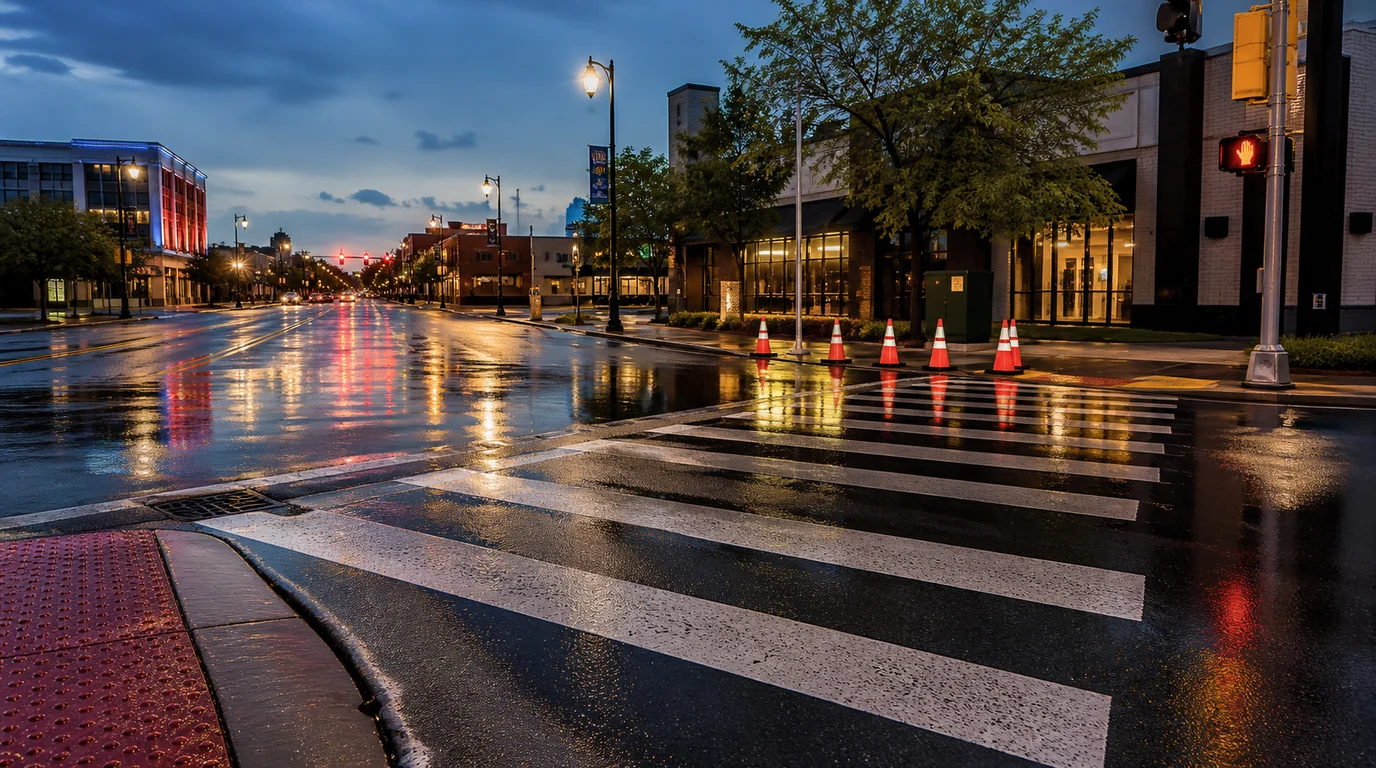

Where Gastonia pedestrian crashes happen
Gaston County’s pedestrian-crash hot spots concentrate on the Franklin Boulevard / US-29-74 corridor running the length of the city, the Wilkinson Boulevard stretch that connects Gastonia to Belmont and Charlotte, and the New Hope Road spine that runs north from the I-85 interchange. These are four- and five-lane arterials with speeds posted at 35–45 but driven at 50+, often with sidewalk gaps and bus stops placed for vehicle convenience rather than pedestrian safety.
Gastonia’s industrial corridor along Cox Road and the rail lines produces a recurring category of crash: third-shift workers walking to and from manufacturing and warehouse jobs at the AM and PM ends of overnight shifts, hit on inadequately lit cross-streets. The employer-worker connection here matters — it pushes the case toward workers’-compensation analysis if the worker was on a route the employer can be shown to have controlled.
The downtown Gastonia revitalization area (Main Avenue, Loray Mill district) has improved pedestrian infrastructure but still produces crashes at the transition points where downtown street design meets old-pattern arterial design. Akers Center, Gastonia Mall traffic, and East Franklin commercial properties account for a steady share of cases — pedestrians crossing from parking to stores across uncontrolled commercial driveways.
Hit-and-run rates in Gastonia track lower than Charlotte’s but are still material on the Franklin and Wilkinson corridors after midnight. Uninsured/underinsured motorist coverage is always part of the first-call analysis.
Trauma care and the Gaston County court
Severe Gaston County pedestrian crashes route to CaroMont Regional Medical Center in Gastonia for initial trauma stabilization; the most severe cases — major TBI, complex polytrauma — transfer to Atrium Health Carolinas Medical Center in Charlotte for definitive Level I trauma care. Orthopedic and rehab follow-up runs through CaroMont’s outpatient network or, for clients who prefer Charlotte specialists, OrthoCarolina and Carolinas Rehabilitation.
Civil cases file in Gaston County Superior Court in Gastonia. The docket moves faster than Mecklenburg’s — many Gaston County pedestrian cases reach trial settings within 12–18 months of filing if settlement does not happen earlier. Local plaintiff representation matters here; Gaston jurors respond differently to lawyers who know the corridors and employers than to out-of-county counsel.
How North Carolina pedestrian law shapes a Gastonia case
NC’s pedestrian framework applies identically in Gaston County to anywhere else in the state: N.C.G.S. §§ 20-173, 20-174 govern right-of-way; contributory negligence bars recovery if the pedestrian is even 1% at fault; last clear chance is the principal workaround when the pedestrian was crossing outside a crosswalk.
What Gaston cases add is the workers’-compensation overlap for shift-worker pedestrians. If the crash occurred on a route the employer required, or in a parking area the employer controlled, comp coverage may apply — in addition to the third-party negligence claim against the at-fault driver. Coordinating the two is part of the case work.
Gaston cases also rely heavily on NCDOT corridor-safety data for Franklin Boulevard and Wilkinson Boulevard specifically — both corridors appear repeatedly in NCDOT and Vision Zero analyses as high-fatality routes. That documented dangerousness rebuts the “reasonable driver could not have anticipated” defense and strengthens the negligence theory against the at-fault driver.
Insider perspective on Gastonia cases
The Gaston pedestrian defense playbook closely tracks the Charlotte one with two local twists. First, defense counsel routinely tries to introduce the pedestrian’s appearance and clothing — dark clothing at night, no reflective gear — as part of the contributory-negligence argument. That is a real argument in NC and has to be addressed head-on with lighting and visibility analysis. Second, when the pedestrian was a third-shift industrial worker, defense counsel sometimes tries to position the case as a workers’-comp matter only, hoping to wall off the larger third-party recovery. The response is to coordinate but not collapse the two: workers’ comp pays its part; the third-party case proceeds in parallel.
Gastonia — common questions
I was hit on Franklin Boulevard outside a crosswalk. Is my case dead?
Not necessarily — but the defense will argue contributory negligence aggressively, and the case turns on last clear chance or driver-fault evidence (speeding, distraction, impairment). The corridor’s documented NCDOT high-fatality status helps. The first weeks are about preserving the evidence that supports the workaround.
I was walking from my third-shift job at a Cox Road plant when I was hit. Workers’ comp or lawsuit?
Often both. Workers’ comp may cover the medical and partial wages if the route was one the employer controlled or required. A separate third-party negligence claim against the at-fault driver captures pain and suffering, full lost wages, and the rest of what comp doesn’t pay. The two have to be coordinated; the comp carrier asserts a lien on the third-party recovery.
The driver who hit me had no insurance. Am I out of luck?
No. If you or anyone in your household has auto insurance, the uninsured-motorist coverage usually responds — even though you were on foot. NC allows stacking across household vehicles in some cases, which can materially expand the recovery.
For the full Carolina legal framework
This page covers the local geography of pedestrian crashes in Gastonia and across Gaston County. For the comprehensive Carolina pedestrian-injury legal framework — statutes, contributory-negligence defenses, last clear chance, hit-and-run recovery, the full 15 FAQs — Carolina Pedestrian Accident Attorney.
Pedestrian cases in nearby Carolina cities
Tell me what happened in Gastonia.
A free, confidential consultation. No fee unless we win.
Request a consultation 704-741-9399General information about Carolina personal-injury practice; not legal advice. Every case turns on its facts. Reading this page does not create an attorney–client relationship.