
Gastonia rear-end accident attorney — for Gaston County drivers hit from behind.
If you were rear-ended on I-85 through Gaston County, on US-321, or in the stop-and-go on Franklin Boulevard, the law and the recovery math here look different than they do in Charlotte. Gastonia cases get filed in Gaston County Superior Court in Gastonia, the medical care typically runs through CaroMont Regional, and the insurance adjusters who handle Gaston claims see meaningfully fewer files than their Mecklenburg counterparts. I represent rear-end victims across Gaston County personally — a former insurance-defense attorney now on the injured driver’s side. This page covers what makes Gastonia rear-end cases their own kind of file.
No fee unless we win · Personally handled by the attorney · Licensed in NC & SC
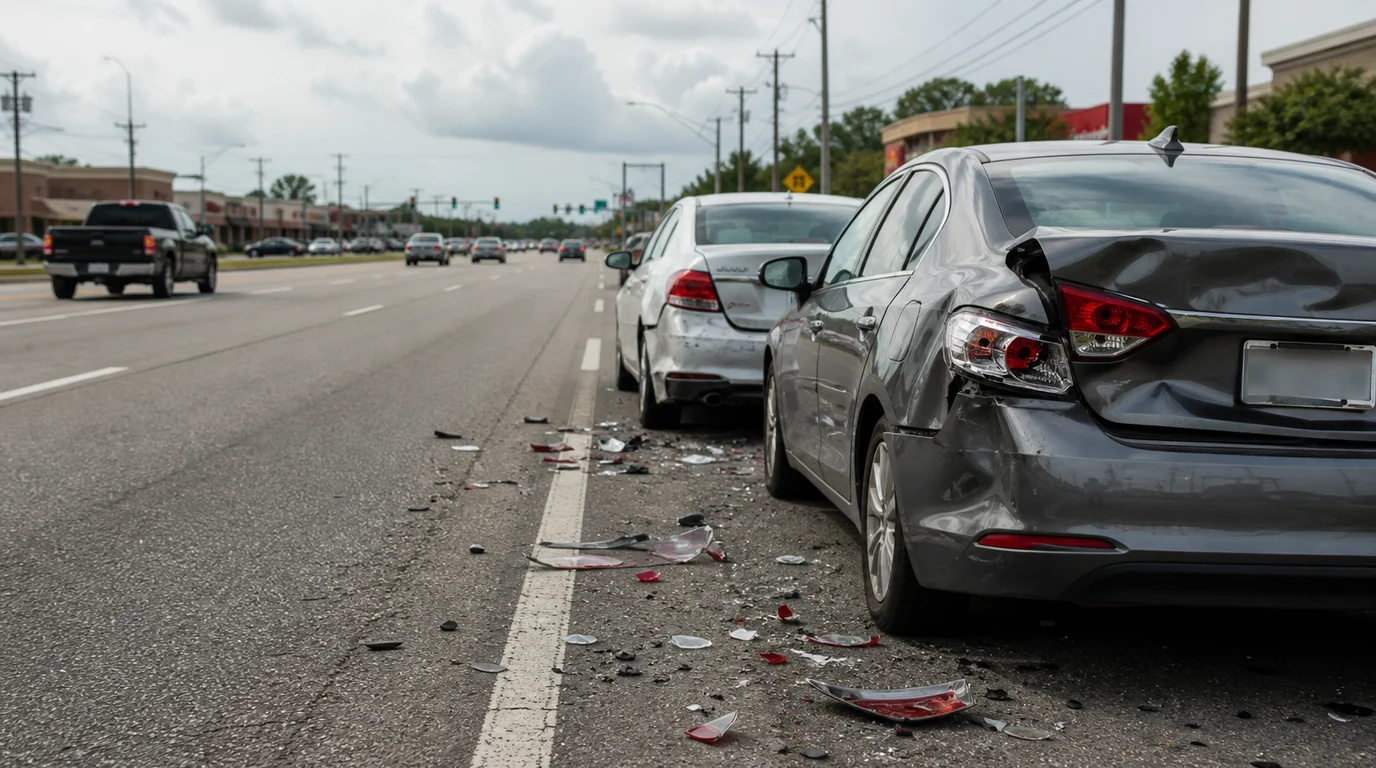

Where gastonia · rear-end collisions happen in Gastonia
Gastonia’s rear-end wreck patterns are shaped by one major artery and several recurring trouble spots.
I-85 is the dominant corridor — the Atlanta-to-Charlotte freight route runs straight through Gaston County, and the truck volume combined with passenger-car commuters generates a predictable supply of rear-end impacts. The segments around the New Hope Road exit, the US-321 interchange, and the segment approaching the Belmont border are the most reliable. Highway-speed rear-ends in these segments routinely involve commercial vehicles or trucks — which means commercial-policy coverage and a different set of investigative considerations than a passenger-car case.
US-321 running north-south through Gastonia — connecting Hickory and points north to Clover, SC and points south — is the county’s second rear-end corridor. The mix of through-traffic and local trips, combined with the signal density between Cox Road and the I-85 interchange, produces a steady volume of mid-speed rear-end wrecks.
Franklin Boulevard through downtown Gastonia and the corridor along East Franklin/East Garrison sees frequent rear-end impacts at the New Hope Road, Cox Road, and Marietta Street intersections. New Hope Road itself produces school-zone-related rear-ends near Hunter Huss High School and the elementary schools along the route.
Smaller corridors that recur in Gastonia case work: Dallas-Cherryville Highway, Union Road, the Robinwood Road area where it crosses I-85, and the Lowell-Bessemer City Highway connecting Gastonia’s smaller surrounding communities. The county’s smaller-town fabric means rear-end wrecks happen more often on arterials than on interstates, and the case work-up looks different for it.
Medical care and the Gaston County court
The vast majority of Gastonia rear-end victims who need transport go to CaroMont Regional Medical Center, the county’s main hospital. CaroMont’s emergency-department documentation tends to be thorough on initial orthopedic and soft-tissue findings, which matters later when an insurer tries to argue your injuries were “subjective” or undocumented. For catastrophic injuries, transport is sometimes diverted to Atrium Health Carolinas Medical Center in Charlotte for Level I trauma care.
Cases get filed in Gaston County Superior Court in Gastonia. Gaston’s civil docket is less congested than Mecklenburg’s, which often means a faster path to trial if filing becomes necessary. That changes negotiation dynamics — carriers know that a Gaston filing won’t sit in a queue for two years before reaching a courtroom, and the leverage that creates sometimes accelerates settlement.
How NC law applies to your Gastonia case
The pure contributory-negligence rule applies the same in Gaston County as everywhere else in North Carolina, but the enforcement texture is different. Gaston adjusters and defense counsel see fewer cases than their Mecklenburg counterparts — which usually means files are more individually evaluated and less script-driven. The flip side: when defense counsel does push the contributory-negligence wedge in a Gaston case, they tend to be more thorough about it, because they have time to be.
The implication for your case: documentation matters here even more than usual. The crash report, the immediate medical visit, the consistent treatment record, photographs of the property damage and the scene, and witness statements all carry more weight in a county where each case gets meaningful individual review.
For the full Carolina car-accident framework — covering recorded-statement tactics, MIST defense, IME doctors, UM/UIM coverage stacking, and the contributory-negligence playbook in detail — see the parent guide: Carolina Car & Rear-End Accident Attorney.
Insider perspective on Gastonia cases
One specific Gaston County dynamic worth knowing: the prevalence of I-85 commercial-trucking cases means a higher percentage of rear-end files involve commercial liability policies, not minimum-limits passenger-car coverage. Commercial policies routinely carry $1M or more in limits, which changes both the coverage analysis and the carrier’s defense intensity. Trucking carriers send adjusters to the scene quickly, secure driver statements, and download the truck’s ELD (electronic logging device) data within days. If your rear-end involved a truck on I-85, the case has to be built faster than a passenger-car case because the defense will have a head start.
The other Gaston-specific factor: smaller-county juries tend to be more skeptical of inflated damages than Mecklenburg juries, and more receptive to genuine, documented injury claims. The case has to be presented honestly — not overstated. That fits how the office handles every file regardless of venue.
Gastonia — common questions
A truck rear-ended me on I-85 in Gaston County. Is that case handled differently?
Yes. Commercial-trucking cases involve federal regulations (the FMCSA hours-of-service rules, electronic logging device data, drug and alcohol testing requirements), commercial-policy limits often well above the NC minimum, and a faster defense investigation. ELD data and dashcam footage need preservation letters within days. The case build is more intensive than a passenger-car rear-end.
How fast does Gaston County’s civil docket move?
Faster than Mecklenburg’s. A Gaston case that requires filing typically reaches resolution in 12–18 months, depending on case complexity. That timeline often creates settlement leverage that Mecklenburg cases lack.
What if my treatment is at CaroMont but the wreck was on I-85 near the Mecklenburg line?
Where the wreck happened controls the venue, not where you got treated. An I-85 wreck within Gaston County is a Gaston case regardless of which side of the county line your hospital is on.
For the full Carolina legal framework
This page covers the local context of Gastonia cases. For the comprehensive Carolina legal framework, see the parent guide. See the parent guide.
cases in nearby Carolina cities
Tell me what happened in Gastonia.
A free, confidential consultation. No fee unless we win.
Request a consultation 704-741-9399General information about Carolina personal-injury practice; not legal advice. Every case turns on its facts. Reading this page does not create an attorney–client relationship.