
Monroe rear-end accident attorney — for Union County drivers, including on the Monroe Bypass.
Monroe and Union County have grown faster in the last decade than almost any part of the Carolinas. The infrastructure has tried to keep up — the Monroe Bypass opened in 2018 to relieve old US-74 — but the volume keeps outpacing the design. If you were rear-ended on the Bypass, on Old US-74 through downtown, on NC-200, or anywhere else in Union County, the case has Union-specific dynamics that don’t apply to a Mecklenburg or Cabarrus wreck. I represent Monroe rear-end victims personally, applying a former insurance-defense attorney’s knowledge of how the carriers work these files.
No fee unless we win · Personally handled by the attorney · Licensed in NC & SC
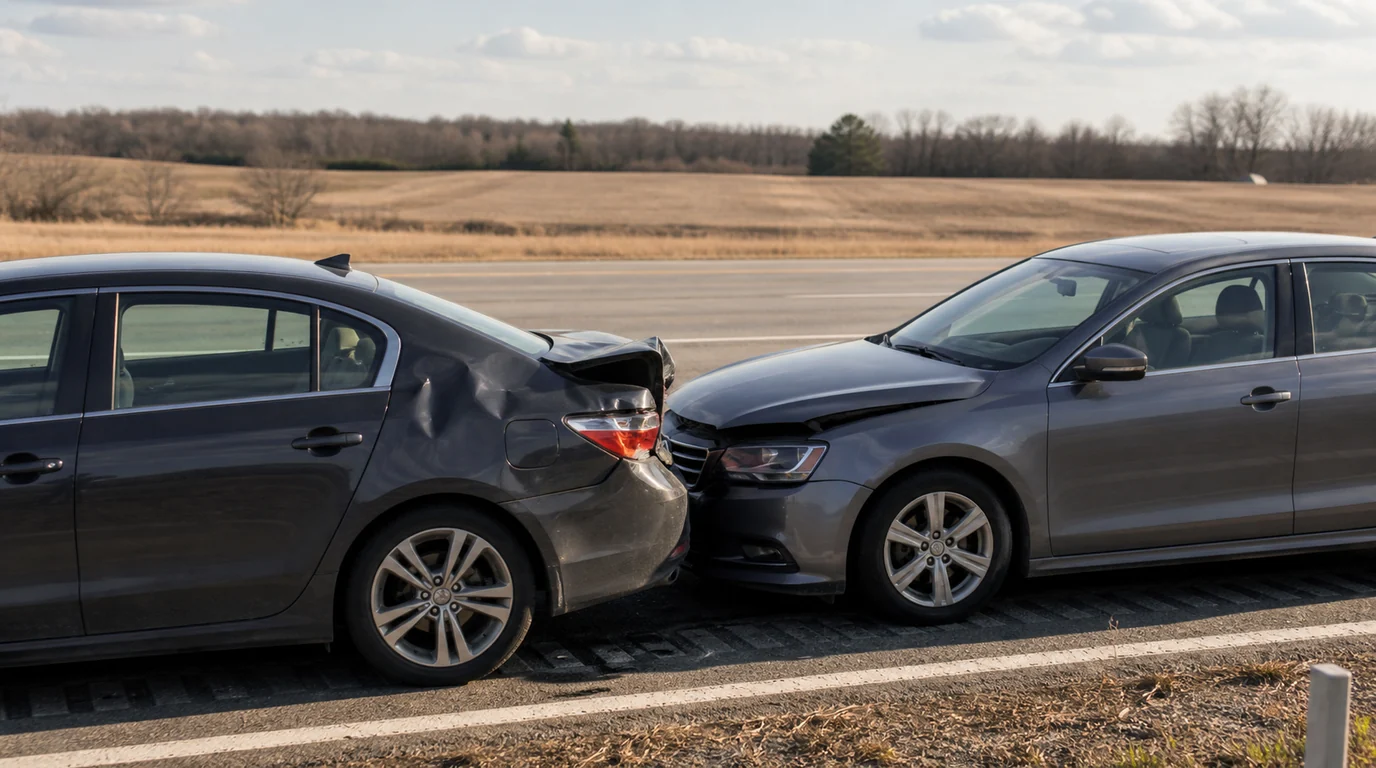

Where monroe · rear-end collisions happen in Monroe
Monroe’s rear-end patterns are shaped by US-74 in both its old and new alignments.
The Monroe Bypass (US-74 Toll) opened in 2018 and changed the county’s rear-end dynamics. The bypass carries high-speed through-traffic that used to crawl through downtown Monroe; its interchanges at NC-200, Rocky River Road, and US-601 are the recurring wreck zones. Because the road is relatively new and many drivers are still learning the interchange geometry, rear-end wrecks on the bypass tend to involve unexpected slowdowns at entrance/exit ramps. Highway-speed impacts on the bypass routinely produce more serious injuries than the surface-street wrecks elsewhere in the county.
Old US-74 (Roosevelt Boulevard / Charlotte Highway / Independence Boulevard through Indian Trail and Stallings) is the second corridor. The old highway still carries heavy local traffic and connects Monroe to the Mecklenburg County line via Indian Trail and Stallings — both growing fast. Signalized intersections at Wesley Chapel Road, Stallings Road, and Indian Trail-Fairview Road are recurring rear-end sites, with the classic surface-street stop-and-go pattern.
NC-200 (Polk Street through downtown Monroe, then south toward Lancaster County, SC) is the county’s third corridor. Rear-end wrecks on NC-200 happen at the I-485 / NC-200 interchange (technically just outside Union County, but common in Union case work) and through the downtown Monroe area.
Other recurring Union County sites: US-601 running north-south, Sikes Mill Road, and the NC-75 corridor connecting Monroe to Waxhaw and Weddington. As Union County’s development continues, secondary roads are absorbing volumes their original design never anticipated.
Medical care and the Union County court
Monroe and Union County rear-end victims who need transport go to Atrium Health Union, which serves as the county’s main hospital. Atrium Union’s ED handles the standard rear-end-injury presentations — cervical and lumbar strain, soft-tissue injuries, orthopedic findings. Severe cases get diverted to Atrium Carolinas Medical Center in Charlotte for Level I trauma services.
Cases file in Union County Superior Court. Union’s civil docket is moderately paced — faster than Mecklenburg, slower than the smaller rural-county courts. Filing in Union typically means a 14–20 month timeline from filing to a tried verdict if the case can’t be settled.
How NC law applies to your Monroe case
NC’s pure contributory-negligence rule applies the same in Union County, with two location-specific dynamics worth knowing about. First, the Monroe Bypass’s status as a toll road and a relatively new piece of infrastructure means defense counsel sometimes argues that drivers should have anticipated unfamiliar conditions — an argument that doesn’t hold up but recurs anyway. Second, Union County’s rapid growth has put a lot of out-of-county and out-of-state drivers on Union roads, which creates coverage analyses that look more like Charlotte cases than Monroe’s small-county history would suggest.
For the full Carolina car-accident legal framework — contributory negligence in detail, the recorded-statement trap, MIST defense, UM/UIM stacking — see the parent guide: Carolina Car & Rear-End Accident Attorney.
Insider perspective on Monroe cases
One Monroe-specific factor that matters to case value: the county’s growth is recent enough that insurance carriers’ historical reserves on Union County cases were set at small-town levels and haven’t fully updated. That can produce low-anchored opening offers on serious cases that would be valued higher in Mecklenburg or Cabarrus. Working those cases requires demonstrating that Union County juries (and Union County injuries) are valued the same as their neighbors’ — something carriers don’t always concede until the case looks file-ready.
Monroe — common questions
My rear-end happened on the Monroe Bypass. Does the toll-road status affect anything?
No — the bypass is part of the state highway system and the legal framework is the same as any other NC road. The toll status doesn’t change liability rules, statute of limitations, or court jurisdiction. The case files in Union County the same as a wreck on US-74 or NC-200.
I’m a Charlotte resident but commute through Monroe daily — where does the case file?
Where the wreck happened. A Union County rear-end is a Union County case regardless of where you live. Venue follows location, not residence. Your insurance coverages — UM/UIM on your own and household-resident policies — apply across state lines and across counties.
Indian Trail and Stallings are technically separate municipalities — same court?
Yes — they’re both in Union County, so civil cases file in Union County Superior Court regardless of which town the wreck happened in. The same is true for Waxhaw, Weddington, and Marvin.
For the full Carolina legal framework
This page covers the local context of Monroe cases. For the comprehensive Carolina legal framework, see the parent guide. See the parent guide.
cases in nearby Carolina cities
Tell me what happened in Monroe.
A free, confidential consultation. No fee unless we win.
Request a consultation 704-741-9399General information about Carolina personal-injury practice; not legal advice. Every case turns on its facts. Reading this page does not create an attorney–client relationship.