

If you were hurt on a construction site where OSHA violations existed, you might think your injury case is a slam dunk. An OSHA citation proves the site was unsafe, right? It’s strong evidence, yes. But it doesn’t automatically win your case — and understanding why that distinction matters could make or break your claim.
I’m Ryan Duffy, a personal injury attorney in Belmont, NC. Before I started representing injured workers, I spent years as an insurance defense attorney. I’ve been on the other side of these cases. I’ve seen how defense teams try to minimize OSHA violations, and I know what it takes to use them effectively in a construction injury lawsuit.
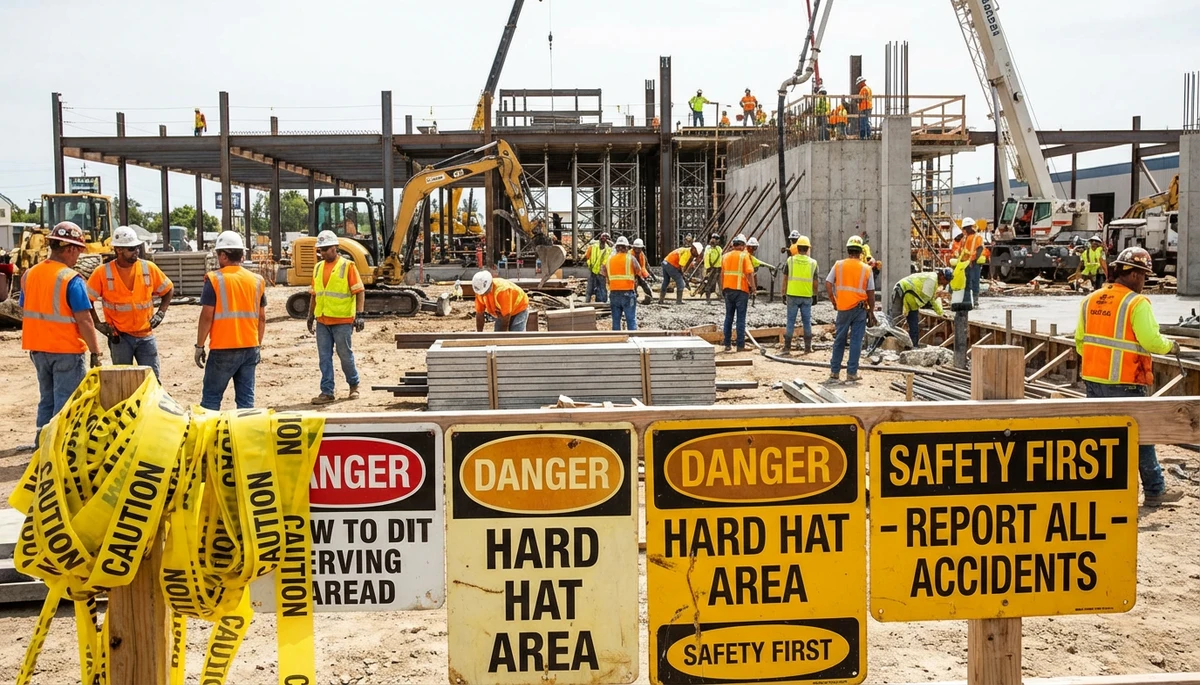
OSHA violations at a construction site can be powerful evidence in your injury claim — but they’re not the whole story.
What OSHA does and doesn’t do
OSHA — the Occupational Safety and Health Administration — sets and enforces workplace safety standards. When OSHA investigates a construction site and finds a violation, it issues a citation. That citation might come with fines, required corrective actions, and a detailed report about what was wrong.
What OSHA does not do is award money to injured workers. OSHA citations are regulatory actions — they punish the employer for violating safety rules. They don’t, on their own, establish that the employer is liable for your injuries in a civil lawsuit. Those are two separate legal tracks.
That said, the findings from an OSHA investigation can become some of the most compelling evidence in your personal injury case. The key is understanding how to use them.
How OSHA violations connect to your injury claim
In North Carolina, to win a construction accident injury claim, you need to prove that someone was negligent — that they failed to act with reasonable care, and that failure caused your injuries. OSHA violations can support that negligence argument in several ways.
The per se negligence argument
In many jurisdictions, violating a safety regulation can establish what’s called “negligence per se.” The idea is straightforward: if a law or regulation exists to protect people like you from the exact type of harm you suffered, then violating that regulation is automatically negligent. You don’t need to prove the defendant “should have known better” — the violation itself is the proof.
North Carolina courts have recognized this principle in various contexts. If OSHA’s fall protection standard (29 CFR 1926.501) requires guardrails on elevated work surfaces, and your employer didn’t install them, and you fell — that violation is strong evidence of negligence. The regulation existed to prevent exactly what happened to you.
Evidence of the standard of care
Even when per se negligence doesn’t apply directly, OSHA standards establish what a reasonable construction company should be doing. If OSHA says trenches deeper than five feet need shoring, that’s the industry standard. A company that ignores that standard is going to have a hard time arguing it acted reasonably.
I use OSHA standards to frame the question for juries: here’s what the federal government says is the minimum level of safety required. The defendant didn’t even meet the minimum. That’s a powerful argument.
Documented proof from a government investigation
An OSHA investigation report isn’t just someone’s opinion. It’s a government inspector’s documented findings, often including photographs, measurements, witness interviews, and detailed descriptions of what was wrong. That kind of evidence carries weight with juries. It’s harder for a defendant to dismiss a government agency’s findings than to argue against an expert witness they claim is biased.
Ryan’s Insider Perspective
When I was on the defense side, OSHA citations were the evidence we hated seeing most. We’d argue they were “just regulatory” and “not admissible to prove negligence,” but the reality is that a documented government finding that the site was unsafe is devastating for a defendant. Now that I represent injured workers, I make sure we get those records into evidence.
The most common OSHA violations on construction sites
OSHA publishes its most frequently cited violations every year, and construction consistently dominates the list. Here are the violations I see most often in injury cases:
Fall protection (29 CFR 1926.501)
This is the number one most cited OSHA violation year after year. The standard requires fall protection — guardrails, safety nets, or personal fall arrest systems — for workers at heights of six feet or more in construction. Falls are the leading cause of death in the construction industry, and the lack of proper fall protection is almost always at the center of those tragedies.
Scaffolding (29 CFR 1926.451)
Scaffold-related violations include improper construction, missing guardrails, inadequate planking, and failure to inspect scaffolding before each use. Workers fall from improperly built scaffolds regularly, and these injuries tend to be severe — broken bones, spinal cord damage, traumatic brain injuries.
Trenching and excavation (29 CFR 1926.651)
Trench collapses kill workers quickly and with little warning. OSHA requires protective systems — sloping, shoring, or trench boxes — for excavations five feet deep or more. Despite this, contractors routinely skip these protections because they cost money and slow down the job. The result is workers being buried alive in preventable collapses.
Ladders (29 CFR 1926.1053)
Ladder violations include using damaged ladders, improper setup, failure to extend ladders three feet above the landing surface, and not securing ladders against displacement. These might sound like minor issues until someone falls twenty feet because a ladder shifted.
Hazard communication (29 CFR 1926.59)
Construction workers are exposed to hazardous chemicals — solvents, adhesives, silica dust, lead paint — and OSHA requires employers to train workers about those hazards and provide safety data sheets. When workers are injured by chemical exposure they weren’t warned about, this violation becomes central to the case.
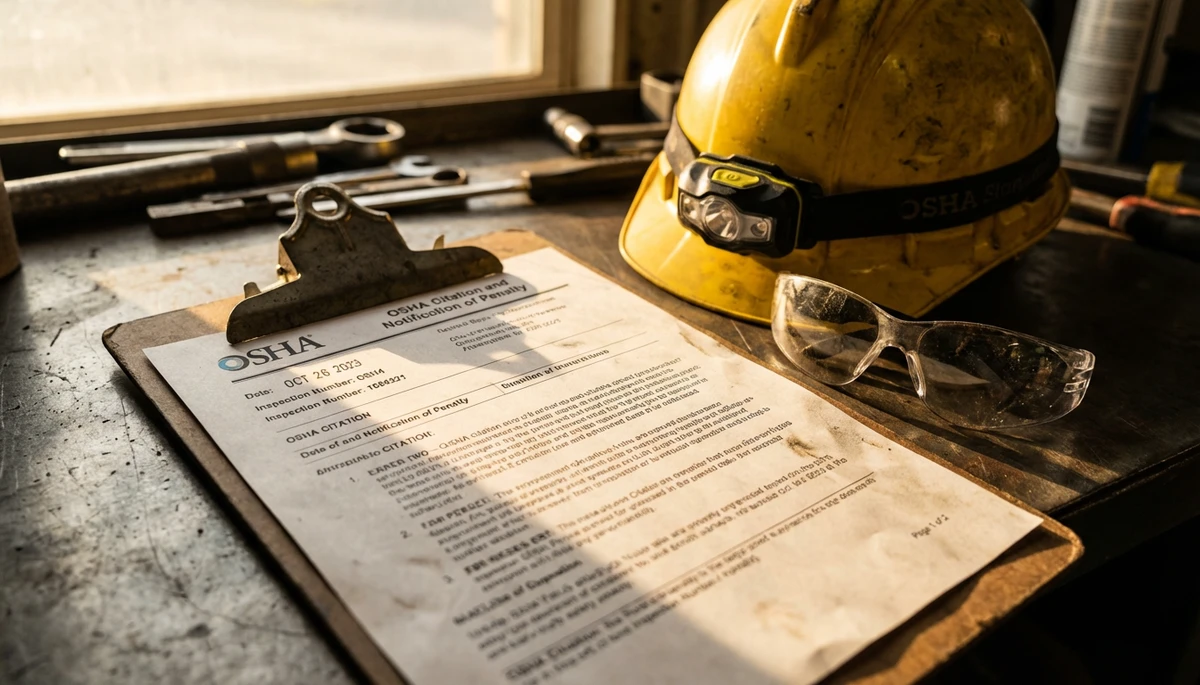
OSHA investigation records include detailed findings that can become critical evidence in your injury case.
How to obtain OSHA investigation records
If OSHA investigated the site where you were injured, you can request copies of the investigation records. There are a few ways to do this:
File a FOIA request. Under the Freedom of Information Act, you can request OSHA investigation files from the U.S. Department of Labor. This includes inspection reports, citations, photographs, witness statements, and the employer’s response. FOIA requests can take weeks or months, so it’s important to file early.
Check OSHA’s online database. OSHA maintains a searchable database of inspections and citations at osha.gov. You can search by employer name, location, or SIC code. The online records won’t include everything from the investigation file, but they’ll tell you whether a citation was issued and for what violations.
Request records through your attorney. An experienced construction accident attorney will know how to obtain OSHA records efficiently and may already have working relationships with the local OSHA area office. Your attorney can also subpoena records during litigation if needed.
One important note: if OSHA hasn’t investigated your job site injury, you can file a complaint with OSHA yourself. You have the right to report unsafe working conditions, and your employer cannot legally retaliate against you for doing so.
Why OSHA violations don’t automatically win your case
I want to be honest about the limitations. An OSHA citation, by itself, isn’t a guaranteed verdict in your favor. Here’s why:
Causation still matters. You need to prove that the OSHA violation actually caused your injury. If the site had a fall protection violation but you were hurt by a falling object, the fall protection citation doesn’t directly help your case. The violation has to be connected to your specific injury.
Defendants will fight admissibility. Defense attorneys routinely argue that OSHA citations shouldn’t be admitted into evidence in civil cases. They’ll claim the citation is hearsay, that it’s unduly prejudicial, or that the OSHA standards don’t apply to the specific situation. A skilled plaintiff’s attorney needs to be prepared for these challenges.
NC’s contributory negligence rule. North Carolina is one of only a few states that follows pure contributory negligence. If the defense can prove you were even slightly at fault for your own injury, you could be barred from any recovery. Even with an OSHA violation on your side, the defense will look for any way to shift blame to you.
Workers’ compensation complications. If you were an employee of the company that committed the OSHA violation, workers’ comp may be your exclusive remedy against that employer. However, you may still have a third-party claim against other contractors, site owners, or equipment manufacturers — and OSHA violations can be powerful evidence in those claims.
Who you can sue after a construction site injury
Construction sites involve multiple parties, and the OSHA violation might point to negligence by someone other than your direct employer. Potential defendants in a construction injury case include:
The general contractor, who has overall responsibility for site safety. If the GC failed to enforce OSHA standards across the site, they may be liable for your injuries — even if you worked for a subcontractor.
The property owner, who may have a duty to ensure the site is safe for workers. Property owners who hire contractors to perform construction work can be held responsible if they knew about unsafe conditions and failed to address them.
Other subcontractors whose negligence contributed to your injury. If another sub’s crew created a hazard — removed guardrails, left an excavation unshored — and you were injured as a result, that subcontractor may be liable.
Equipment manufacturers, if defective tools, machinery, or safety equipment contributed to your injury. A product liability claim doesn’t require proving negligence — just that the product was defective and caused harm.
What to do if you’ve been hurt on a construction site with OSHA violations
Time matters in these cases. OSHA records can be harder to obtain as time passes, witnesses’ memories fade, and evidence at the construction site will change as work continues. Here’s what I recommend:
Report the injury immediately — to your employer, to the general contractor, and to OSHA if the violation hasn’t been reported yet.
Get medical treatment and follow your doctor’s instructions. Your medical records create a documented connection between the accident and your injuries.
Document everything. Take photos of the site, the hazardous condition, any safety equipment (or lack of it), and your injuries. Write down the names of witnesses, supervisors, and anyone who was present.
Don’t give a recorded statement to any insurance company without talking to an attorney first. The defense will be looking for anything to use against you.
Contact a construction accident attorney who understands both OSHA regulations and North Carolina personal injury law. These cases are too complex to handle alone.
Frequently asked questions
Can I sue my employer for an OSHA violation?
If you’re an employee, workers’ compensation is generally your exclusive remedy against your direct employer in North Carolina, regardless of OSHA violations. However, you may have a third-party claim against the general contractor, property owner, other subcontractors, or equipment manufacturers. An attorney can evaluate who is potentially liable in your specific case.
How long do I have to file a construction injury lawsuit in NC?
North Carolina’s statute of limitations for personal injury is generally three years from the date of injury. But don’t wait that long. Evidence disappears, OSHA records become harder to obtain, and the construction site will continue to change. The sooner you take action, the stronger your case will be.
Will OSHA investigate my construction accident automatically?
OSHA investigates workplace fatalities, hospitalizations, amputations, and losses of an eye. For other injuries, OSHA may investigate if a complaint is filed. If OSHA hasn’t investigated your accident, you or your attorney can file a complaint to trigger an inspection. You’re protected from employer retaliation for filing an OSHA complaint.
Does the OSHA fine amount matter for my injury case?
The fine itself doesn’t directly determine your damages. However, the severity of the citation — whether it’s classified as “serious,” “willful,” or “repeat” — can be relevant. A willful violation, where OSHA found the employer intentionally disregarded the standard, is especially powerful evidence for your case and may support a claim for punitive damages.
Hurt on a construction site? Let’s talk.
I’ve handled construction injury cases from both sides. I know how the defense will use — and try to minimize — OSHA violations. Let me put that experience to work for you.
Or call (704) 741-9399
Find a Construction Accident Lawyer Near You
The information on this page is for general informational purposes only and does not constitute legal advice. Every case is different. Contacting Ryan P. Duffy Law does not create an attorney-client relationship. Past results do not guarantee future outcomes.