

Within days of a car accident, your phone will ring. It’ll be an insurance adjuster — friendly, concerned, maybe even sympathetic. They’ll say they just want to “get your side of the story” and ask if you’d mind giving a recorded statement. It sounds reasonable. It isn’t.
I spent years as an insurance defense attorney. I’ve reviewed hundreds of recorded statements, and I can tell you exactly what the adjuster is doing: building a case against you. Every question they ask has a purpose, and that purpose isn’t to help you get fair compensation.

That friendly call from the insurance adjuster isn’t as innocent as it sounds.
What is a recorded statement?
A recorded statement is exactly what it sounds like — the insurance company asks you questions while recording your answers, usually over the phone. Sometimes they’ll call it an “interview” or say they’re just “taking your statement for the file.” The recording can be audio, or the adjuster may type it up and ask you to sign it later.
There are two types you might encounter. The at-fault driver’s insurance company (the third-party insurer) may call and ask for one. Your own insurance company might also request a statement, especially if you’re filing a UM/UIM claim. The rules are a bit different depending on which company is asking, and I’ll get into that below.
Why the other driver’s insurance company wants your statement
Let me be blunt: the other driver’s insurance company is not on your side. They have one goal — pay you as little as possible, or nothing at all. The recorded statement is a tool to accomplish that goal.
Adjusters are trained to ask questions in specific ways. They’re not just collecting facts. They’re looking for inconsistencies, admissions, and anything they can use to argue contributory negligence — which in North Carolina can completely eliminate your right to compensation.
The questions are designed to trap you
An adjuster might ask, “Did you see the other car before the impact?” If you say no, they’ll argue you weren’t keeping a proper lookout. If you say yes, they’ll ask why you didn’t take evasive action. Either answer can be used against you.
“How are you feeling today?” Sounds like small talk. It’s not. If you say “I’m doing okay,” that statement will show up in a letter denying your injury claim. They’ll say you told them you were fine shortly after the accident.
“Can you describe exactly what happened?” You’re being asked to give a detailed account while you’re still in pain, possibly on medication, and dealing with the stress of the accident. You might get a detail wrong. You might say something imprecise. That inconsistency will be used to undermine your credibility later.
They’re locking you into a story
One of the most effective things about a recorded statement is that it locks you into a version of events early — before you’ve had a chance to fully understand what happened, get all your medical records, or consult with an attorney. If your account changes later (because you remembered something, or new evidence came to light), the insurance company will use the recorded statement to argue you’re not credible.
I’ve seen it happen dozens of times. A person gives an honest statement two days after a crash, then three months later their medical records show injuries they didn’t mention in the statement because the symptoms hadn’t appeared yet. The insurance company points to the statement and says, “You never mentioned neck pain when we talked to you. You must be exaggerating.”
Ryan’s Insider Perspective
When I reviewed recorded statements on the defense side, I was specifically looking for three things: admissions of any fault (even partial), inconsistencies between the statement and other evidence, and minimization of injuries. A single sentence like “I guess I could have been paying more attention” was often enough to build an entire contributory negligence defense around. The person thought they were being honest and humble. The insurance company saw it as a signed confession.
Are you legally required to give a recorded statement?
If the other driver’s insurance company asks for a recorded statement, the answer is simple: no, you are not required to give one. You have no contractual relationship with the at-fault driver’s insurer. They have no legal right to demand a statement from you. You can politely decline, and you should.
The adjuster might push back. They might imply that your claim can’t move forward without a statement, or that refusing makes you look like you have something to hide. That’s a pressure tactic. Your claim doesn’t depend on cooperating with the other side’s investigation.
What about your own insurance company?
This is where it gets more complicated. Your own auto insurance policy likely includes a “cooperation clause” that requires you to assist with the investigation of any claim. If you’re filing a claim under your own policy — like a UM/UIM claim — your insurer may have a contractual right to request a statement.
But even then, you have rights. You can have an attorney present. You can schedule it at a reasonable time. You don’t have to answer questions that go beyond the scope of the claim. And your attorney can object to questions that are designed to harm your case rather than investigate the facts.
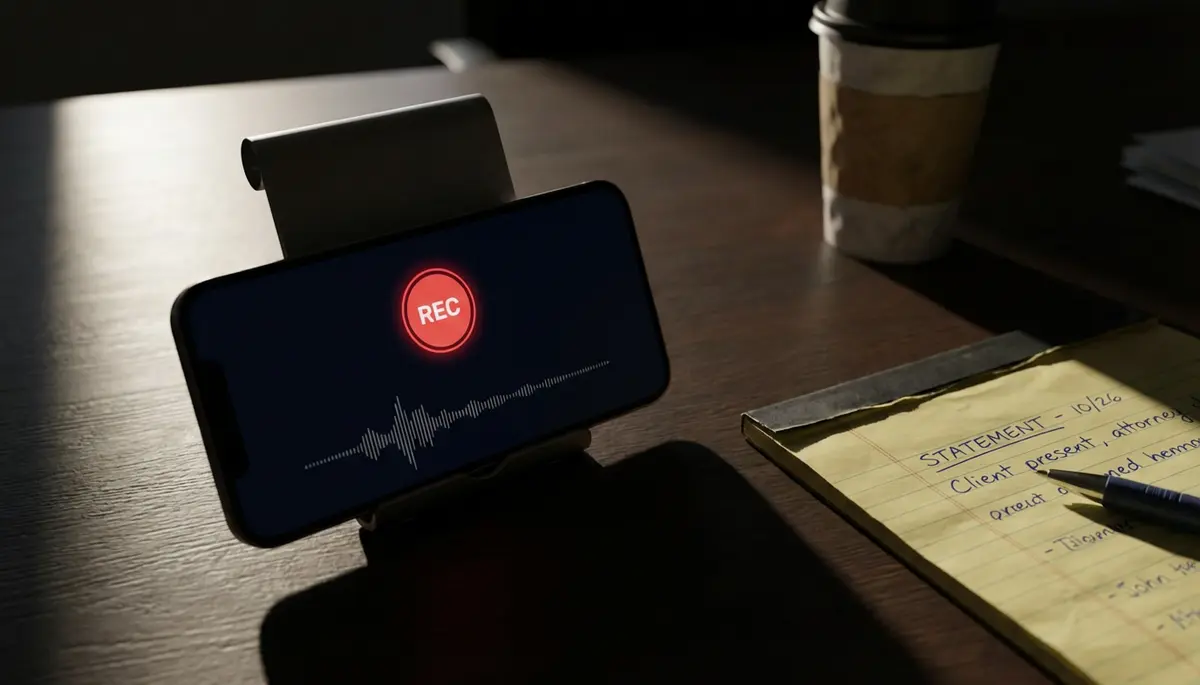
Adjusters are trained professionals. They ask questions for a reason — and that reason isn’t to help your claim.
What to do when the adjuster calls
If you get that call — and you will — here’s what I tell my clients.
Be polite but firm. You can say, “I’m not comfortable giving a recorded statement at this time. I’d like to speak with an attorney first.” That’s it. You don’t need to explain further or justify your decision.
Don’t discuss the accident in detail. You can confirm basic information — your name, the date of the accident, your insurance policy number. But don’t describe what happened, how you’re feeling, or anything about your injuries. Keep it short.
Don’t say you’re “fine” or “okay.” This is a natural response when someone asks how you’re doing. But in the context of an injury claim, those words will be used to minimize your injuries. If the adjuster asks how you’re feeling, say you’re still being evaluated by your doctors.
Write down who called you and when. Keep a record of every contact from the insurance company. Note the adjuster’s name, the company they represent, their phone number, and what they said. This documentation can be helpful later.
Talk to an attorney before giving any statement. I know I’m a lawyer saying “call a lawyer,” but this is one of those situations where it genuinely matters. An experienced car accident attorney can handle communication with the insurance company, and if a statement is needed, they can prepare you and be present to protect your interests. If you’re not sure what steps to take after your accident, start there.
Can a recorded statement help your case?
In rare situations, yes. If the facts are overwhelmingly in your favor and there’s no question about liability or injuries, a well-prepared statement given with an attorney’s guidance can sometimes move a claim forward faster. But that’s the exception, not the rule.
The problem is that most people don’t know which category their case falls into. And by the time you realize the statement hurt you, it’s too late — the words are already on the record. The safe play is almost always to decline the third-party statement and have your attorney manage the process.
Frequently asked questions
Can the insurance company deny my claim if I refuse to give a recorded statement?
The other driver’s insurance company cannot deny your claim simply because you refused their request for a recorded statement. You have no obligation to cooperate with their investigation. Your own insurance company is different — your policy may require cooperation, but even then, you can have an attorney present and set reasonable conditions.
What if I already gave a recorded statement?
Don’t panic. A recorded statement doesn’t automatically destroy your case. But you should talk to an attorney as soon as possible so they can review what was said and develop a strategy to address any problematic statements. The sooner you get legal help, the more options you’ll have.
Is a recorded statement the same as a deposition?
No. A recorded statement is an informal interview conducted by an insurance adjuster, usually over the phone. A deposition is a formal proceeding under oath, typically conducted by an attorney during litigation, with a court reporter present. Depositions have legal protections that recorded statements don’t — including the right to have your attorney object to improper questions.
How soon after an accident will the insurance company call?
Fast. It’s common to get a call within 24 to 72 hours of the accident. Insurance companies move quickly because they know you’re most vulnerable right after a crash — you’re in pain, you’re stressed, and you haven’t had time to think clearly or talk to a lawyer. That speed is intentional.
Got a call from an insurance adjuster? Talk to a former defense attorney before you say a word.
Find a Car Accident Lawyer Near You
This blog post is for general informational purposes only and does not constitute legal advice. Every case is different, and outcomes depend on the specific facts and circumstances involved. Contact the Law Office of Ryan P. Duffy for a free consultation to discuss your specific situation.