

After a construction accident in North Carolina, you might be told that workers’ compensation is your only option. That’s not always true. Depending on who caused your injury, you could have a separate personal injury lawsuit against a third party — and that claim can be worth dramatically more than workers’ comp alone.
I spent years as an insurance defense attorney handling claims for contractors and their insurers. I know the strategies companies use to limit what injured construction workers receive. At the Law Office of Ryan P. Duffy, I help workers in Belmont and across the Charlotte metro area understand both tracks of recovery and pursue the maximum compensation available to them.
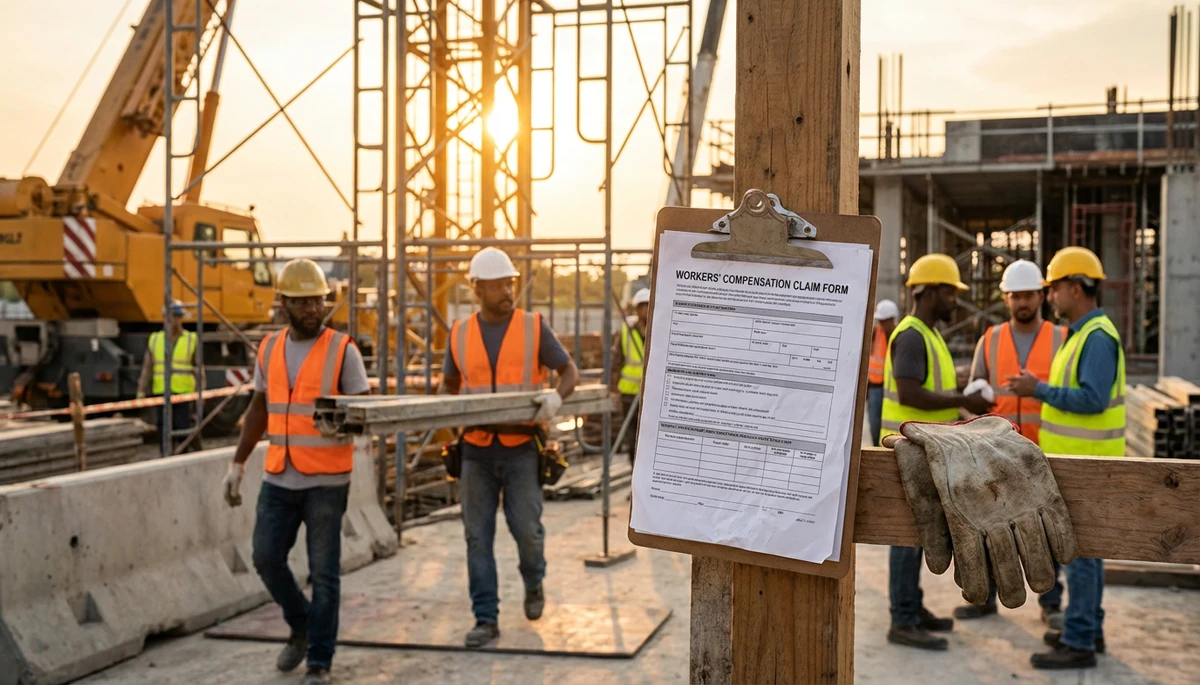
Construction accident victims in NC may have both workers’ comp and personal injury claims available.
Workers’ compensation: what it covers and what it doesn’t
Workers’ compensation in North Carolina is a no-fault system. If you were injured on the job, you’re generally entitled to benefits regardless of who caused the accident. You don’t have to prove your employer was negligent. You don’t have to prove anyone was at fault.
That sounds great until you see what workers’ comp actually pays:
- Medical expenses — all reasonable and necessary medical treatment related to your work injury is covered, but your employer’s insurance carrier gets to choose or approve your treating physician
- Temporary total disability — if you can’t work while recovering, you receive two-thirds of your average weekly wage, up to a maximum set by the state (which changes annually). That’s a 33 percent pay cut from day one.
- Permanent partial disability — if you’re left with a permanent impairment, you receive compensation based on a rating system that assigns a number of weeks of benefits to each body part
- Permanent total disability — for catastrophic injuries that prevent you from ever returning to any employment
What workers’ comp does NOT cover:
- Pain and suffering — there is no compensation for your physical pain, emotional distress, or diminished quality of life
- Full lost wages — you only get two-thirds, and there’s a cap
- Loss of consortium — your spouse has no separate claim for how your injury affects your relationship
- Punitive damages — even if your employer’s conduct was reckless or intentional, workers’ comp doesn’t punish them for it
The tradeoff is speed and certainty. Workers’ comp pays without litigation. But for serious construction injuries — falls, crush injuries, amputations, traumatic brain injuries — the workers’ comp benefits often fall far short of what you actually need.
The employer immunity problem
In exchange for providing workers’ comp coverage, employers get something valuable: immunity from personal injury lawsuits by their employees. Under North Carolina’s Workers’ Compensation Act, you generally cannot sue your own employer for negligence, even if their safety violations directly caused your injury.
This is the “exclusive remedy” doctrine, and it’s one of the most frustrating aspects of construction accident cases. Your employer ignored OSHA regulations, didn’t provide fall protection, or failed to maintain equipment — and you still can’t sue them in civil court. Workers’ comp is your only remedy against your direct employer.
But the exclusive remedy only applies to your employer. It doesn’t protect anyone else.
Third-party personal injury claims: where the real money is
Construction sites are complicated workplaces with multiple companies operating in the same space. Your employer may be immune from a lawsuit, but other parties at the site usually aren’t. When one of those third parties causes your injury, you have a personal injury claim that’s completely separate from workers’ comp.
A third-party personal injury claim gives you access to damages that workers’ comp doesn’t cover:
- Full lost wages — past and future, without the two-thirds cap
- Pain and suffering — compensation for the physical pain and emotional toll of your injury
- Loss of enjoyment of life — damages for the activities and experiences your injury has taken from you
- Loss of consortium — your spouse’s separate claim for the impact on your relationship
- Punitive damages — if the third party’s conduct was willful or reckless, the jury can award additional damages to punish them
The catch: unlike workers’ comp, a personal injury claim requires you to prove fault. You have to show that the third party was negligent and that their negligence caused your injury. And in North Carolina, the defendant will argue contributory negligence — that you were partly at fault too — to try to bar your entire claim.
Common third parties in construction accident claims
On a typical construction site, potential third-party defendants include:
- General contractors — if you work for a subcontractor, the general contractor who controls the site may be liable for unsafe conditions
- Other subcontractors — a different sub whose negligence created the hazard that injured you
- Property owners — the owner of the building or land where the construction is taking place
- Equipment manufacturers — if a defective tool, machine, scaffold, or safety device caused your injury, the manufacturer may be liable under product liability law
- Equipment rental companies — if they rented defective or poorly maintained equipment to the site
- Architects and engineers — if a design defect created the unsafe condition
Ryan’s Insider Perspective
When I defended construction companies, the first thing I did was try to establish that my client was the injured worker’s “employer” — because employer immunity killed the lawsuit immediately. The second thing I did was argue contributory negligence. Construction workers handle dangerous tasks every day, and defense attorneys exploit that to argue the worker should have known better. Identifying the right third-party defendant and defeating these defenses is where experienced representation makes the difference between a denied claim and a significant recovery.
Understanding the difference between workers’ comp and a personal injury claim can mean tens of thousands of dollars in additional recovery.
Can you file both workers’ comp and a personal injury claim?
Yes. You can pursue workers’ comp benefits from your employer and a separate personal injury lawsuit against a negligent third party at the same time. These are two independent legal proceedings, and one doesn’t prevent the other.
There’s an important catch, though. If you receive workers’ comp benefits and then win a third-party personal injury settlement or verdict, your employer’s workers’ comp carrier has a lien on your personal injury recovery. They’re entitled to reimbursement for the benefits they’ve already paid you.
This is called the workers’ comp subrogation lien, and it’s governed by NCGS 97-10.2. The lien amount can be negotiated, and an experienced attorney can often reduce it significantly — but you need to account for it when evaluating the total value of your two-track recovery.
A simplified example: you receive $50,000 in workers’ comp benefits for your injury. You then settle a third-party personal injury claim for $200,000. The workers’ comp carrier may have a lien of up to $50,000 against that settlement. Your attorney can negotiate this lien, potentially reducing it — but you won’t walk away with the full $200,000 on top of your $50,000 in comp benefits.
The subcontractor vs. employee distinction
One of the most contested issues in construction accident cases is whether the injured worker is an employee or an independent contractor. This distinction determines whether workers’ comp applies and whether employer immunity kicks in.
General contractors on large projects frequently use subcontractors, who in turn hire their own workers. The chain of employment relationships can be complex:
- If you’re an employee of a subcontractor, your sub’s workers’ comp covers you. You can’t sue your sub, but you can potentially sue the general contractor, other subs, and other third parties.
- If you’re classified as an independent contractor, you may not be covered by anyone’s workers’ comp. That means you don’t have the guaranteed benefits of comp, but you also aren’t subject to employer immunity — you may be able to sue the party that hired you directly.
- If you’re misclassified as an independent contractor when you should be an employee, you may be able to claim workers’ comp benefits and pursue other remedies for the misclassification.
North Carolina uses a multi-factor test to determine whether someone is an employee or an independent contractor. The key factor is the degree of control the hiring party exercises over how the work is done — not just what work is done, but how, when, and where. If the general contractor controlled the details of your work, you might be considered their employee for workers’ comp purposes, even if you were hired by a subcontractor.
Steps to take after a construction accident
- Get medical treatment immediately. Report your injury to the site supervisor and get to an emergency room or urgent care. Construction injuries can involve internal trauma that isn’t immediately obvious.
- Report the injury to your employer in writing. North Carolina requires you to report a work injury to your employer within 30 days to preserve your workers’ comp claim. Do it in writing so there’s no dispute about whether you reported it.
- Document everything. Photograph the accident scene, your injuries, the equipment involved, and the conditions that contributed to the accident. Get the names and contact information of any witnesses.
- Don’t sign anything from the workers’ comp carrier without legal advice. Insurance adjusters may try to get you to settle quickly or sign releases that limit your recovery.
- Talk to a personal injury attorney — not just a workers’ comp attorney. Many lawyers handle workers’ comp but don’t pursue third-party claims. If a third party caused your injury, you need an attorney who will investigate both tracks.
My construction accident attorney page explains the types of construction injuries we handle and how the claims process works. For general guidance on what to do after any injury, see my guide on what to do after an accident in North Carolina.
Frequently asked questions
Can I sue my employer after a construction accident in North Carolina?
In most cases, no. North Carolina’s exclusive remedy doctrine provides employers with immunity from personal injury lawsuits when they carry workers’ compensation insurance. Your remedy against your employer is limited to workers’ comp benefits. However, if your employer intentionally caused your injury or engaged in certain egregious conduct, narrow exceptions to this immunity may apply.
What’s the difference in compensation between workers’ comp and a personal injury claim?
Workers’ comp covers medical bills and pays two-thirds of your lost wages up to a state-set cap. It does not compensate you for pain and suffering, emotional distress, or loss of enjoyment of life. A third-party personal injury claim covers all of these damages and can include full lost wages with no cap. For serious construction injuries, the personal injury claim is often worth several times more than workers’ comp alone.
Who qualifies as a “third party” I can sue after a construction site injury?
A third party is anyone other than your direct employer who contributed to your injury. This includes general contractors (if you work for a sub), other subcontractors on the site, property owners, equipment manufacturers, equipment rental companies, and design professionals whose negligence created a hazardous condition. An attorney can investigate the accident to identify all potentially liable third parties.
What happens to my workers’ comp if I win a third-party personal injury lawsuit?
Your employer’s workers’ comp carrier has a subrogation lien under NCGS 97-10.2, which means they’re entitled to reimbursement from your personal injury recovery for the comp benefits they already paid. This lien can often be negotiated down by your attorney. You won’t be “double-dipping” — but a skilled attorney can structure the recovery to maximize what you actually take home from both claims combined.
Injured on a construction site? Don’t settle for workers’ comp alone if a third party caused your accident. I’ll investigate both tracks and fight for every dollar you’re owed.
Find a Construction Accident Lawyer Near You
This blog post is for general informational purposes only and does not constitute legal advice. Every case is different, and outcomes depend on the specific facts and circumstances involved. Contact the Law Office of Ryan P. Duffy for a free consultation to discuss your specific situation.