

If you’re hit by a driver who has no insurance — or doesn’t have enough insurance to cover your injuries — you might think you’re out of luck. You’re not. North Carolina law requires every auto insurance policy to include uninsured motorist (UM) and underinsured motorist (UIM) coverage. That coverage exists specifically for this situation.
But here’s what most people don’t realize until it’s too late: filing a UM or UIM claim means going up against your own insurance company. And your own insurer isn’t always on your side. I’ve handled these claims from both the defense and plaintiff side, and I can tell you that UM/UIM claims are some of the most misunderstood — and most contentious — cases in personal injury law.
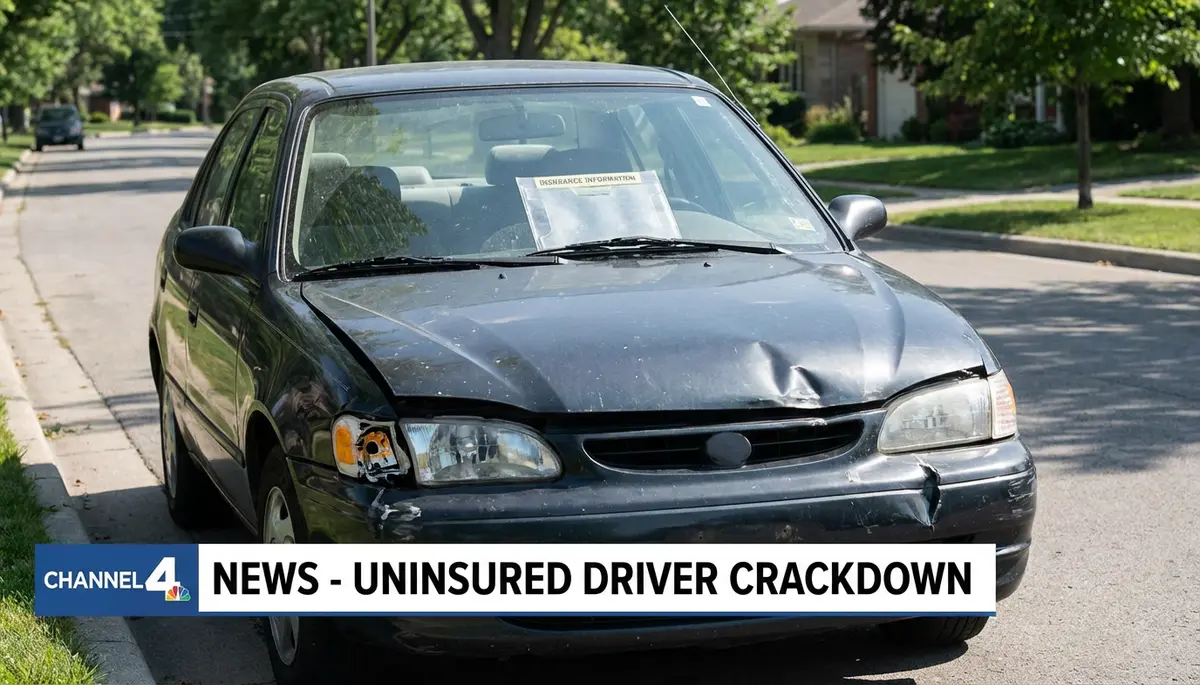
Every auto insurance policy in NC must include UM/UIM coverage — but most people don’t understand how it works.
What UM and UIM coverage actually means
Let’s start with the basics because the terminology confuses a lot of people.
Uninsured motorist (UM) coverage protects you when the at-fault driver has no liability insurance at all. It also covers hit-and-run accidents where the other driver can’t be identified. Despite NC’s mandatory insurance law (NCGS § 20-309), roughly 1 in 7 drivers on the road is uninsured. If one of them hits you, your UM coverage steps in to pay for your injuries.
Underinsured motorist (UIM) coverage kicks in when the at-fault driver has insurance, but their policy limits aren’t enough to cover your damages. Say you’re seriously injured and have $200,000 in medical bills, lost wages, and pain and suffering. If the other driver only has $30,000 in liability coverage (the NC minimum), their insurance pays that $30,000, and your UIM coverage can make up the difference — up to your own policy limits.
Under North Carolina General Statutes § 20-279.21(b)(3), every auto policy issued in the state must include UM/UIM coverage in an amount equal to at least the liability limits of the policy. You can reject UM/UIM coverage in writing, but most people don’t — and for good reason.
When you need UM/UIM coverage
You might think you’ll never need this coverage. Most people don’t think about it until they’re in one of these situations.
Hit-and-run accidents
The other driver flees the scene and can’t be identified. Without UM coverage, you’d have no one to claim against for your injuries. In NC, you can file a UM claim for a hit-and-run, but you’ll need to report the accident to law enforcement promptly and show physical contact between the vehicles (or, in some cases, corroborating evidence).
The at-fault driver has no insurance
This happens more often than you’d expect. The other driver might have let their policy lapse, been driving someone else’s uninsured car, or never had insurance in the first place. Your UM coverage protects you regardless of the other driver’s irresponsibility.
The at-fault driver’s insurance isn’t enough
North Carolina only requires $30,000 per person / $60,000 per accident in liability coverage. That’s not a lot. A single ER visit, an MRI, and a few weeks of physical therapy can blow through $30,000 quickly. If you have serious injuries — a herniated disc, broken bones, or a concussion — the at-fault driver’s minimum policy won’t come close to covering your damages. That’s where your UIM coverage fills the gap.
How UM/UIM claims work in North Carolina
Filing a UM or UIM claim is different from a standard third-party insurance claim. There are specific rules and procedures you need to follow.
The exhaustion requirement for UIM claims
Before you can tap your UIM coverage, you generally need to exhaust the at-fault driver’s liability policy first. That means you’ll need to settle with (or get a judgment against) the other driver’s insurer for their full policy limits before your UIM carrier will pay.
There’s an important procedural step here. Under NC law, before you accept the at-fault driver’s policy limits, you must notify your own UIM insurer and give them the opportunity to consent to the settlement or substitute their own payment. If you settle with the at-fault driver’s insurer without giving your UIM carrier proper notice, you could jeopardize your UIM claim. This is a mistake I’ve seen people make, and it’s one reason having an attorney handle the process matters.
Your own insurer becomes your adversary
This is the part that catches people off guard. When you file a UM or UIM claim, you’re making a claim against your own insurance company. And your own insurance company will treat it like any other claim — they’ll investigate, question your injuries, and try to minimize what they pay.
Your insurer may hire defense attorneys to fight your claim. They may send you to an independent medical examination (IME) — which is really a defense medical exam — where a doctor hired by the insurance company evaluates your injuries and often downplays them. They’ll raise contributory negligence if they can. They’ll question your treatment. In short, they’ll do everything the other driver’s insurance company would do.
Ryan’s Insider Perspective
I’ve defended insurance companies against their own policyholders’ UM/UIM claims. The approach is identical to defending any liability claim — find weaknesses in the plaintiff’s case, question the medical treatment, look for contributory negligence, and minimize the payout. Your insurer was happy to cash your premium check every month, but the moment you file a UM/UIM claim, the relationship changes. You’re no longer a customer. You’re a claimant. Don’t expect loyalty.
Stacking UM/UIM coverage in North Carolina
“Stacking” is a term that refers to combining UM/UIM coverage from multiple policies or multiple vehicles on the same policy to increase your available coverage. Whether you can stack depends on your specific situation.
In NC, stacking is generally allowed when you have multiple vehicles on one policy, unless the policy specifically contains a valid anti-stacking provision. If you have two cars on your policy with $100,000 in UM/UIM coverage each, you might be able to stack them for $200,000 in total coverage. But insurance companies fight stacking claims aggressively, and the case law on this topic has evolved over the years.
You may also be able to access UM/UIM coverage from other policies. For example, if you were a passenger in someone else’s car when the accident happened, you might be able to claim under both the vehicle owner’s policy and your own policy. The rules around this are technical and fact-specific, so talk to an attorney if you think stacking could apply to your case.

Check your policy’s declaration page to see your UM/UIM limits — they could make or break your recovery.
How much UM/UIM coverage should you carry?
NC’s minimum liability requirements are $30,000 per person and $60,000 per accident. Since UM/UIM coverage must match your liability limits (unless you’ve rejected it in writing), most people carry at least that much.
But the minimum often isn’t enough. If you’re in a serious accident with an uninsured driver and your UM limit is only $30,000, that might not cover your medical bills, let alone your lost wages and pain and suffering.
I tell clients to carry as much UM/UIM coverage as they can reasonably afford. Bumping from $30,000 to $100,000 or even $250,000 in UM/UIM coverage is surprisingly cheap — often just a few dollars more per month. Given how many uninsured and underinsured drivers are on NC roads, it’s some of the best value in your entire policy.
Think of it this way: your UM/UIM coverage is the one part of your auto policy that directly protects you and your family. Liability coverage protects other people you might injure. UM/UIM coverage is there for you when someone else fails to carry adequate insurance.
Steps to take if you need to file a UM/UIM claim
If you’ve been in an accident with an uninsured or underinsured driver, here’s what you should do to protect your claim.
Report the accident to police. This is always step one, but it’s especially important for UM claims involving hit-and-run accidents. A police report creates an official record of the incident. Check out my full guide on what to do after a car accident in North Carolina.
Notify your own insurance company. Report the accident to your insurer promptly. Your policy likely requires timely notice, and delaying can give the insurance company an excuse to complicate your claim.
Don’t give a recorded statement without an attorney. Your own insurer may ask for a recorded statement. While your policy’s cooperation clause may require you to provide one eventually, you should have an attorney present to protect your interests. The questions your own insurer asks in a UM/UIM claim are just as strategic as the ones the other side would ask.
Document everything. Keep records of all medical treatment, out-of-pocket expenses, lost work time, and correspondence with insurance companies. The more documentation you have, the harder it is for the insurer to dispute your damages.
Be aware of time limits. North Carolina’s statute of limitations for personal injury claims applies to UM/UIM claims as well. Don’t wait too long to take action.
Consult an attorney early. UM/UIM claims have procedural traps that can derail your case if you’re not careful. An attorney who handles these claims regularly knows the notice requirements, the exhaustion rules, and how to deal with your own insurance company when they’re acting more like an opponent than a partner.
Frequently asked questions
Will my rates go up if I file a UM/UIM claim?
This is a common concern. In North Carolina, insurance companies are not supposed to raise your rates for filing a UM/UIM claim because the accident wasn’t your fault — you’re the victim. In practice, some people worry about it anyway. But you paid for this coverage for exactly this reason, and the law is on your side. NCGS § 58-36-65 restricts insurers from surcharging for not-at-fault claims.
What’s the difference between UM and UIM coverage?
UM coverage applies when the at-fault driver has no insurance at all (or in hit-and-run cases). UIM coverage applies when the at-fault driver has insurance, but their limits aren’t enough to cover your damages. Both are required on every NC auto policy, and they often share the same coverage limits.
Can I sue the uninsured driver directly?
Yes, you can file a lawsuit against the uninsured driver personally. But collecting a judgment against someone with no insurance can be difficult if they don’t have significant assets. That’s why UM coverage exists — it gives you a realistic source of compensation even when the at-fault driver can’t pay.
Does UM/UIM coverage apply if I’m a passenger in someone else’s car?
Yes. If you’re injured as a passenger and the at-fault driver is uninsured or underinsured, you can file a UM/UIM claim under the vehicle owner’s policy. You may also be able to file under your own auto policy if you have one. In some situations, both policies provide coverage, which can increase your total available recovery.
Hit by an uninsured or underinsured driver? A former defense attorney can help you get the most from your UM/UIM claim.
Find a Car Accident Lawyer Near You
This blog post is for general informational purposes only and does not constitute legal advice. Every case is different, and outcomes depend on the specific facts and circumstances involved. Contact the Law Office of Ryan P. Duffy for a free consultation to discuss your specific situation.